


 简体中文
简体中文 English
 日本語
日本語 한국어
한국어 Español
 русский


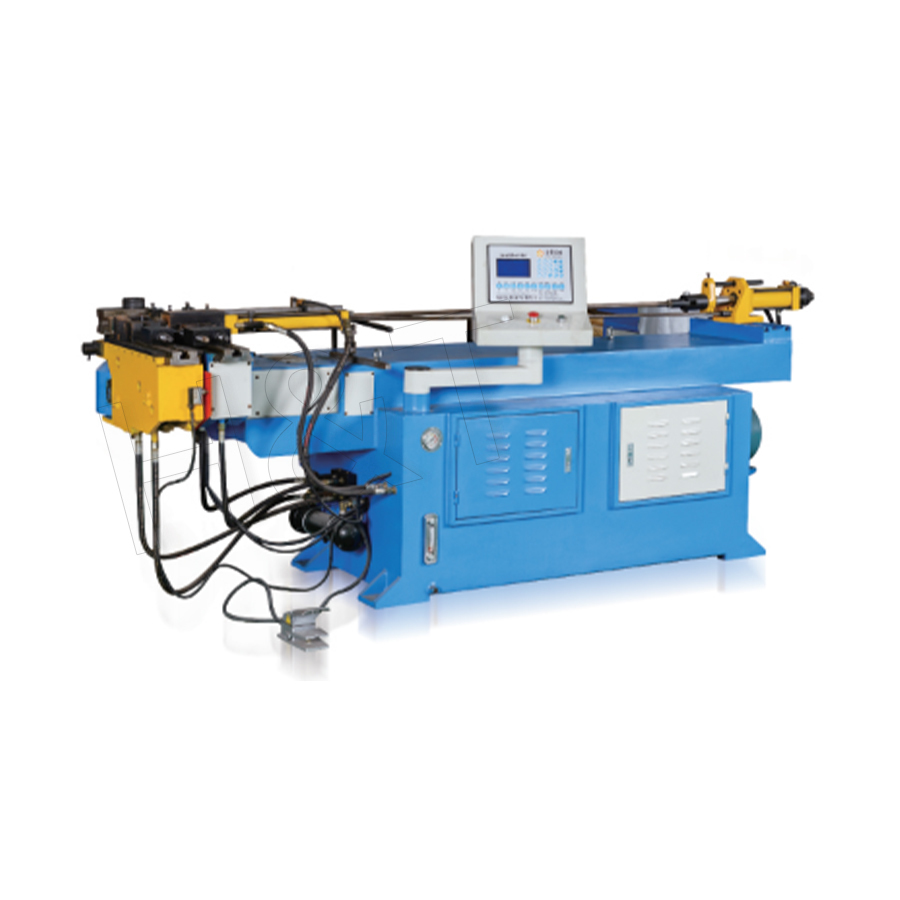
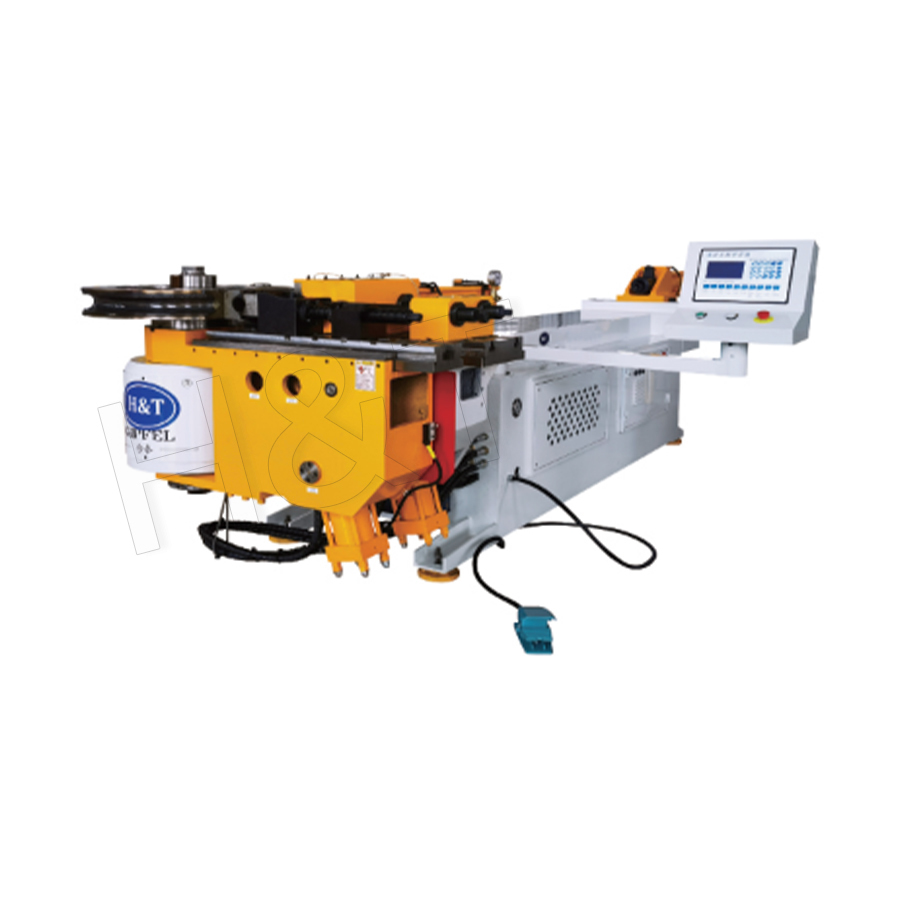
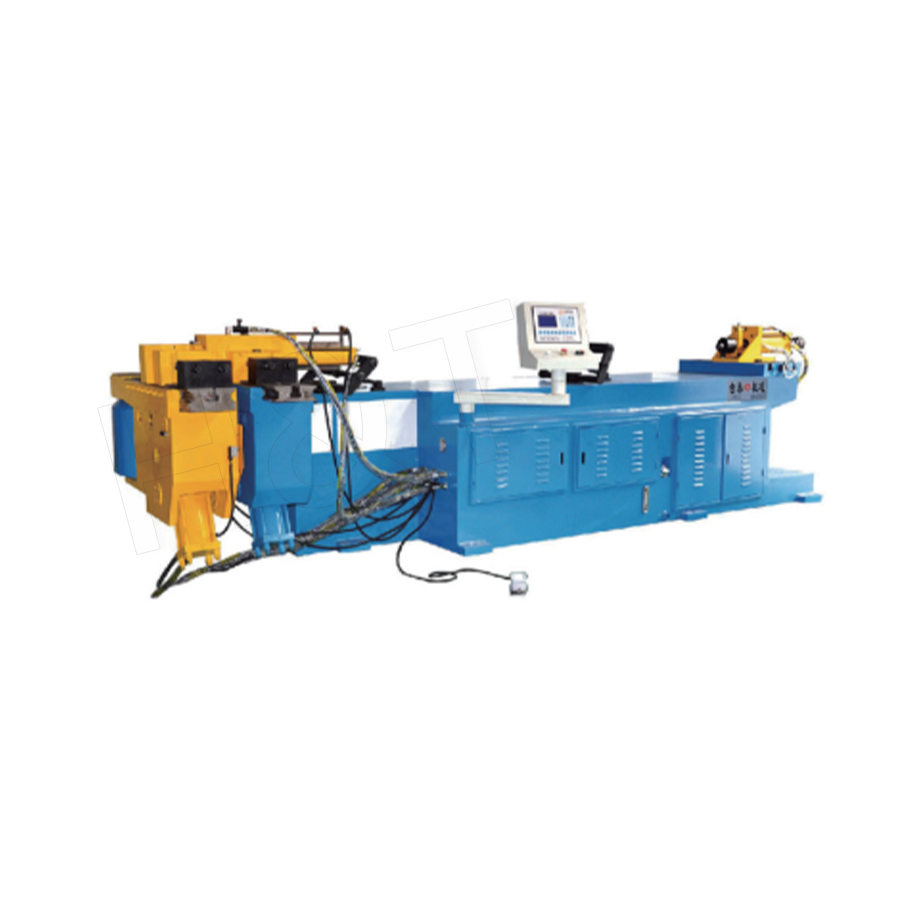
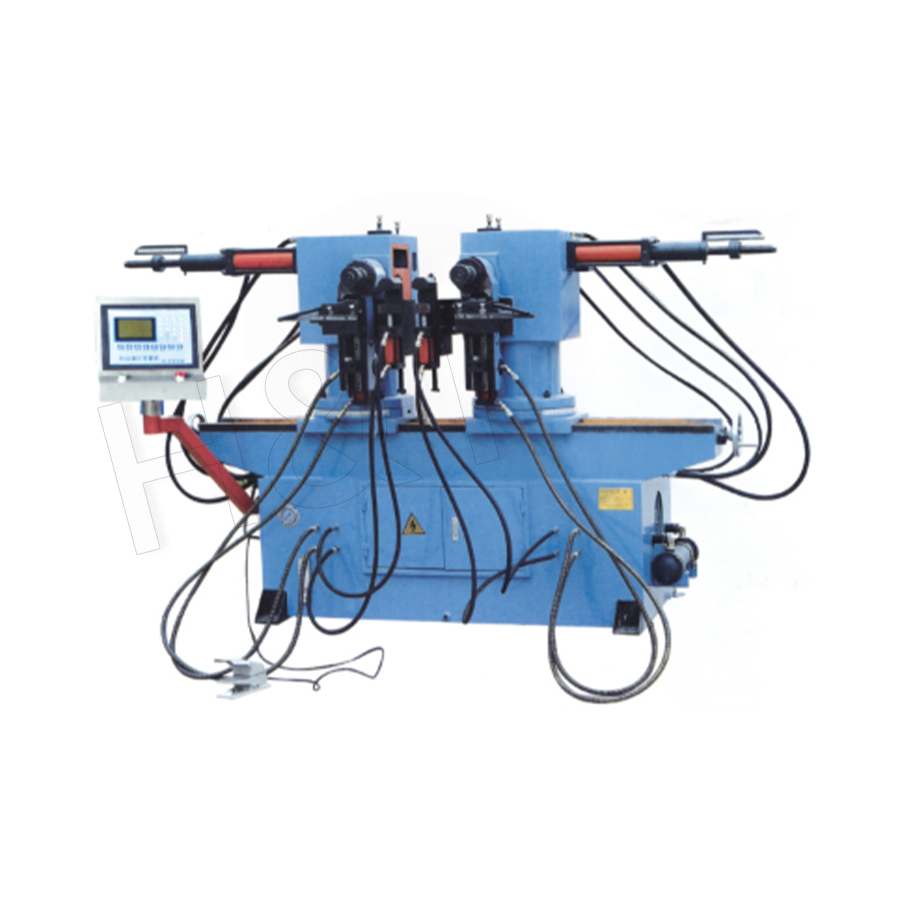
NC Tube Bending Machine—numerical control bending—refers to the use of a numerically controlled pipe bending machine that executes programmed bending instructions to shape metal tubes and pipes into precise angles and multi-axis configurations. Unlike fully CNC systems (which use closed-loop servo feedback on all axes), NC Tube Bending Machines typically use a combination of semi-open-loop digital control and hydraulic or servo drive to deliver high-precision bending at a more accessible equipment cost.
The NC single-head pipe bending machine integrates mechanics, electrical systems, hydraulics, and digital control into a unified platform. It uses a rotating bending die to wind and shape pipes, and supports multi-axis linkage control—allowing operators to input complex 3D pipe bending paths directly on the control screen. The system automatically calculates and executes the bending sequence, achieving seamless machining from simple 2D to complex 3D pipe fittings. Its single-head structure results in a more compact machine with a lower center of gravity, making it particularly suited to precision machining environments with limited floor space or requirements for high structural rigidity.
Working Principle of the NC Single-Head Pipe Bending Machine
The bending sequence of an NC single-head machine follows a structured process, with each axis performing a defined function within the overall cycle:
- Tube loading and clamping: The tube is loaded into the chuck or gripper and clamped securely. The clamp die closes against the tube near the bending die, preventing slippage during the bend.
- Feed positioning (Y-axis): The carriage advances the tube to the programmed distance from the bend die centerline—establishing the tangent point for the upcoming bend.
- Tube rotation (B-axis): The tube rotates to the correct angular orientation for the next bend plane. For 2D parts, this axis remains fixed; for 3D multi-plane parts, precise B-axis indexing between bends is essential.
- Bending (C-axis): The bending arm rotates around the die, pulling the tube into the programmed bend angle. The NC system applies a pre-calculated over-bend to compensate for springback.
- Tool retraction: The clamp die, pressure die, and (if used) mandrel retract. The bending arm returns to its home position, and the tube advances for the next bend.
This cycle repeats for each bend in the program. A typical NC bender completes a 6-bend automotive coolant tube in approximately 45–90 seconds, depending on tube diameter and the number of B-axis repositions required.
Advantages of the NC Single-Head Design
Compact Footprint and High Structural Rigidity
The single-head architecture concentrates all bending forces at one point on the machine frame, allowing a more compact, lower-profile design compared to multi-head alternatives. The reduced height lowers the machine's center of gravity, improving rigidity under bending load and reducing vibration-induced angular error. Floor space requirements are typically 30–50% less than equivalent multi-head configurations.
Cost-Effective Entry into Precision NC Tube Bending Machine
NC single-head machines offer substantially lower acquisition cost than fully CNC all-electric systems—typically 40–60% of the price of a comparable CNC model—while still providing multi-axis digital control, repeatability adequate for most automotive and general industrial applications, and the ability to store and recall hundreds of production programs.
3D Path Programming from the Control Screen
Operators can input Y (feed distance), B (rotation angle), and C (bend angle) values for each bend directly on the NC control panel. The system calculates springback corrections based on pre-stored material data and executes the full 3D bending sequence automatically. Program storage for 200 or more part programs is standard, enabling rapid changeover between part numbers without manual re-setup.
Suitable for Precision and Space-Constrained Environments
The low-profile, high-rigidity single-head design is particularly valued in precision instrument manufacturing and aerospace component production, where machine-induced vibration must be minimized and floor space is at a premium. The reduced overhang of a single bending head also improves geometric accuracy on long tubes with closely spaced bends, where multi-head configurations may introduce alignment errors.
NC Tube Bending Machine Performance Specifications
| Parameter | Typical NC Single-Head | Significance |
|---|---|---|
| Tube OD range | Ø6 – Ø76 mm | Covers automotive and general industrial tubes |
| Bend angle accuracy | ±0.3° | Sufficient for most hydraulic and automotive applications |
| Feed length accuracy | ±0.3 mm | Controls tangent distance between bends |
| Number of controlled axes | 3–5 | Y, B, C + pressure die and clamp |
| Program storage | 200+ programs | Rapid recall for high-mix production |
| Max bend angle per pass | 190°+ | Enables U-bends and over-180° forms |
Industry Applications of NC Pipe Bending Machine
Automotive Parts Production
NC single-head benders are widely used in Tier-2 and Tier-3 automotive suppliers for producing fuel lines, brake tubes, coolant hoses, and chassis tubes. The combination of multi-axis digital control, adequate precision (±0.3° bend angle), and lower equipment cost makes them the preferred choice where per-part tolerance requirements do not demand the full servo-loop precision of CNC-all-electric machines.
Medical and Precision Instrument Manufacturing
The compact single-head design and vibration-dampened structure make NC benders suitable for small-diameter tube bending in medical device components (endoscope shafts, surgical instrument tubes) and precision instruments where the bending machine's mechanical stability directly affects part quality. Tube ODs in these applications are typically in the range of Ø4–Ø25 mm with tight angular tolerances.
Aerospace Component Production
For aerospace hydraulic and fuel line components, NC Pipe Bending Machine provides the precision and program traceability required by quality standards such as AS9100. Operators can store and recall material-specific springback parameters for titanium, stainless steel, and aluminum alloys, ensuring consistent bending results across material lots with slightly varying mechanical properties.
General Industrial and HVAC Tubing
Refrigeration copper tube bending, industrial hydraulic line fabrication, and furniture tube forming all benefit from the NC single-head's balance of precision, flexibility, and cost. Job shops particularly value the ability to store hundreds of programs for different customer parts and recall them instantly, minimizing setup time between jobs.
NC Pipe Bending Machine vs. CNC Bending Machine: Choosing the Right Technology
The decision between NC and CNC Bending Machine depends primarily on part tolerance requirements, production volume, part complexity, and budget. Both technologies are appropriate for different segments of the market:
- Choose NC Pipe Bending Machine when: bend angle tolerance of ±0.3° is acceptable; parts have up to 8–10 bends; production volumes are medium (5,000–50,000 parts per shift per year per part number); and capital budget is a primary constraint.
- Choose CNC all-electric bending when: tolerance requirements are ±0.1° or tighter; parts require multi-stack dies (2–4 radii per part); high-volume automated production with robotic integration is required; or full closed-loop servo control is mandated by quality standards.
For many mid-tier automotive suppliers and precision job shops, an NC single-head machine represents the optimal cost-performance solution—delivering digital control, program storage, and repeatability at a fraction of the investment required for a fully servo CNC system.
Common Questions About NC Pipe Bending Machine
Can an NC Pipe Bending Machine handle 3D multi-plane tube geometries?
Yes. NC single-head machines with a B-axis (tube rotation) can produce full 3D multi-plane tube configurations by rotating the tube to the correct angular orientation between bends. The operator enters Y, B, and C values for each bend into the NC control, and the machine executes the sequence automatically. Parts with up to 8–12 bends in multiple planes are routinely produced on NC single-head machines.
How do I set up springback compensation on an NC bender?
Springback compensation on NC machines is typically set by bending a trial piece, measuring the actual angle after springback, and entering a correction factor into the control. The NC system adds this correction to all subsequent bends for that program. Once established for a given material and radius combination, the correction factor is stored with the program and applied automatically on future production runs—eliminating re-qualification when the same job is repeated.
What maintenance does an NC hydraulic bender require?
Key maintenance tasks include: hydraulic oil and filter replacement every 2,000 operating hours; lubrication of bend arm bearings and carriage rails every 500 hours; inspection and replacement of tooling wear surfaces (clamp inserts, pressure die pads) every 50,000–200,000 bending cycles depending on material abrasiveness; and calibration verification of angle encoders quarterly. A structured preventive maintenance program typically reduces unplanned downtime by 40–60%.