


 简体中文
简体中文 English
 日本語
日本語 한국어
한국어 Español
 русский


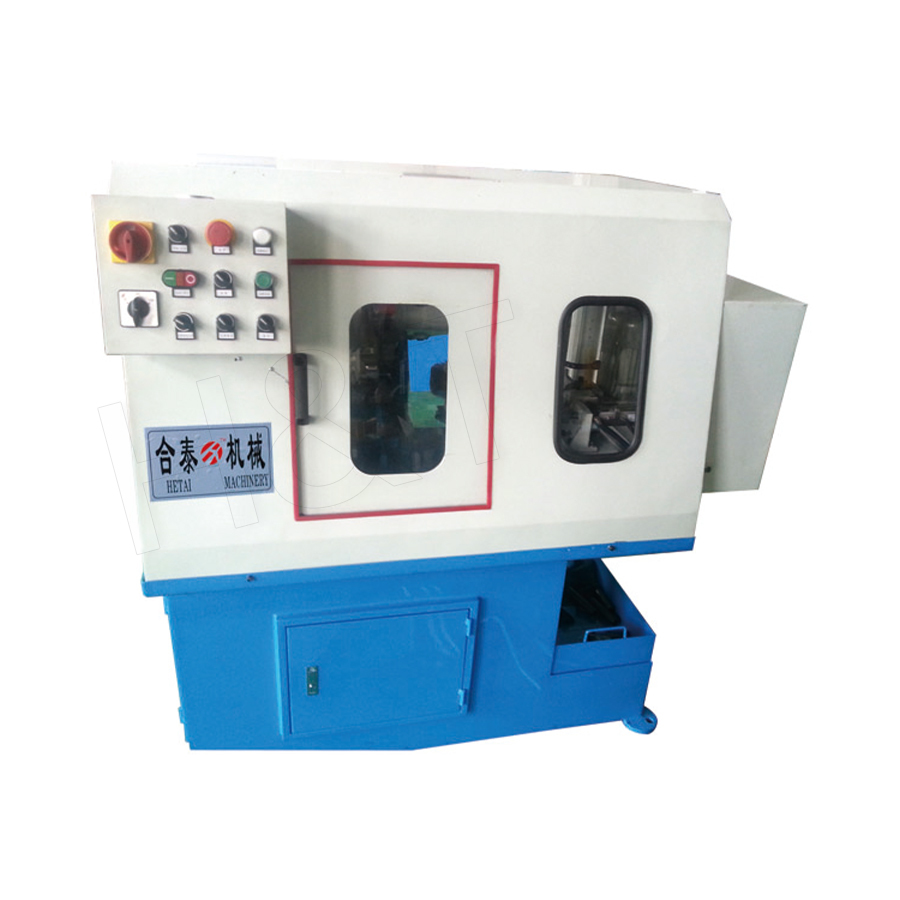
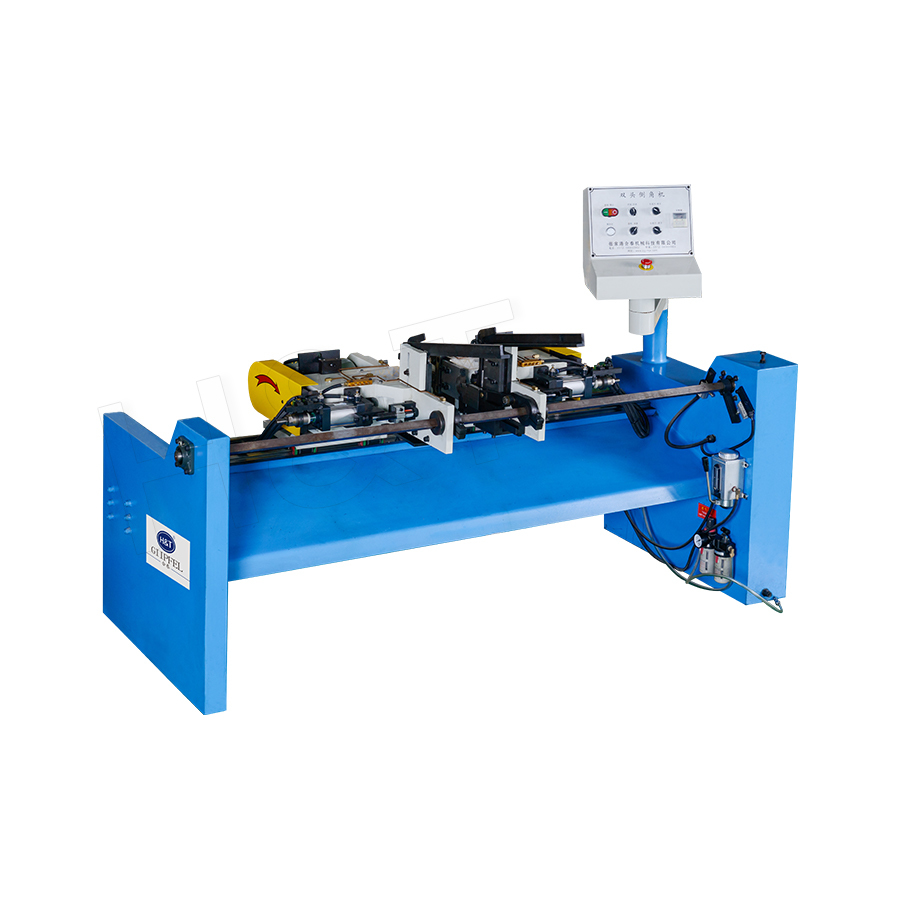
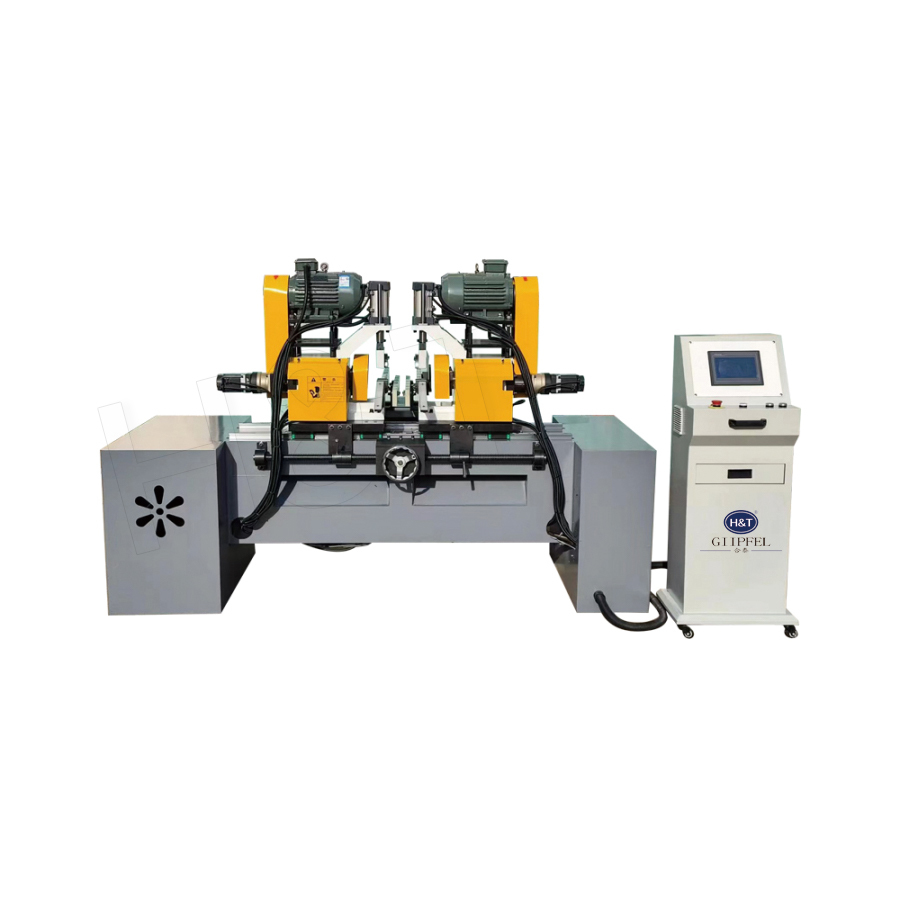
Chamfering Machine is the machining of a flat, angled surface at the edge or end of a metal workpiece—replacing a sharp 90° corner with an angled transition. In industrial pipe, tube, and bar processing, Chamfering Machine is performed by a single-head Chamfering Machine that applies a rotating multi-tooth cutter or insert tool to the pipe end, simultaneously processing the outer diameter bevel, inner diameter bevel (ID deburring), and end face squareness in a single tool plunge cycle.
Chamfering Machine is not a finishing cosmetic operation—it is a functional process step that directly determines whether the downstream operation (fitting assembly, welding, or component installation) can be performed correctly. A missing or non-conforming chamfer on a hydraulic tube fitting causes immediate leakage; a non-conforming weld bevel geometry produces a weld that fails code qualification. Understanding Chamfering Machine as a critical process step—not an afterthought—transforms how it is specified, controlled, and integrated into the production flow.
Chamfer Geometry: Standard Angles and Dimensional Requirements
Different downstream applications impose specific chamfer geometry requirements. Producing the wrong angle or face width can be as problematic as producing no chamfer at all:
Weld Bevel Preparation
For butt-welded pipe joints, international piping codes specify the bevel geometry. ASME B31.3 (process piping) and EN 13480 (metallic industrial piping) specify a 30° bevel angle (yielding a 60° included V-groove), a root face (land) of 1.5 ± 0.8 mm, and a bevel face width proportional to the wall thickness. These dimensions are not guidelines—they are code requirements for pressure-containing welds. Chamfering Machines producing weld bevels must be validated to maintain these dimensions within the stated tolerances across the full production run.
Fitting and Assembly Chamfers
A 45° chamfer is standard for handling safety (removing sharp cut edges) and for guiding parts during assembly. The chamfer face width for a deburring-only chamfer is typically 0.3–1.0 mm—small enough not to affect the tube OD's interference with a bore, but sufficient to eliminate the burr. For hydraulic compression fittings, the ID chamfer must be sized to allow the ferrule to slide over the tube end without catching; typical ID chamfer requirements are 0.5–1.5 mm face width at 30°–45°.
End Face Perpendicularity
For orbital welding and compression fitting installations, the tube end face must be perpendicular to the tube axis within 0.05°–0.1°. Cold circular saws achieve end face squareness of approximately 0.1°–0.2°—adequate for most applications. Where tighter squareness is required, the Chamfering Machine's face-milling function (which machines a fresh flat face during the chamfer cycle) achieves 0.01°–0.05° perpendicularity, improving weld root gap consistency and fitting seal surface quality.
Single-Head Chamfering Machine: Technical Deep Dive
Cutter Tool Design
The Chamfering Machine cutter is a rotating body carrying 3–8 carbide insert blades arranged at the target chamfer angle. As the cutter advances axially into the tube end face, the inserts simultaneously remove material from the OD chamfer, the ID chamfer (through a separate angled insert), and the end face flat. This geometry ensures all three features are produced concentrically and in a single pass, preventing the alignment errors that occur when OD Chamfering Machine and ID deburring are done in separate operations.
Drive System Comparison
- Hydraulic drive: Provides the highest torque density, enabling Chamfering Machine of thick-wall pipe (wall thickness up to 40 mm) and high-strength alloy steel without stalling. Hydraulic feed also enables smooth, vibration-free tool advance—important for surface finish quality on precision components. Best for pipes from Ø50 mm to Ø220 mm with heavy walls.
- Pneumatic drive: Lightweight, portable, and lower acquisition cost. Suitable for small-diameter thin-wall tube (Ø6 mm to Ø76 mm, wall up to 5 mm). Air consumption of 200–400 L/min at 6 bar requires an adequately sized compressed air supply. Torque is lower than hydraulic, limiting application to softer materials and thinner walls.
- CNC servo drive: Offers programmable feed rate, depth of cut, and spindle speed—enabling automatic adjustment for different tube diameters and wall thicknesses without mechanical stops. CNC machines store 100+ part programs for rapid changeover. Feed accuracy of ±0.01 mm ensures consistent chamfer face width across all parts in a production run.
Clamping and Part Holding
The Chamfering Machine machine must hold the tube end concentric with the spindle axis to produce a chamfer that is symmetric around the tube OD. Self-centering 3-jaw chucks (for round tube) or V-block clamps with a top pressure plate (for square and rectangular sections) are the most common holding arrangements. Chuck jaw centering accuracy of ±0.1 mm TIR is sufficient for standard Chamfering Machine; for weld bevel applications requiring high root face width consistency, toolmaker-grade collet chucks achieving ±0.02 mm TIR are used.
Integration of Chamfering Machine in Automated Tube Processing Lines
In high-volume tube processing, Chamfering Machine is rarely a standalone operation—it is integrated into the production line flow immediately after cutting and before bending or end forming:
- Transfer from saw to Chamfering Machine: Cut tubes exit the circular saw onto a conveyor or roller table and are transferred automatically (via pusher mechanism or robotic pick-and-place) to the Chamfering Machine's loading station. Transfer cycle time of 3–5 seconds matches the saw cut time for Ø50 mm thin-wall tube, ensuring no production queue accumulates between the two stations.
- Chamfering Machine cycle: Both tube ends are chamfered simultaneously on double-end machines (total Chamfering Machine time 8–15 seconds), or one end is chamfered followed by automatic tube reversal and Chamfering Machine of the second end on single-head machines with auto-reversal (total cycle 15–25 seconds).
- Inspection: A vision system or contact gauge verifies chamfer presence, approximate angle, and face width on a sampling or 100% basis before the tube advances to bending or end forming. Parts with missing or out-of-tolerance chamfers are automatically diverted.
- Advance to next process: Verified tubes continue on the conveyor to the tube bending machine, end-forming station, or parts bin, completing the cutting-to-formed-part sequence without any manual handling.
Common Questions About Chamfering Machine
What happens if the chamfer angle deviates from the specified value?
For weld bevel preparation, a chamfer angle deviation of more than ±2.5° from the specified angle causes the V-groove geometry to fall outside code tolerance, resulting in either insufficient weld penetration (too-shallow groove) or excessive weld volume (too-deep groove), both of which are cause for weld rejection under ASME and EN piping standards. For hydraulic compression fitting assembly, a chamfer angle deviation of more than ±3° can prevent the ferrule from seating correctly, causing immediate leakage on pressure testing.
How is chamfer quality verified in production?
First-article inspection uses a calibrated contact profilometer or optical comparator to measure the chamfer angle and face width against the drawing specification. In-process control uses go/no-go gauges for face width and visual inspection for tool marks or chipping. For weld bevel applications, a bevel protractor with a vernier scale measures angle to 0.1° resolution. Statistical process control (SPC) on face width measurements (sampled every 50–100 parts) provides early warning of tool wear before chamfer dimensions drift outside tolerance.
When should the Chamfering Machine insert be replaced?
Carbide Chamfering Machine inserts should be replaced (or indexed to a fresh edge) when: the cut face shows chatter marks or a rough texture that was absent during earlier production; the chamfer face width begins drifting beyond the control limits despite unchanged machine settings; or a visible wear flat appears on the insert cutting edge. For carbon steel tube Chamfering Machine, typical insert life before indexing is 2,000–6,000 Chamfering Machine cycles per cutting edge. Proactive indexing before visible wear-related dimensional drift prevents scrap parts and avoids the cost of re-Chamfering Machine already-processed tubes.