


 简体中文
简体中文 English
 日本語
日本語 한국어
한국어 Español
 русский


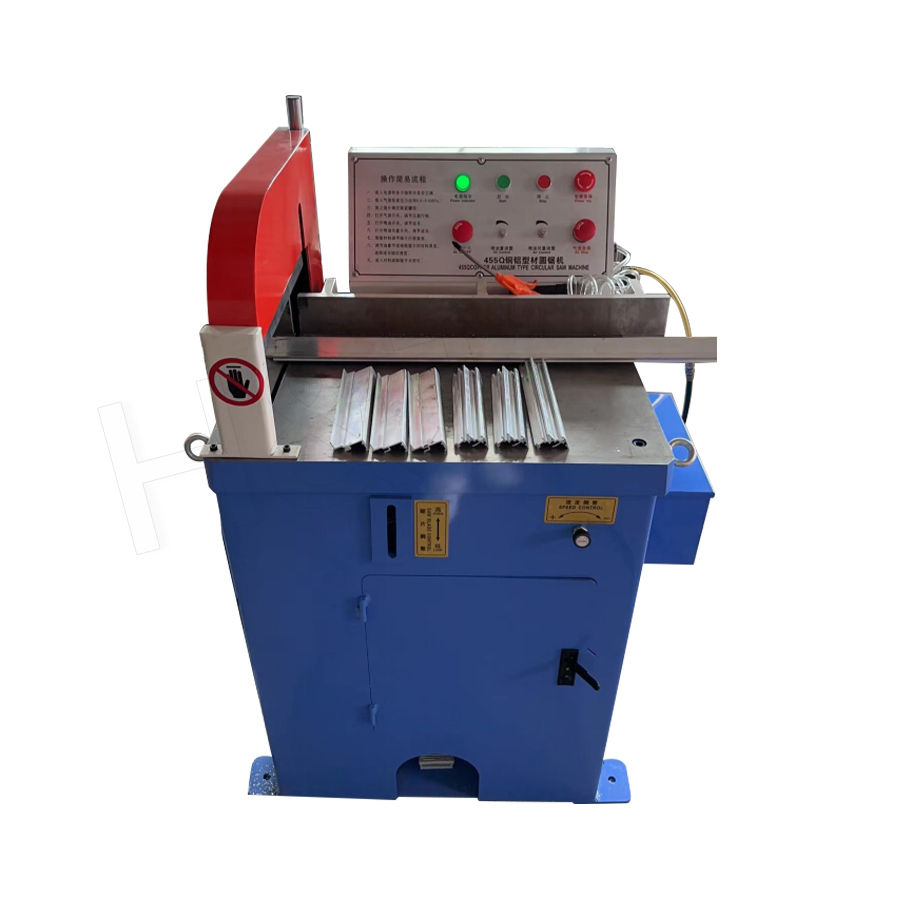
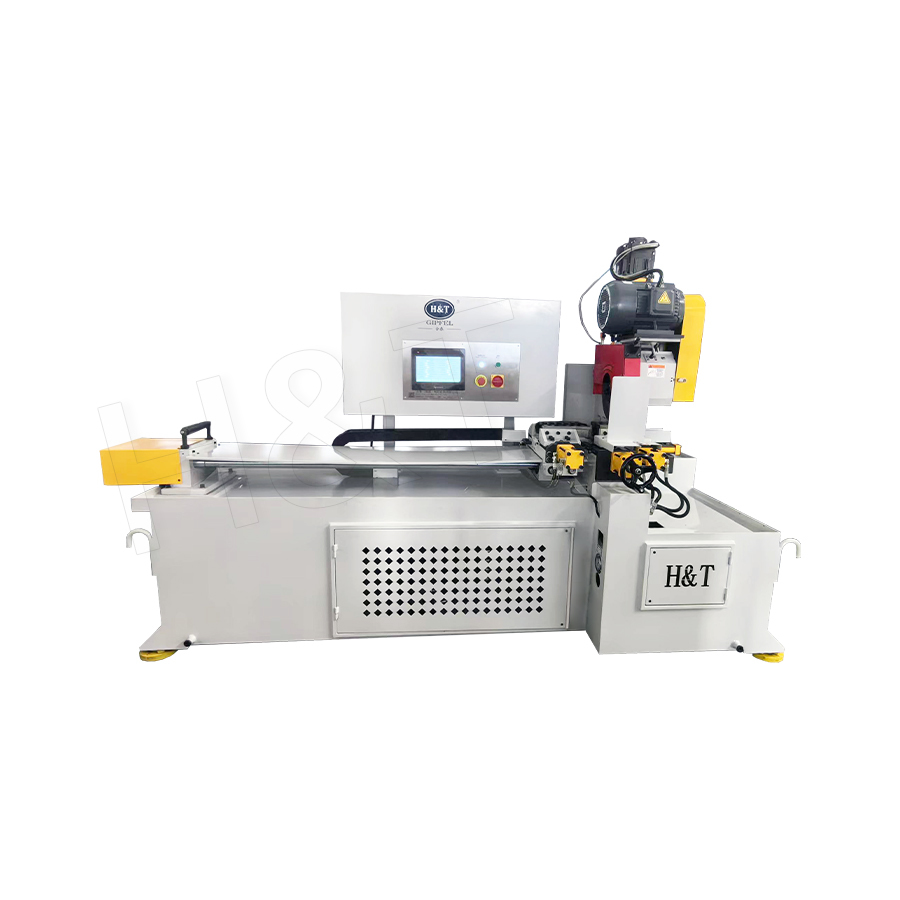
A Circular Metal Saw Machine uses a rotating toothed disc blade—driven through a precision gear or direct-drive transmission at carefully controlled low spindle speeds—to cut metal workpieces by mechanical chip formation rather than abrasive grinding or thermal energy. The result is a cut face that is square, burr-free, and dimensionally accurate to ±0.2 mm, with no heat-affected zone, no distortion of the material's microstructure at the cut edge, and noise levels 20–35 dB lower than abrasive cut-off wheels.
Semi-automatic configurations automate the demanding elements—blade rotation, hydraulic feed rate control, and coolant delivery—while leaving material loading, length setting, and clamping initiation to the operator or a semi-automatic backstop. This balance makes semi-automatic Circular Metal Saw Machines highly productive for medium-volume tube, bar, and profile cutting in manufacturing shops where fully automated saw lines are not yet cost-justified.
Anatomy of a Semi-Automatic Circular Metal Saw Machine
Saw Head and Spindle Assembly
The saw head houses the spindle bearings, blade arbor, and blade guard assembly. Spindle bearing quality is critical—angular contact bearings pre-loaded to eliminate axial and radial play ensure the blade runs true, preventing blade wobble that would widen the kerf and accelerate tooth wear. Spindle speeds for metal cold sawing are typically 20–120 RPM, far lower than abrasive cut-off (thousands of RPM), enabling the controlled chip-formation cutting action that defines cold sawing.
Drive Motor and Transmission
Motor power ranges from 2.2 kW (small benchtop saws) to 15 kW (heavy-duty production saws) for large-diameter solid bar cutting. Cycloidal pinwheel, worm-gear, and bevel-gear transmissions are common—each providing the large speed reduction (typically 1:20 to 1:60 reduction ratio) needed to step the motor's 1,450 RPM output down to the blade's 25–120 RPM operating range while multiplying torque proportionally. Variable-frequency drives (VFDs) on the motor allow infinitely adjustable blade speed within the machine's range, enabling optimal speed selection for each material without mechanical gear changes.
Hydraulic Feed System
The saw head's downward (or horizontal) feed into the workpiece is powered by a hydraulic cylinder. A flow-control valve throttles the hydraulic oil flow to set the feed rate; a pressure-relief valve caps the maximum cutting force to prevent blade overload. On advanced semi-automatic models, a proportional hydraulic valve adjusts feed pressure based on a load sensor monitoring spindle motor current—automatically reducing feed when cutting resistance increases (e.g., entering a thicker wall section) and increasing it when resistance drops, maintaining consistent chip load per tooth throughout the cut.
Clamping Vice System
Hydraulic or pneumatic twin-jaw vices grip the workpiece symmetrically on both sides of the cut line. Clamping force is controlled to securely hold the material without deforming thin-wall tubes—typically 5–30 kN clamping force depending on workpiece size. Quick-release mechanisms allow jaw opening in under 2 seconds after the cut completes. Interchangeable jaw inserts (V-shaped for round tube, flat for bar and plate, profiled for structural sections) accommodate the full range of cross-sections the machine may encounter.
Coolant System
A pump circulates cutting emulsion (3–8% soluble oil in water) from the reservoir through nozzles directed at both faces of the saw blade at the point of material contact. Coolant flow rates of 5–20 liters/minute are typical. The coolant serves to reduce cutting temperature (preventing carbide tip thermal shock), lubricate the tooth-chip-workpiece interface (reducing cutting force by 15–25%), and flush chips out of the kerf and away from the machine table. A coolant tray and chip conveyor or sump collect metal chips and used coolant for recycling and disposal.
Blade Selection Guide for Different Metals
| Material | Recommended Blade Type | Spindle Speed | Coolant Requirement |
|---|---|---|---|
| Carbon steel (solid bar) | Carbide-tipped, 0° rake, fine pitch | 25–45 RPM | Flood emulsion |
| Carbon steel (thin-wall tube) | Carbide-tipped, positive rake, fine pitch | 45–80 RPM | Flood emulsion |
| Stainless steel | Carbide-tipped, positive rake, sharp edge | 20–40 RPM | High-flow emulsion |
| Aluminum | Carbide-tipped, high positive rake, wide gullet | 80–120 RPM | Mist lubrication |
| Copper / brass | HSS or carbide, high positive rake | 60–100 RPM | Light oil mist |
Productivity Optimization: Cycle Time Reduction Strategies
For medium-volume production environments, the following strategies reduce per-cut cycle time and increase daily output without compromising cut quality:
- Servo-driven programmable backstop: A motorized backstop that stores multiple cut-length positions (programmable to ±0.1 mm) and advances to each position automatically between cuts eliminates manual length setting—reducing non-cutting time by 40–60% in multi-length cutting operations.
- Dual-vice "cut-and-advance" setup: Installing a secondary vice 1–2 meters upstream allows the operator to load and clamp the next bar while the current cut is completing, overlapping loading time with cutting time and increasing hourly output by 25–35%.
- Infeed roller conveyor: A roller conveyor extending 3–6 meters upstream of the saw supports long bar stock, allowing the operator to push material forward with minimal effort. On lightweight aluminum profiles, this enables one-person operation of bars up to 6 meters and 80 kg.
- Auto-return fast traverse: Hydraulic or servo-actuated fast traverse on the saw head return stroke (returning from cut depth to home position in under 1 second) minimizes unproductive head travel time between cuts, adding up to 5–10 additional cuts per hour over a full shift.
Maintenance Best Practices for Circular Metal Saw Machines
Consistent preventive maintenance is the single most effective way to maximize blade life, cut quality, and machine uptime on Circular Metal Saw Machines:
- Daily: Inspect cutting nozzle alignment and flow; clean chip build-up from blade guard and table; check coolant concentration (target 3–8% using a refractometer); verify clamp pressure and release function.
- Weekly: Inspect blade teeth for chipping or wear (a magnifying glass reveals micro-chipping before it affects cut quality); check hydraulic oil level; clean coolant sump and replace if tramp oil contamination exceeds 5%.
- Monthly: Lubricate saw head pivot bearings and slide ways; check hydraulic hose condition for abrasion or leakage; verify backstop accuracy with a calibrated gauge block; inspect transmission gear case oil level.
- At blade change: Clean the blade mounting face and arbor flange; verify arbor runout with a dial gauge (should be less than 0.02 mm TIR); torque the blade mounting bolt to the specified value using a calibrated torque wrench.
Common Questions About Circular Metal Saw Machines
What is the difference between a cold saw and a friction saw?
A cold saw cuts by mechanical chip removal at low blade speed, producing a cool workpiece with no HAZ, no burr, and dimensionally stable cut faces. A friction (hot) saw uses a thin uncoated disc rotating at very high speed (3,000–6,000 RPM); the friction between blade and material generates intense heat that locally softens the metal, allowing the disc to penetrate—essentially a thermal cut, not a mechanical one. Friction saws are lower cost but produce heat-discolored, oxidized, rough cut faces with significant burring and HAZ. For applications requiring cut quality, accuracy, or material integrity at the cut face, cold circular sawing is always preferred.
Can a Circular Metal Saw Machine cut at 45° miters accurately?
Yes. The saw head swivels on a calibrated pivot to set the cut angle, typically from 0° (square) to 45° left and right. On machines with a vernier-scale or digital angle indicator, miter angle accuracy of ±0.1° is achievable, which is sufficient for structural steel miter joints where weld gap consistency is important. For production runs of mitered cuts at a fixed angle, the head is locked at the target angle and can produce thousands of identical mitered cuts without re-setting.
How is coolant concentration managed, and why does it matter?
Cutting emulsion concentration should be maintained at 3–8% soluble oil in water, verified daily with a refractometer. Below 3%, lubrication is insufficient and blade wear accelerates. Above 8%, the excess oil causes foaming, poor chip flushing, and skin irritation for operators. Coolant is lost to drag-out on chips and workpieces at rates of 0.5–2 liters per hour; make-up coolant at the correct concentration should be added to maintain the reservoir level rather than adding neat oil or plain water, which would change the concentration unpredictably.