


 简体中文
简体中文 English
 日本語
日本語 한국어
한국어 Español
 русский


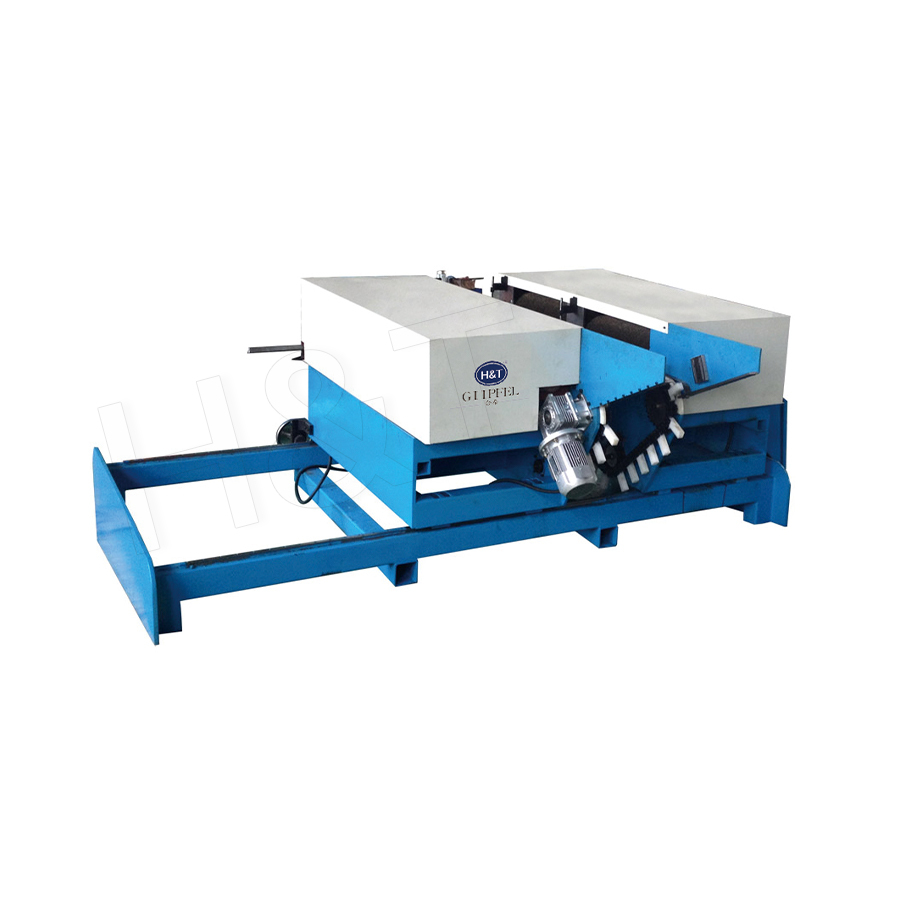
Every cutting, stamping, casting, milling, or drilling operation leaves behind burrs—thin slivers, raised edges, or sharp protrusions of material that remain at the boundary of the machined surface. While burrs may appear minor, they represent a significant quality, safety, and functional risk in finished components. A deburring machine systematically removes these burrs and sharp edges using mechanical, vibratory, fluid-pressure, electrochemical, or thermal mechanisms, restoring dimensional accuracy, improving surface quality, and enabling reliable downstream assembly and coating operations.
In modern production environments, deburring has evolved from a manual grinding operation to an automated, inline process step with defined quality standards, measurable output metrics, and integration into broader production line control systems. The shift from manual to automated deburring is driven by three factors: labor cost reduction (hand deburring costs $0.50–$3.00 per part versus $0.01–$0.15 per part for automated methods), quality consistency (manual deburring varies with operator fatigue and skill), and occupational health requirements (sustained hand grinding causes musculoskeletal disorders classified as occupational illness in many jurisdictions).
Understanding Burr Formation: Why Deburring Is Inevitable
Burrs form because metal is ductile—rather than fracturing cleanly at the edge of a cut or punch, it plastically deforms and bends over, leaving a thin projection of material. The size and type of burr depends on the process:
- Punching/blanking burrs: Form on the underside of the sheet opposite the punch direction, typically 0.05–0.5 mm in height. Burr height increases as the punch-to-die clearance increases and as the punch wears. These are the most common burr type in sheet metal fabrication.
- Drilling burrs: Form at both drill entry (minor) and drill exit (major) on the underside of the hole. Exit burrs can be 0.3–2 mm tall and present assembly interference in close-tolerance bore-to-shaft fits and blind fastener holes.
- Milling/turning burrs: Form at the end of a machined surface where the cutter exits the material. These are typically thin and easily removed but must be addressed before measurement or assembly to avoid false CMM readings.
- Sawing/shearing burrs: Relatively small (0.05–0.3 mm) but consistent—present on every cut edge. Circular saw cold cuts produce the smallest burrs of any mechanical cutting method, often requiring only light brushing or vibratory treatment to fully remove.
Deburring Technologies and Their Mechanisms
Belt Grinding and Brush Deburring Machines
Wide belt grinding machines feed flat sheet metal parts on a conveyor belt under one or more abrasive grinding heads. A single pass through a 1,350 mm wide belt grinding machine simultaneously deburrs all edges, removes scale and oxide from the cut surface, and achieves a consistent surface finish of Ra 0.4–1.6 µm. Production speeds of 3–12 meters per minute make this the highest-throughput deburring technology for flat sheet. Secondary brushing heads (nylon filament or SiC-impregnated fiber) follow the belt grinding head to round the edge slightly (controlled edge radius of 0.1–0.3 mm), which significantly improves coating adhesion and corrosion resistance at cut edges.
Vibratory Finishing Systems
Parts and abrasive media tumble together in a vibrating trough or bowl. The relative motion between media and part continuously abrades burrs from all accessible surfaces. Vibratory systems process batches of 5–500 kg of parts per load, making them economical for small, complex parts (castings, stampings, turned components) where individual manual deburring would be time-prohibitive. Process parameters—vibratory amplitude (typically 2–8 mm), frequency (25–50 Hz), media type, compound chemistry, and process time—are adjusted to achieve the target edge condition and surface finish.
High-Pressure Water Jet Deburring
Pump pressures of 200–700 bar create water jets with sufficient kinetic energy to shear away burrs from metal surfaces without abrasive contact. CNC-controlled nozzle positioning directs jets precisely at cross-drilled holes, internal passages, and complex 3D edge geometries that no other deburring method can reach as reliably. Part cleaning is integrated with the deburring cycle—parts exit the machine clean, dry (after an air-blow drying stage), and ready for inspection or coating. Water jet deburring is particularly valuable for precision hydraulic and fuel injection components where any abrasive particle contamination from media deburring would be catastrophic.
Electrochemical Deburring
An electrolytic cell positions a shaped cathode electrode close to the burr-bearing surface of the workpiece (anode). DC current causes selective anodic dissolution: burr tips, where current density is highest, dissolve first. The process produces a smooth, rounded edge with a controlled radius of 0.1–0.5 mm without mechanical contact. Cycle times of 15–60 seconds per workpiece make ECM deburring practical for high-value, precision components in automotive fuel systems, hydraulic valves, and aerospace hydraulic manifolds.
Thermal Energy Method (TEM)
A combustible gas-oxygen mixture fills a sealed chamber containing the workpiece. Ignition creates a pressure wave of 3–5 bar and a temperature pulse of 2,500–3,300°C lasting 20–40 milliseconds. Burrs—with their high surface-area-to-volume ratio—absorb heat faster than the bulk part and are oxidized and removed. Bulk part temperature rise is typically only 20–50°C, preserving dimensional accuracy. TEM is uniquely capable of simultaneously removing all burrs from every passage in complex die-cast or sintered parts in a single 1–2 second cycle.
Industry-Specific Deburring Requirements
| Industry | Critical Requirement | Preferred Deburring Method | Key Standard / Reference |
|---|---|---|---|
| Automotive hydraulics | Zero loose particles, internal cleanliness | Water jet or ECM | ISO 16232 (cleanliness) |
| Sheet metal fabrication | Edge rounding, surface finish | Belt grinding + brushing | Customer drawing edge spec |
| Medical devices | No sharp edges, bio-cleanliness | Vibratory (ceramic media) + water jet | ISO 13485, FDA 21 CFR |
| Die casting | All internal passages, blind holes | Thermal (TEM) | ASTM B85, component drawing |
| Aerospace | Fatigue edge prep, no re-contamination | Vibratory or ECM | AS9100, SAE AMS 2630 |
Common Questions About Deburring Machines
How is deburring quality defined and measured?
Deburring quality specifications define a maximum allowable burr height, typically 0.05–0.2 mm for precision components and 0.1–0.5 mm for structural parts. Measurement uses a calibrated optical comparator, profilometer, or tactile edge-sensing gauge. For internal cleanliness (automotive hydraulic components), particle counts per unit volume at defined particle size thresholds are measured by extracting the part's internal passages with solvent and analyzing the extract on a particle counter—a method standardized in ISO 16232. Visual inspection under defined lighting conditions at 5× magnification is the most common production-floor verification method.
What is the difference between deburring and edge rounding?
Deburring removes unwanted material projections (burrs) to restore the intended part geometry. Edge rounding (or edge blending) goes further—it intentionally introduces a controlled radius (typically 0.1–0.5 mm) on all cut edges, replacing the sharp 90° intersection with a smooth arc. Edge rounding significantly improves fatigue life (by removing stress concentrators), improves coating adhesion (eliminating the thin edge where coatings tend to pull back), and reduces injury risk. Many modern deburring machines combine both functions—removing burrs and simultaneously rounding edges—in a single pass.
Can vibratory deburring be used for parts that must maintain tight tolerances?
Vibratory finishing removes material from all accessible surfaces, including functional surfaces. The material removal rate depends on media type, hardness, and process time. For precision parts with tolerances tighter than 0.05 mm, process time and media selection must be validated to ensure that functional surfaces (bores, seating faces, thread flanks) do not have material removed beyond the tolerance budget. Plastic media with very fine abrasive loading, short cycle times, and frequent in-process measurement checks are used to deburr precision components without compromising dimensional compliance.