


 简体中文
简体中文 English
 日本語
日本語 한국어
한국어 Español
 русский


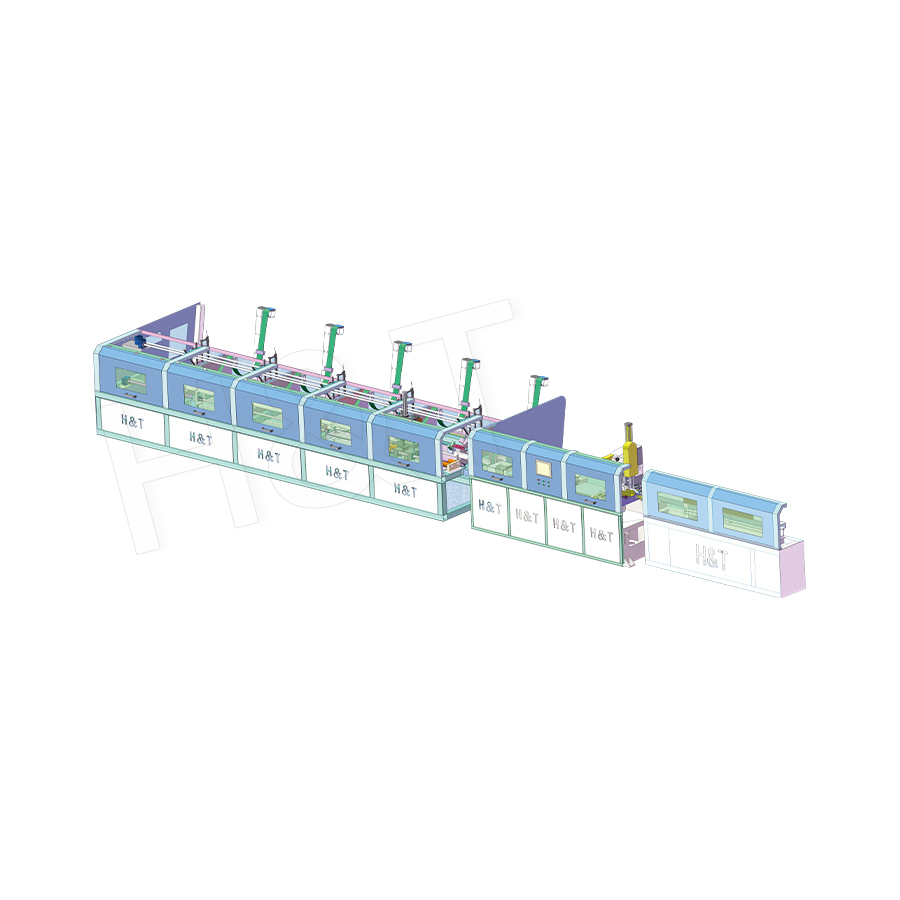
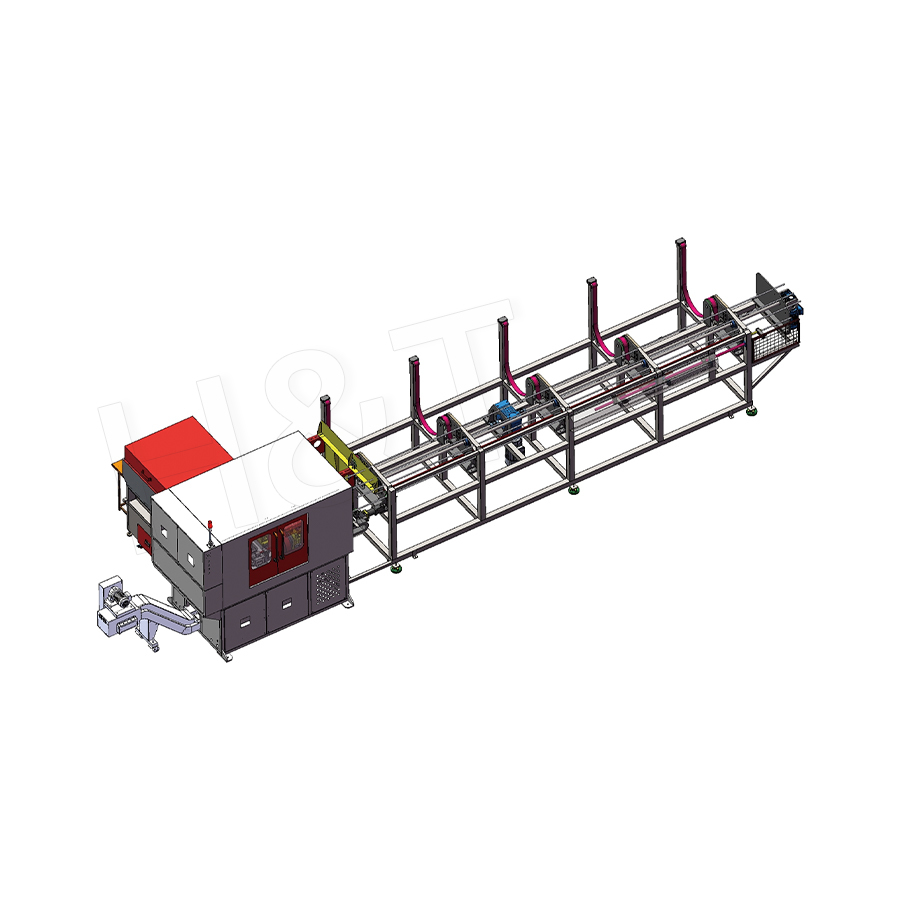
An Automation Line Machine is a production system in which a sequence of manufacturing operations—feeding, processing, inspecting, transferring, and discharging—is performed by interconnected mechanical and electronic equipment under unified control, with minimal or no human intervention at individual process steps. Raw materials enter at one end; finished or semi-finished products exit at the other, with all intermediate steps executed automatically and continuously.
What distinguishes an Automation Line Machine from a collection of individual automated machines is the integration: a central control system synchronizes all stations to a common cycle time (takt time), material transfer between stations is automated, and quality inspection is embedded within the production flow rather than performed as a separate offline step. This integration eliminates the inter-station queues, re-handling labor, and inspection delays that consume 30–60% of total lead time in non-integrated production environments.
Takt Time and Line Balancing: The Foundation of Automation Line Machine Design
Every Automation Line Machine is designed around a takt time—the cycle time at which the line must produce one unit to meet demand. Takt time is calculated as available production time divided by required demand volume. For a line producing 1,500 automotive tube assemblies in a 7.5-hour net shift, the takt time is 18 seconds per unit. All stations must complete their operations within 18 seconds; any station taking longer becomes a bottleneck that limits the whole line's output.
Station Time Balancing
If one station (e.g., CNC bending) takes 25 seconds but the takt time is 18 seconds, the line output is constrained to one part every 25 seconds—a throughput loss of 28%. Balancing solutions include: installing two bending machines in parallel (splitting the 25-second operation across two stations, each receiving every other part); redesigning the bending program to reduce cycle time (through faster axis speeds or fewer bends per station); or adjusting the upstream cut length to allow a simpler bending sequence. Discrete-event simulation tools model these options before hardware is committed, verifying that the balanced line achieves the target takt time.
Buffer Strategy
Small inter-station buffers (typically holding 3–10 parts) absorb brief station stoppages without stopping the entire line. Without any buffers, a 30-second downtime event at any single station stops all upstream and downstream stations simultaneously. With appropriately sized buffers, downstream stations can continue producing from buffer stock while the affected station is restarted, limiting the production loss of a 30-second fault to the affected station only rather than propagating it throughout the line.
A Tube Processing Automation Line Machine: End-to-End Example
A fully automated tube cutting, chamfering, and bending line for automotive brake tubes illustrates how individual process steps integrate into a synchronized production system:
- Tube magazine and auto-feeder (Station 0): A bundle of straight tubes (6-meter lengths) is placed in the magazine by a forklift operator. The auto-feeder separates individual tubes and feeds them one at a time into the line at the programmed rate. Changeover from one tube OD to another requires magazine adjustment in under 5 minutes.
- Servo circular saw (Station 1): The tube is advanced by a servo carriage to the programmed cut length (±0.2 mm accuracy) and cut by a carbide-tipped circular saw. Cut cycle time: 5–8 seconds for Ø8 mm × 0.7 mm brake tube.
- Double-end chamfering machine (Station 2): The cut tube is transferred automatically and both ends are chamfered simultaneously in 8–12 seconds. A vision system verifies chamfer presence before the tube advances.
- CNC tube bending machine (Station 3): The chamfered tube is loaded by robot into the CNC bender and bent to the programmed multi-radius 3D geometry in 15–20 seconds. Bend angle data is logged automatically per part serial number.
- Inline dimensional inspection (Station 4): A 3D tube measurement system checks key bend angles and distances against the nominal CAD geometry in 8–12 seconds. Non-conforming parts are automatically diverted to a reject bin with the measured deviation logged.
- Conveyor and stacking (Station 5): Accepted parts are conveyed to a stacking fixture, counted, and bundled for packaging or transfer to the next assembly stage. A production counter and batch report are generated automatically at shift end.
This integrated line produces 800–1,200 brake tube assemblies per shift with 2 operators (one for material replenishment at Station 0, one for line monitoring and exception handling), compared to 8–12 operators and 400–500 assemblies per shift in an equivalent manual process layout.
OEE: Measuring and Improving Automation Line Machine Performance
Overall Equipment Effectiveness (OEE) is the standard metric for quantifying Automation Line Machine performance. It is calculated as:
OEE = Availability × Performance × Quality
- Availability = (Planned production time − Unplanned downtime) / Planned production time. A line with 2 hours of unplanned downtime in an 8-hour shift has 75% availability.
- Performance = Actual output / Theoretical maximum output at ideal cycle time. If the line produces 700 parts in a 6-hour available window but the ideal cycle time allows 900, performance is 78%.
- Quality = Good parts / Total parts produced. If 15 of 700 parts are rejected, quality is 97.9%.
In this example: OEE = 75% × 78% × 97.9% = 57%—well below the world-class benchmark of 85%. Achieving 85% OEE on an Automation Line Machine requires attacking the largest availability, performance, and quality losses systematically using data-driven analysis tools such as fault log Pareto charts, cycle time trend analysis, and first-pass yield tracking by station.
Common Questions About Automation Line Machines
What is the typical lead time to design, build, and commission an Automation Line Machine?
For a medium-complexity tube processing line (5–8 stations), the total project timeline from contract award to production release is typically 16–28 weeks: 4–6 weeks for detailed engineering and simulation; 8–14 weeks for mechanical build, electrical wiring, and software development; and 4–8 weeks for factory acceptance testing (FAT), shipping, installation, site acceptance testing (SAT), and operator training. Larger or more complex lines (20+ stations, custom non-standard automation) may require 40–60 weeks from contract to production.
How is Automation Line Machine safety ensured for operators working near automated equipment?
Automation Line Machine safety is governed by machine safety standards (ISO 13849, IEC 62061) and implemented through: safety-rated perimeter fencing with interlocked access doors (opening a door triggers a controlled stop of all hazardous motion within the guarded zone); safety light curtains at material entry and exit points (detecting operator hand entry and triggering stop before the hazard is reached); two-hand controls for manual maintenance operations within the guarded zone; and emergency stop buttons accessible within 5 seconds of any position on the line. Safety function integrity is validated by a certified safety engineer and documented in a machine safety file before the line enters production.
What data should an Automation Line Machine capture and report automatically?
At minimum, a well-configured Automation Line Machine should capture: parts produced and rejected per shift (with rejection reason code per station); station cycle times and deviation from target; downtime events with timestamp, duration, and fault code; and critical process parameter values per part (bend angles, cut lengths, torque values, inspection measurements). This data enables automatic shift reports, OEE calculation, Pareto analysis of downtime causes, and part-level traceability linking each finished part to its production data—all without manual data entry. Connecting this data stream to a plant-level MES via OPC-UA or MQTT provides real-time production visibility across the entire facility.