


 简体中文
简体中文 English
 日本語
日本語 한국어
한국어 Español
 русский


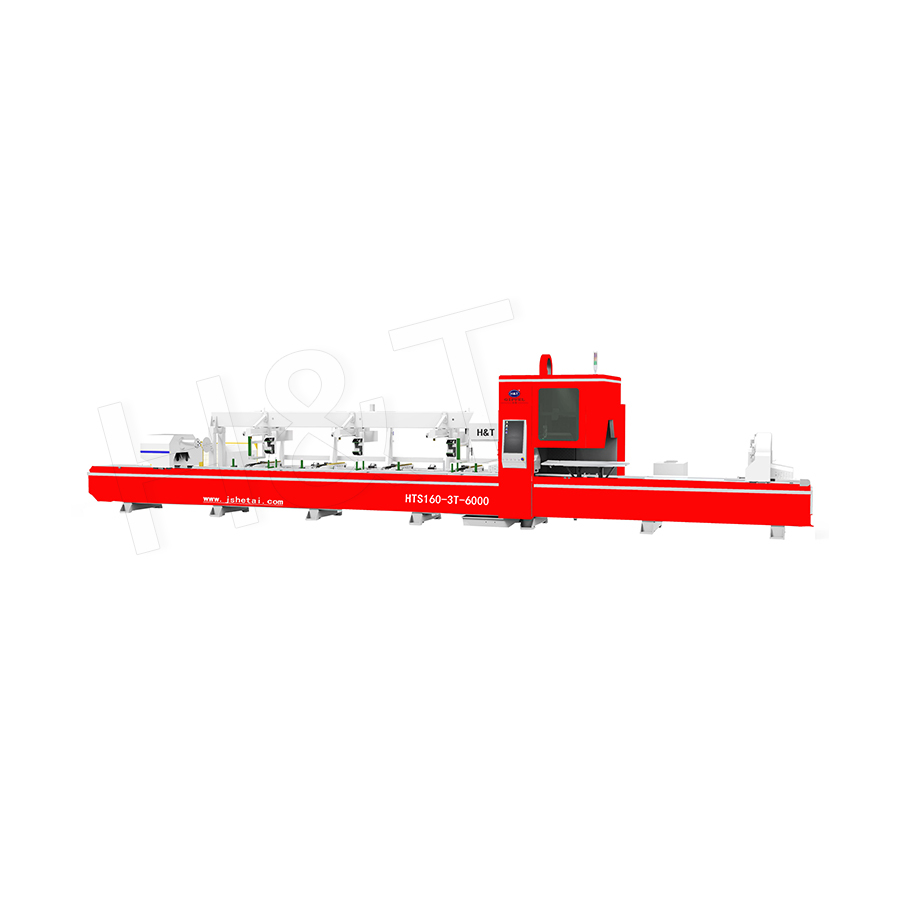
Laser Cutting Machine is a thermal material-removal process that focuses a high-energy laser beam onto a workpiece surface, locally melting, vaporizing, or burning through the material within milliseconds. A high-pressure assist gas—oxygen, nitrogen, or compressed air—expels the molten or vaporized material from the kerf, leaving a clean, precisely contoured cut edge. Because the entire operation is CNC-controlled, the cutting head traces any programmed 2D path or 3D contour with no tooling contact, no mechanical force on the part, and with kerf widths as narrow as 0.1 mm.
Today's Laser Cutting Machine installations range from compact 1.5 kW fiber laser systems for thin-sheet job shops to gantry-style 30 kW machines capable of cutting carbon steel up to 40 mm thick in production environments. The technology's combination of precision, speed, and material versatility has made it the dominant cutting process for flat sheet metal profiling globally, with the global Laser Cutting Machine market valued at over USD 5 billion and growing steadily as fiber laser costs continue to fall.
The Physics Behind Laser Cutting Machine
Understanding how laser energy interacts with material helps explain why different materials and thicknesses respond differently to Laser Cutting Machine and why process parameter selection matters so much:
Energy Absorption and the Role of Wavelength
Not all laser energy directed at a surface is absorbed—reflectivity determines how much is reflected away and how much is converted to heat. At the CO₂ laser wavelength of 10.6 µm, most metals are highly reflective (copper reflects over 98%), while non-metals absorb efficiently. At the fiber laser wavelength of 1.06 µm, metal absorptivity is significantly higher: steel absorbs 35–40%, stainless steel 40–50%, and even copper absorbs approximately 5–10%—enough for reliable cutting with sufficient laser power. This wavelength advantage is why fiber lasers have displaced CO₂ lasers for metal cutting.
Focus Position and Its Effect on Cut Quality
The focal point position relative to the material surface directly controls kerf width and cut-face quality. For thin sheet (under 3 mm), focus is typically set at or slightly above the top surface to maximize power density at the point of initial material entry. For thick plate, focus is set 1/3 to 1/2 of the material thickness below the top surface, ensuring the laser beam maintains sufficient intensity throughout the full material depth. Incorrect focus position is one of the most common causes of rough cut surfaces and excessive dross formation.
Cutting Speed and Power Density Trade-offs
For a given laser power and material thickness, there is an optimal cutting speed window. Too slow: excess heat input causes widened kerf, increased HAZ, and re-solidified dross. Too fast: insufficient energy melts the full thickness, producing incomplete cuts or rough striations on the cut face. A 6 kW fiber Laser Cutting Machine 6 mm carbon steel with oxygen typically operates optimally at 3.5–5.5 m/min; stepping outside this window by 20% significantly degrades edge quality.
Material-Specific Laser Cutting Machine Guidelines
| Material | Recommended Assist Gas | Max Thickness (6 kW fiber) | Key Consideration |
|---|---|---|---|
| Carbon steel | O₂ (speed) or N₂ (quality) | 25–30 mm | O₂ cuts faster; N₂ gives oxide-free edge |
| Stainless steel | N₂ (99.999% purity) | 20–25 mm | High-purity N₂ prevents edge discoloration |
| Aluminum alloy | N₂ or compressed air | 15–20 mm | High reflectivity requires high peak power |
| Copper / brass | O₂ or N₂ | 6–10 mm | Fiber laser only; back-reflection protection required |
| Acrylic / plastics | Compressed air or N₂ | 25–50 mm (CO₂) | CO₂ preferred; fire risk with O₂ |
Laser Cutting Machine Economics: Cost Per Part Analysis
Understanding the true cost structure of Laser Cutting Machine helps manufacturers evaluate its ROI against alternative processes and optimize operational decisions:
Primary Cost Components
- Machine depreciation: A mid-range 6 kW fiber Laser Cutting Machine (3,000 × 1,500 mm table) typically costs USD 200,000–350,000. Amortized over 10 years at 4,000 operating hours/year, the depreciation cost is approximately USD 5–9 per operating hour.
- Energy cost: A 6 kW machine draws approximately 15–20 kW total (including chiller, compressor, extraction). At USD 0.12/kWh, energy cost is USD 1.80–2.40 per hour—significantly lower than plasma cutting at equivalent power.
- Assist gas cost: Nitrogen at high pressure (12–20 bar) is the largest consumable cost for stainless and aluminum cutting. A 6 kW machine cutting 3 mm stainless with nitrogen consumes approximately 30–50 m³/hour; at USD 0.15–0.25/m³ (bulk nitrogen), this is USD 4.50–12.50 per hour. Oxygen cutting of carbon steel costs approximately 10× less per hour in gas consumption.
- Nozzle and lens maintenance: Cutting nozzles (USD 5–15 each) typically last 8–40 hours of cutting time depending on material. Protective lenses (USD 50–200) last 200–500 hours. These consumable costs are typically USD 1–3 per operating hour.
Nesting Efficiency as a Cost Lever
For sheet metal Laser Cutting Machine, material cost typically represents 60–80% of total part cost. Nesting software that optimizes part layout on the sheet can increase material utilization from 70% (simple manual nesting) to 85–92% (automated nesting with remnant management), directly reducing cost per part by 15–25% without any change to the laser process itself.
Tube and Profile Laser Cutting Machine
While flat sheet Laser Cutting Machine is the most common application, tube and profile Laser Cutting Machines—which rotate and advance the workpiece through a cutting head on a 4- to 6-axis system—extend laser precision to round tubes, square sections, rectangular sections, and structural profiles:
- Saddle cuts and cope joints: The CNC rotates and advances the tube while the laser traces the complex curved geometry of a saddle cut, producing a precisely fitted tube-to-tube join that eliminates manual grinding. Fit-up accuracy of ±0.3 mm on saddle cuts reduces weld gap variation and improves weld quality on structural tube assemblies.
- Slot and hole cutting: Rectangular slots, round holes, oblong openings, and intricate patterns can be cut through the tube wall at any position along the tube length and around its circumference, enabling structural members with built-in connection features that would require separate drilling or milling operations on conventional equipment.
- Productivity: A tube Laser Cutting Machine can process a standard 6-meter structural section with 8 cut operations (length cut + 7 features) in under 3 minutes, compared to 15–40 minutes for equivalent manual sawing, drilling, and grinding operations.
Software and Automation Integration
The full productivity potential of Laser Cutting Machine is only realized when the machine is integrated with the surrounding digital workflow:
- CAD/CAM and nesting software: DXF or DWG part geometry is imported directly into nesting software, which automatically arranges parts on sheets, generates cutting programs, and calculates material utilization, scrap weight, and estimated cutting time—eliminating manual programming and reducing job setup time from hours to minutes.
- Automated sheet loading/unloading: Pallet changers (storing 2–10 sheet pallets) allow the operator to pre-load sheets while the machine cuts, achieving near-continuous operation. Tower storage systems with automated material handling robots can support unattended overnight production by storing 20–50 sheet pallets and automatically feeding sheets to the machine throughout the night shift.
- Sorting and part removal: Automated sorting systems use suction cups or magnetic grippers to lift cut parts from the skeleton and deposit them into labeled bins or conveyor lanes, enabling fully automated part flow from raw sheet to sorted finished parts without operator intervention between jobs.
Common Questions About Laser Cutting Machine
What causes striation (lines) on the laser cut edge?
Striations are periodic surface marks on the cut face caused by oscillations in the melt flow as it is expelled from the kerf by the assist gas. On carbon steel with oxygen, some striation is normal on thicker material (above 8 mm). On stainless and aluminum with nitrogen, striation is a sign of process parameter deviation—typically cutting speed slightly too high, gas pressure too low, or focus position incorrect. Adjusting these parameters within the optimal window typically eliminates visible striations, reducing post-cut finishing requirements to zero for most applications.
How does Laser Cutting Machine handle galvanized or coated sheet metal?
Hot-dip galvanized steel (Z275 coating, ~20 µm zinc layer) can be laser cut with compressed air assist gas, which helps oxidize and eject the zinc-rich melt without excessive fume generation. Pre-painted (primer-coated) steel and powder-coated material can also be cut, though heavy organic coatings (above 80 µm) may cause edge burning and increased fume extraction requirements. In all cases, the Laser Cutting Machine process does not require coating removal before cutting—a significant advantage over plasma and flame cutting, where coating preparation is often needed.
Is Laser Cutting Machine suitable for small-batch and prototype production?
Yes—Laser Cutting Machine is one of the most economical processes for small-batch and prototype work precisely because it requires no hard tooling. A new part geometry is introduced by uploading a DXF file and nesting it on a sheet; the first part can be cut within 10–30 minutes of receiving the CAD file. There is no die cost, no setup lead time, and no minimum order quantity, making Laser Cutting Machine the standard prototyping method for sheet metal parts across all industries.
How should laser-cut parts be handled to prevent surface contamination?
Laser-cut stainless steel parts should be handled with clean gloves or suction-cup lifters to prevent fingerprint contamination (iron transfer from fingerprints causes rust staining). Carbon steel parts cut with oxygen develop a thin iron oxide layer on the cut edge that should be removed by mechanical brushing or pickling before painting or galvanizing. Aluminum parts cut with nitrogen have a clean, oxide-free surface that can be anodized immediately without further surface preparation.