


 简体中文
简体中文 English
 日本語
日本語 한국어
한국어 Español
 русский


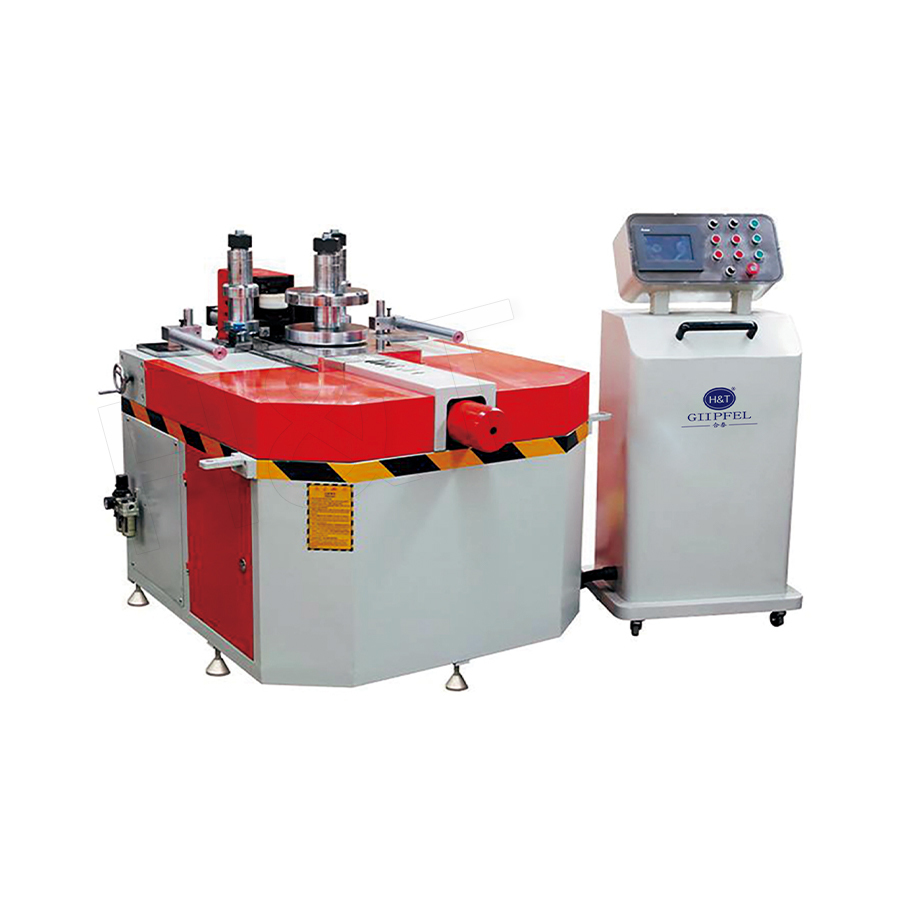

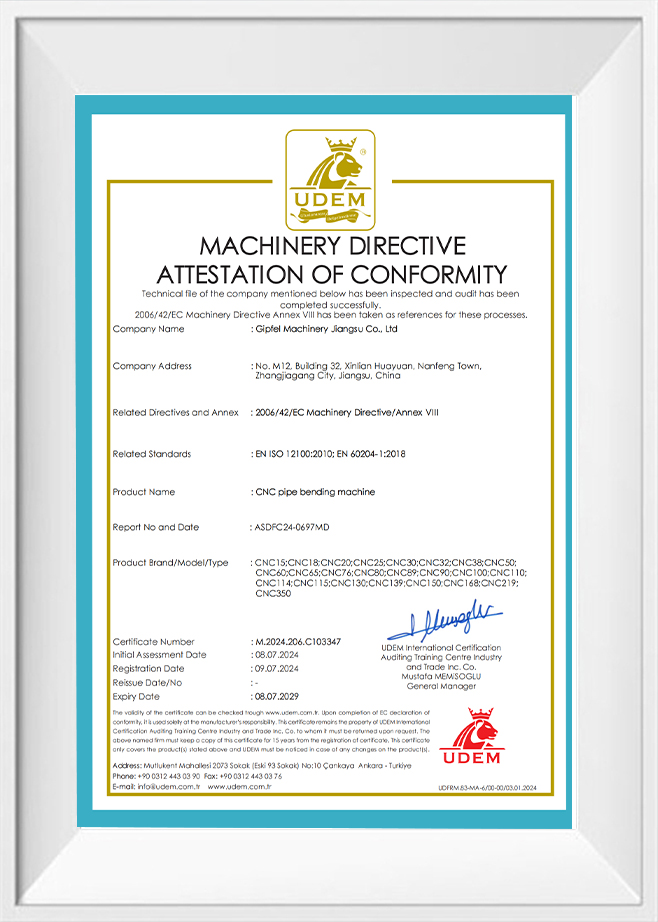



3D Rolling Bending Machine is a CNC-controlled metal forming process that uses three or more independently adjustable rollers to continuously bend metal profiles, tubes, or plates into complex curved geometries in three-dimensional space. Unlike conventional 2D roll bending—which produces simple circular arcs in a single plane—3D Rolling Bending Machine simultaneously controls the workpiece's curvature in the X, Y, and Z directions, enabling the production of spatial curves such as helices, compound arcs, ellipses, parabolas, and freeform 3D paths.
The three rollers function as a progressive-deformation system: as the workpiece is fed between them, each roller's position is independently adjusted by servo drives under CNC control, generating localized plastic deformation that bends the cross-section into the target curved path. CNC roller positioning repeatability of approximately 0.01 mm enables the production of complex architectural, aerospace, and structural components that would be impossible to achieve with manual or 2D roll bending equipment.
How 3D Rolling Bending Machine Works
The Three-Roller Forming Principle
In a standard three-roller configuration, two rollers serve as support/drive rollers (fixed or adjustable in position) and one roller is the bending roller (vertically adjustable). As the workpiece passes between the rollers, the bending roller's vertical displacement determines the local radius of curvature at the contact point. By continuously varying this displacement as the profile is fed through, a continuously variable radius curve—rather than a fixed-radius arc—can be produced along the full length of the workpiece.
3D Spatial Forming
For true 3D curve production, the roller assembly is mounted on a system that also allows lateral (Y-axis) and rotational (twist) adjustment of the roller contact point as the profile feeds through. This enables the bending direction to change continuously along the workpiece length, producing helical, compound-curved, and spatially twisted shapes. The CNC system interpolates all roller axes simultaneously, translating the 3D target curve geometry into a coordinated multi-axis roller motion sequence.
Multi-Pass Bending for Tight Radii
For radii tighter than can be achieved in a single pass (typically R/section-height ratios less than 5:1 for structural sections), the CNC program executes multiple passes with incrementally increasing roller displacement, gradually bending the profile to the target radius without overstressing the material. The number of passes required depends on material ductility and the target radius; aluminum sections may require 3–5 passes, while softer metals may reach the target in 1–2 passes.
Key Technical Advantages
High Repeatability and CNC Precision
Servo-driven roller positioning with encoder feedback achieves roller position repeatability of 0.01 mm, which translates to radius consistency of better than ±0.5% across the full profile length. This precision is critical for architectural structures where identical curved components must assemble with uniform joint gaps, and for aerospace frames where curve deviation affects aerodynamic performance.
Low Residual Stress and Dimensional Stability
Because 3D Rolling Bending Machine distributes the bending deformation gradually and progressively along the profile length—rather than applying it at a single point as in press bending—the residual stress distribution in the finished part is more uniform and lower in magnitude. This results in better dimensional stability over time, reduced springback after forming, and lower risk of delayed deformation during downstream welding or coating operations.
Wide Range of Profile Types and Sizes
3D Rolling Bending Machines accommodate a broad cross-section of structural and architectural profiles by equipping the rollers with profile-matched grooves or flat surfaces:
- Round tubes and pipes (Ø20 mm to Ø500 mm)
- Square and rectangular hollow sections (20×20 to 400×200 mm)
- Angle steel (L30×30 to L200×200 mm)
- Channel steel (U / C sections, up to C300)
- H-beams and I-beams (up to HEA 300 and heavier on large machines)
- Custom aluminum extrusions (T-sections, Z-sections, curtain wall profiles)
- Flat plate (for cone and dished head pre-forming)
Automation and Integrated Measurement
Advanced 3D Rolling Bending Machine systems integrate online radius measurement—using laser distance sensors or encoder-based curvature calculators—that feed real-time curve geometry data back to the CNC controller. The system automatically adjusts roller positions to correct deviations between the actual and target radius mid-pass, without stopping the machine. This closed-loop radius control reduces scrap rates on complex profiles from 5–15% (open-loop) to under 1%.
Comparison: 3D Rolling Bending Machine vs. Other Bending Methods for Profiles
| Criterion | 3D Rolling Bending Machine | Stretch Bending | Press Bending |
|---|---|---|---|
| 3D spatial curves | Yes (native capability) | Limited (die-constrained) | No |
| Variable radius curves | Yes (continuous) | Limited | No |
| Max profile size | Large (HEA 300+) | Large | Medium |
| Springback control | Good (closed-loop) | Excellent (<0.5°) | Moderate |
| Tooling cost per profile | Low (roller groove sets) | High (custom die per radius) | Medium |
| Best for | Complex 3D curves, variable R | Long uniform arcs, low springback | Short discrete bends |
Industry Applications of 3D Rolling Bending Machine
Architectural and Structural Construction
3D Rolling Bending Machine is the primary technology for producing curved structural steel elements in large-span buildings, stadium canopies, airport terminal roofs, and pedestrian bridges. Structural I-beams, hollow sections, and channel profiles bent into helical or compound-curved geometries are commonly used in feature staircases, curved handrails, and space-frame nodes where the curve changes direction in 3D space.
Automotive and Rail Vehicle Frames
Roof arches, window surrounds, and body side structural rails for buses, rail cars, and special-purpose vehicles follow complex 3D curve paths that conform to the vehicle's exterior design surface. 3D Rolling Bending Machine produces these curved structural members from aluminum extrusions or steel hollow sections in a single machine pass, with radius accuracy sufficient for direct assembly into the vehicle frame without additional fitting operations.
Shipbuilding and Offshore Structures
Ship hull frames, curved deck beams, and pipe bends in topside structures of offshore platforms require large-radius bending of heavy steel sections. 3D Rolling Bending Machines for shipbuilding applications can process sections up to 600 mm × 300 mm with wall thicknesses up to 30 mm, delivering the compound curves required by ship hull geometry without the thermal distortion associated with heat bending.
Solar and Energy Structures
Curved mounting rails for solar panel arrays on curved roofs or building facades, wind turbine nacelle frames, and energy storage system housing structural members all benefit from 3D Rolling Bending Machine's ability to produce lightweight, precisely curved aluminum profiles that conform to complex architectural or engineering surface geometries.
Common Questions About 3D Rolling Bending Machine
How is a 3D curve programmed into the machine?
The target 3D curve geometry is typically defined as a point cloud, spline, or NURBS curve in a 3D CAD model. Offline programming software imported this geometry, discretizes the curve into roller position commands at defined feed increment intervals, applies springback compensation, and generates the multi-axis CNC program. The program can be validated by simulation before the first physical bend, reducing first-article scrap on complex geometries.
What is the minimum achievable bend radius for structural sections?
For a standard structural steel square hollow section (e.g., RHS 100×100×5 mm), the minimum achievable bend radius by cold rolling is approximately 8–12× the section height (800–1,200 mm centerline radius) without significant cross-section distortion. Tighter radii require multiple passes with intermediate heat treatment or the use of mandrel-assisted rolling, which is available on specialized machines.
Does cross-section distortion (ovalization) occur during 3D Rolling Bending Machine?
Yes, some degree of cross-section ovalization or flange distortion is inherent in roll bending. For round tubes, ovalization at the bend is typically limited to 3–8% of the nominal OD when the bend radius is greater than 10× OD. For square and rectangular sections, side bulging at the outer radius can be controlled by profile-matched roller grooves that support all four sides during bending. For I-beams and channels, web buckling is prevented by adjusting the speed and pressure of the bending roller to maintain controlled deformation rates.