


 简体中文
简体中文 English
 日本語
日本語 한국어
한국어 Español
 русский


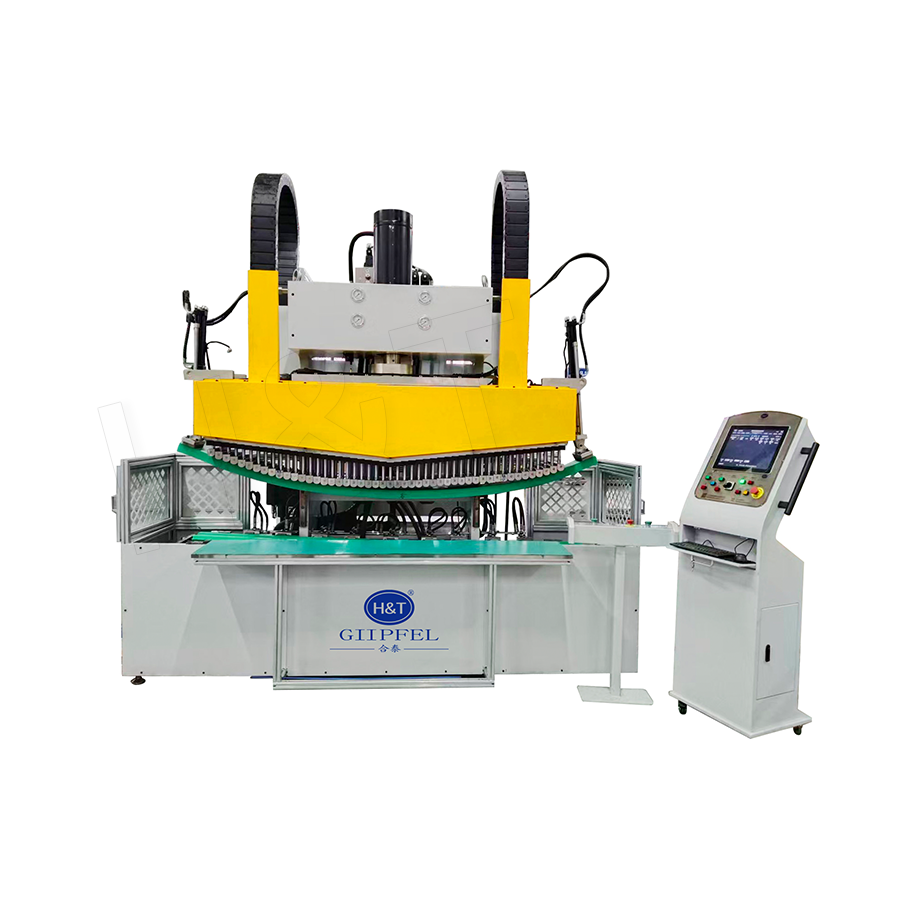
Press Bending Machine is a metal forming process in which a workpiece—most commonly a flat sheet or plate—is placed between two dies (upper and lower) and subjected to a controlled force from a press machine (also known as a press brake or stamping machine). The applied force causes the material to plastically deform at the point of contact with the dies, producing a bend of a defined angle and geometry. Unlike continuous roll bending or draw bending, Press Bending Machine creates a bend at a single, localized point along the workpiece in each stroke of the press.
Press Bending Machines vary from simple manually operated presses to sophisticated CNC hydraulic press brakes capable of bending plates up to 12 meters long with bending force capacities ranging from 40 tons to 3,000 tons, depending on the application. They are a cornerstone of sheet metal fabrication across industries including machine building, construction, shipbuilding, automotive, HVAC, and electrical enclosures.
Main Components of a Press Bending Machine
Understanding the Press Bending Machine's structure clarifies how each component contributes to forming precision and safety:
- Frame and worktable: The welded or cast steel frame supports all mechanical and hydraulic loads. The lower die is mounted on the worktable, which provides the rigid reference surface against which the sheet metal is formed. Frame deflection under load is a key factor in bend angle consistency along the full bending length.
- Upper die (ram / pressure head): The vertically movable upper tool holder carries the punch (upper die). It is driven downward by the hydraulic or mechanical drive system, applying the forming force to the sheet metal. CNC back-gauge stops and ram depth control determine bend angle and position.
- Lower die (die block): Typically a V-die, U-die, or acute-angle die matched to the punch profile. The V-opening width determines the bending radius and the force required; a wider V-opening requires less force but produces a larger inside radius.
- Drive system: Hydraulic systems are the most common for large press brakes, providing high force, controllable speed, and programmable ram positioning. Mechanical (eccentric gear) drives are used for high-speed blanking and coining operations. Servo-electric drives are increasingly adopted for energy efficiency and precision in CNC press brakes.
- Back gauge system: CNC-controlled back gauges position the sheet metal against reference fingers before each stroke, ensuring consistent bend location along the workpiece. Multi-axis back gauges (up to 6 axes) handle complex flanging sequences on irregularly shaped blanks.
- Safety systems: Safety light curtains, two-hand control panels, safety-rated speed limits during the closing phase (muting zones), and emergency stop circuits comply with international machine safety standards (ISO 13849, EN 12622) to protect operators from press closing injuries.
Working Principle: The Press Bending Machine Cycle
- Sheet positioning: The sheet metal blank is placed on the lower die and positioned against the back gauge fingers, which locate it at the programmed distance from the die centerline to establish the correct bend line position.
- Fast approach: The upper die descends rapidly at reduced force until it is within a few millimeters of the sheet surface (typically 5–10 mm above contact). Speed is then automatically reduced for safe, controlled forming.
- Forming stroke: The upper die continues downward at bending speed, contacting the sheet and forcing it into the V-die opening. Material flows plastically at the bend line, taking the angle formed by the die geometry and the ram penetration depth.
- Springback compensation: The CNC system advances the ram to a depth slightly greater than the nominal target angle (over-bending), so that after the ram retracts and the sheet springs back elastically, the final angle equals the target. The required over-bend is material-dependent—typically 1°–8° for common sheet steels.
- Return stroke: The upper die retracts to its home or safe position. The formed sheet can be repositioned for the next bend, or removed if the program is complete.
For CNC press brakes, the full cycle—positioning, bending, and retraction—for a single bend takes 3–10 seconds depending on sheet thickness and machine size. A multi-bend enclosure panel with 6 bends can typically be completed in 60–120 seconds total.
Press Bending Machine Methods: Air Bending, Bottoming, and Coining
The three primary Press Bending Machine methods differ in the degree to which the sheet contacts the die, producing different trade-offs between accuracy, springback, and tooling force:
Air Bending
The punch presses the sheet into the V-die opening but does not contact the die walls or bottom. The bend angle is determined by the ram penetration depth, not the die angle. Air bending requires the least forming force (approximately 25–30% of bottoming force for the same material and thickness), allows a single die set to produce multiple different angles, and is the dominant method on CNC press brakes. The trade-off is greater sensitivity to material thickness and yield strength variation, requiring regular springback compensation updates.
Bottoming (Bottom Bending)
The punch drives the sheet fully against the die sidewalls, bringing the material into full contact with the V-die angle. This locks the bend angle to the die geometry, reducing springback variation to less than ±0.5°—more consistent than air bending. Bottoming requires 3–5× more force than air bending for the same part, and each die angle can only produce one bend angle.
Coining
The highest-force method: the punch compresses the material at the bend line to the point where plastic deformation occurs through the full thickness, essentially "coining" the bend geometry into the material. Springback is virtually eliminated, producing angular accuracy of ±0.25° or better. Coining requires 5–30× the force of air bending and is reserved for precision components requiring the tightest angular tolerances, such as precision enclosures and aerospace bracket flanges.
| Method | Relative Force Required | Angular Accuracy | Die Flexibility |
|---|---|---|---|
| Air bending | 1× (base) | ±1–2° | Multiple angles per die set |
| Bottoming | 3–5× | ±0.5° | One angle per die |
| Coining | 5–30× | ±0.25° | One angle per die, premium tooling |
Key Advantages of Press Bending Machine
Versatility Across Part Sizes and Geometries
A single CNC press brake can produce parts ranging from small precision brackets (100 mm × 50 mm) to large enclosure panels (3,000 mm × 1,500 mm) by combining different punch and die sets in the tool holder. With a segmented die system, a single 3-meter press brake can handle sheet widths from 100 mm to 3,000 mm without repositioning the tooling.
High Volume Production Capability
With CNC control, servo-electric drives, and automated back gauge positioning, modern press brakes execute bending cycles in 3–5 seconds per bend on standard sheet thicknesses (1–4 mm), supporting output rates of 400–800 bends per hour for simple repetitive production. Automated material handling (robotic loading/unloading) eliminates the operator handling time between bends, further increasing throughput.
Wide Material and Thickness Range
Press Bending Machine is applicable from thin sheet (0.5 mm stainless steel for precision enclosures) to heavy plate (100 mm carbon steel for ship frames and pressure vessels), provided the press tonnage matches the forming requirements. Forming force scales approximately with material tensile strength × thickness² × bending length, so thicker and stronger materials require proportionally larger presses.
CNC Precision and Repeatability
Closed-loop hydraulic or servo-electric CNC press brakes achieve ram position repeatability of ±0.01 mm, translating to angular repeatability of ±0.1° on standard sheet thicknesses. Coupled with real-time angle measurement systems (e.g., optical sensors in the die area), these machines can self-correct for material variation mid-production, maintaining consistent angles across the full batch without operator adjustment.
Industry Applications of Press Bending Machine
Sheet Metal Fabrication and Enclosures
Electrical control panels, server rack enclosures, HVAC duct sections, and machine covers are among the most common Press Bending Machine applications. Batch sizes range from 1 piece (custom fabrication) to 10,000+ pieces (OEM production), demonstrating Press Bending Machine's flexibility across both job shop and production environments.
Automotive Structural Parts
Body reinforcement brackets, longitudinal beam flanges, and suspension support brackets are press-bent from advanced high-strength steel (AHSS) blanks. Bending forces of 500–2,000 tons are required for thick AHSS sections; specialized servo-hydraulic press brakes with active crowning (compensating for frame deflection) ensure consistent bend angles across the full part width.
Construction and Infrastructure
Large-format press brakes are used to form structural steel plates into box beams, pipe sections, and custom profiles for bridges, industrial buildings, and offshore structures. Bending of plates up to 50 mm thick and 12 meters long is achievable on heavy-duty press brakes with tandem or triple-press configurations.
Precision Components
Aerospace brackets, medical equipment frames, and precision scientific instrument housings require tight angular tolerances (±0.25°–0.5°) that can be achieved through bottoming or coining in a CNC press brake. Offline programming from CAD models and digital die library management reduce first-article setup time to under 20 minutes for complex multi-bend parts.
Common Questions About Press Bending Machine
How do I calculate the required press tonnage for a bending operation?
The standard formula for air bending force is: F = (1.42 × Rm × t² × L) / V, where F is force in kN, Rm is material tensile strength (N/mm²), t is sheet thickness (mm), L is bending length (mm), and V is the V-die opening width (mm). For example, bending a 2 mm thick S235 steel (Rm = 360 N/mm²) sheet 1,000 mm wide in an 8V die (V = 8t = 16 mm) requires approximately 640 kN (64 tons). Online bending force calculators provided by tooling suppliers simplify this calculation for daily production use.
What causes a bent part to have a different angle in the center vs. the ends?
This is caused by machine frame deflection (crowning effect): as the bending force is applied, the press beam deflects upward at its center, producing less forming force at the center of the part than at the ends. This results in a larger (more open) angle at the center. The solution is hydraulic crowning (actively bowing the lower beam upward) or mechanical wedge crowning, which compensates for the deflection and ensures uniform bend angle along the full bending length.
What is the minimum flange length for Press Bending Machine?
The minimum flange length (the shorter of the two legs of the bent part) is determined by the V-die opening width: the minimum flange must be at least 0.7 × V-opening to prevent the sheet from slipping into the die. For a standard 8V die with an 8-mm V-opening (for 1 mm sheet), the minimum flange is approximately 5.6 mm. Using a smaller V-die allows shorter flanges but requires more forming force.
How often do press brake tooling (punches and dies) need to be replaced?
Hardened tool steel punches and dies used for standard carbon steel bending typically last 500,000–2,000,000 bending strokes before radius wear becomes significant enough to affect part quality. Stainless steel and AHSS materials cause faster tooling wear due to higher abrasiveness; carbide-tipped or coated tooling can extend service life by 3–5× in these applications. Regular cleaning and lubrication of tooling contact surfaces are the most cost-effective maintenance measures.