

 简体中文
简体中文 English
 日本語
日本語 한국어
한국어 Español
 русский
No. 196, Lifa Avenue, Haian City, Nantong, Jiangsu Province, China

News Category
Product Category
What is the difference between press bending and roll bending?
The fundamental difference between press bending and roll bending lies in how force is applied and what geometry the process produces. Press bending uses a punch (upper die) that descends onto sheet metal resting on a lower die to create a single discrete bend at a defined angle — the deformation is concentrated at one point. Roll bending passes metal through a set of rollers that progressively and continuously curve the material into an arc, radius, or full cylinder — the deformation is distributed across a length. Put simply: press bending makes sharp or angled bends; roll bending makes curved or circular shapes.
Both are essential metal forming processes, but they serve entirely different geometric outcomes. A press brake bends a sheet at 90° to make a box panel; a plate roll curves a sheet into a pipe section or cylindrical vessel. Choosing incorrectly between them leads to either an impossible outcome (trying to roll a sharp corner) or a wasteful one (press bending dozens of incremental points to approximate a curve that a rolling machine would produce in one pass). This article explains both processes in depth, compares them across all key parameters, and provides guidance for selecting the right process for each application.
Content
- 1 How Press Bending Works: Principle and Process
- 2 How Roll Bending Works: Principle and Process
- 3 Core Technical Differences: A Direct Comparison
- 4 Geometric Output: What Each Process Can and Cannot Produce
- 5 Springback: How Each Process Handles This Key Challenge
- 6 Material Range and Thickness Capabilities
- 7 Tolerances and Dimensional Accuracy
- 8 Production Rate and Setup Time
- 9 Typical Industrial Applications: Where Each Process Dominates
- 10 Combining Both Processes: When Fabrication Requires Both
- 11 Decision Guide: Which Process to Choose
How Press Bending Works: Principle and Process
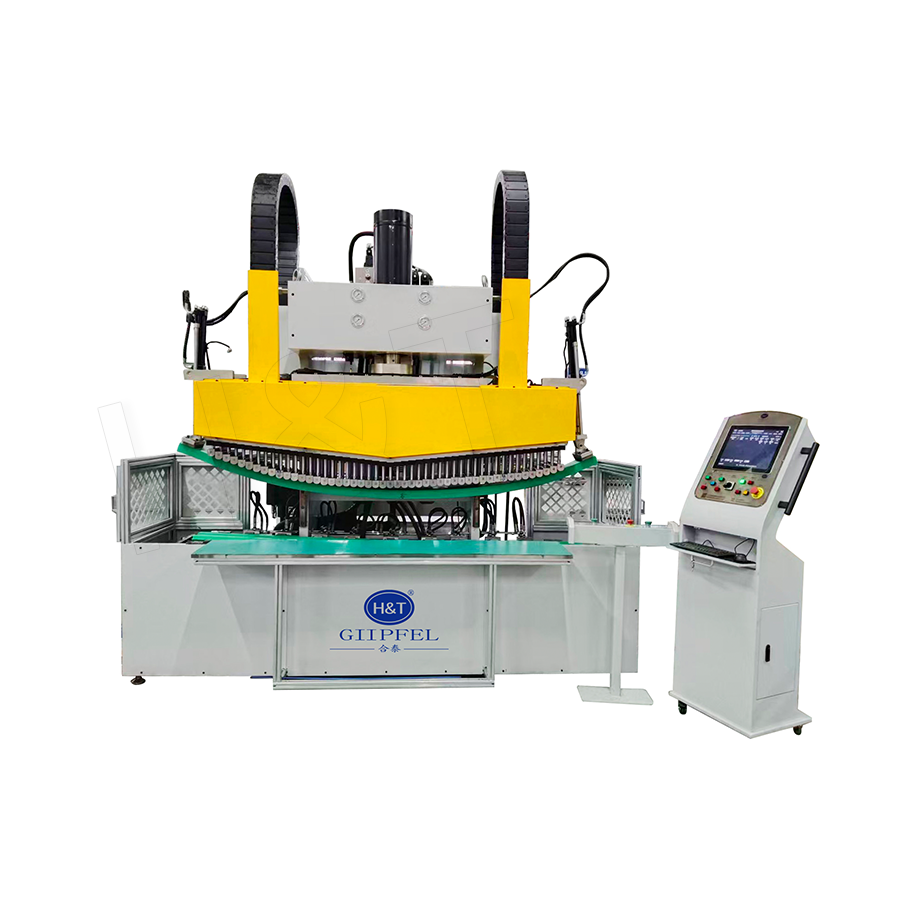
Press bending — performed on a press brake or stamping machine — is a point-deformation process. The sheet metal is positioned on a lower die (the die), and an upper die (the punch) descends under hydraulic, mechanical, or servo-electric force to press the metal into the die cavity. The metal deforms plastically at the line of contact between the punch tip and the sheet, creating a bend angle determined by the geometry of the tooling and the depth of the punch stroke.
Main Components of a Press Brake
- Frame and worktable: The rigid structural body that supports all machine components. The lower die is mounted on the worktable and must remain stationary and precisely aligned with the upper die throughout the stroke.
- Upper die (punch): The descending tool that contacts the metal surface and forces it into the lower die geometry. Punch profiles range from acute-angle V-tips (for sharp bends) to radiused tips (for gentler bends) and gooseneck profiles (for deep box forming).
- Lower die (die block): The stationary V-groove or other profiled block into which the metal is forced. The V-opening width (die opening) relative to material thickness significantly affects the required bending force and the resulting bend radius.
- Drive system: Hydraulic drive is most common for high-tonnage press brakes (up to 1,000 tonnes or more), providing smooth, controllable force throughout the stroke. Mechanical (eccentric gear) drives offer high speed. Servo-electric drives provide the highest positioning accuracy (±0.01 mm) and energy efficiency.
- CNC back gauge: A programmable stop system that positions the metal precisely before each bend, enabling repeatable part geometry across a production run without manual measuring.
- Control system: Modern press brakes use CNC controllers with graphical bend sequence programming, automatic springback compensation, and closed-loop angle measurement via laser or contact sensors.
- Safety devices: Light curtains, safety mats, two-hand controls, and emergency stops are mandatory on industrial press brakes to protect operators from the closing motion between upper and lower dies.
The Four Press Bending Methods
Press bending is not a single technique but a family of related methods, each producing different results:
- Air bending: The punch descends into the die V-opening without the metal touching the bottom of the die. The bend angle is controlled by the punch stroke depth — deeper penetration creates a tighter angle. Air bending requires the least force and is the most flexible method since a range of angles can be achieved with a single set of tooling. It is the dominant method in modern CNC press brake work. Springback must be compensated by overbending slightly.
- Bottoming (bottom bending): The punch forces the metal fully to the bottom of the die cavity, eliminating most springback by plastically setting the metal against the die geometry. Requires 3–5× more force than air bending but produces more consistent, accurate angles. Separate tooling is typically needed for each different angle.
- Coining: The highest force method, where the punch compresses the metal to 25–30% of its original thickness at the bend zone, fully eliminating springback and producing very tight bend radii. Requires the highest tonnage but yields the most dimensionally accurate bends. Typically used for precision aerospace and electronic enclosure components.
- Wipe bending: The sheet metal is held by a clamp while a wipe die swipes across the edge to bend it. Used for very short flanges and hemming operations that cannot be reached by a standard V-die setup.
Working Sequence of a Press Bending Operation
- Positioning: The sheet metal is placed on the lower die and butted against the CNC back gauge, aligning the intended bend line with the centerline of the tooling.
- Clamping (if applicable): Foot pedal or two-hand control initiates the controlled descent of the upper die toward the workpiece.
- Pressure application: The punch contacts the metal and forces it into the die cavity. Bending force peaks at the point of maximum deformation — for air bending, this occurs near the target angle.
- Forming: The metal plastically deforms along the bend line between the punch tip and the two die shoulder contact points, creating the desired angle.
- Return stroke: The punch retracts to the open position, the metal springbacks slightly (compensated by overbending), and the formed part is removed or repositioned for the next bend.
How Roll Bending Works: Principle and Process
Roll bending — performed on a plate roll, section bender, or tube rolling machine — is a continuous progressive deformation process. Rather than applying force at a single point, roll bending distributes bending stress across a length of material by feeding it through a set of rollers arranged in a geometric configuration that induces curvature. The metal exits the rollers continuously curved, and multiple passes can progressively tighten the radius until the desired arc or full cylinder is achieved.
Main Types of Roll Bending Machines
- Three-roll plate rolling machine (symmetric/asymmetric): The most common configuration. Three rollers are arranged in a pyramid or pinch-roll configuration. The two lower (side) rollers support the material while the top roller descends to apply bending force. Symmetric three-roll machines leave flat unbent sections at both ends; asymmetric (initial pinch) designs minimize the flat end by clamping the leading edge before the first pass.
- Four-roll plate rolling machine: Adds a fourth roller that clamps the leading edge of the plate, eliminating the flat end issue of three-roll machines entirely. The most productive configuration for high-volume cylindrical shell production, capable of completing a full cylinder in a single pass without repositioning.
- Section bending machine (profile bender): Configured with profiled roller grooves to match the cross-section of structural profiles — I-beams, H-beams, channels, angles, tubes, and pipes. Used to curve structural steel sections for architectural facades, curved roofs, and tank ring stiffeners.
- Tube and pipe bending rolls: Specialized rollers with grooved profiles that support the tube circumference during bending, preventing ovalization (cross-section distortion) of the tube wall.
Working Sequence of a Roll Bending Operation
- Setup and calibration: The top roller is set at an initial height that creates slight plastic deformation in the metal as it passes through. The roller gap is calculated based on material thickness, width, yield strength, and target radius.
- First pass: The metal plate or section is fed between the rollers. The drive rollers rotate, pulling the material through while the top (bending) roller applies downward force, inducing a consistent radius of curvature as the material passes through the roller gap.
- Progressive passes: For tight radii, the top roller is incrementally lowered with each pass, progressively tightening the curve. For gradual curves or large radii, a single pass may be sufficient.
- Radius checking: The operator checks the achieved radius against a template or measuring tool after each pass, adjusting roller position as required until the target radius is reached within tolerance.
- Cylinder closing (if applicable): For full cylindrical shells, the two ends of the curved plate are brought together and tack-welded before seam welding to complete the cylindrical form.
Core Technical Differences: A Direct Comparison
The following table presents the key technical differences between press bending and roll bending across all major parameters:
| Parameter | Press Bending | Roll Bending |
|---|---|---|
| Deformation type | Point / line deformation | Continuous progressive deformation |
| Output geometry | Discrete angles (V-shapes, channels, boxes, flanges) | Arcs, curves, cylinders, cones, helical shapes |
| Minimum bend radius | As tight as 0.5× material thickness (coining) | Typically 5–10× material thickness minimum |
| Maximum sheet/plate thickness | Up to 25–30 mm on high-tonnage machines | Up to 100+ mm on heavy plate rolls |
| Tooling cost | Moderate (standard die sets; custom dies for complex profiles) | Low for plate (no tooling change); moderate for sections (profiled rolls) |
| Springback compensation | Automatic via CNC overbending; eliminated by coining | Compensated by additional passes; operator experience-dependent |
| Dimensional repeatability | ±0.1° to ±0.5° on CNC press brakes | ±1–3 mm on radius (manual); tighter on CNC roll machines |
| Flat end effect | Not applicable (point bend, not continuous) | Present on 3-roll machines; minimized by 4-roll or pre-bending |
| Surface marking / scratching | Localized at die contact zone; polyurethane inserts reduce marking | Distributed along roller contact; risk on pre-painted or polished surfaces |
| Typical machine tonnage / force | 30–1,000+ tonnes | Rated by roller diameter and drive power (5–500+ kW) |
| Operator skill required | Moderate (CNC programming); high for complex multi-bend parts | High (radius judgment, springback management, end handling) |
| Part length capacity | Limited by machine bed length (typically up to 6 m) | Unlimited in principle (roller width determines max width) |
Geometric Output: What Each Process Can and Cannot Produce
The most fundamental distinction between the two processes is the geometry they produce. Understanding this prevents the common mistake of specifying the wrong process for a given part design.
What Press Bending Produces
Press bending produces parts with straight sections separated by discrete bend lines. Every bend is a single, defined angular deformation. By making multiple sequential bends on the same piece, a press brake can produce complex profiles such as:
- Sheet metal enclosures, boxes, and trays (cabinets, electrical enclosures, junction boxes)
- Structural channels, angles, Z-sections, hat sections, and custom profiles
- Brackets, flanges, and mounting plates with precisely angled faces
- Door frames, window frames, and cladding panel edge profiles
- Panel hemming (folding a raw edge back on itself to create a safe, finished edge)
What press bending cannot efficiently produce is any shape requiring a continuously curved surface without straight sections — a pipe, a cylindrical tank shell, an arched beam, or a conical hopper. Attempting to approximate a curve with press bending (a technique called "bump bending" or "incremental press bending") requires dozens of closely spaced bend lines that together form a faceted approximation of a curve. This is time-consuming, labor-intensive, and produces a surface with visible flat facets rather than a smooth arc.
What Roll Bending Produces
Roll bending produces parts with continuously curved surfaces with constant or variable radii. The range of possible outputs includes:
- Cylindrical shells for pressure vessels, storage tanks, and silos
- Pipe and tube sections (replacing welded fabrication for smaller diameters)
- Conical sections (by setting the rollers at an angle relative to the material feed direction)
- Curved structural beams, arched roof purlins, and curved architectural facade elements
- Ring stiffeners and flanges for vessels and towers
- Helical spiral sections (by feeding material at an angle across the rollers)
What roll bending cannot efficiently produce is any shape with a sharp, discrete bend angle — a 90° corner, a V-groove, a hem, or a flanged edge. Attempting to create a sharp corner by extreme over-bending on a plate roll either damages the rollers, kinks the material unpredictably, or simply fails to achieve a tight radius because the geometry of three or four rollers cannot concentrate stress at a single line as the punch tip of a press brake can.
Springback: How Each Process Handles This Key Challenge
Springback — the elastic recovery that causes a bent part to open slightly toward its original shape after the bending force is removed — affects both press bending and roll bending, but is addressed differently in each process.
Springback in Press Bending
In press bending, springback is predictable and can be compensated precisely. For air bending, the CNC controller calculates the required overbend angle based on the material's yield strength, thickness, and die opening, then programs the punch to descend to a slightly greater angle than the target. When the punch retracts, the metal springs back to the correct angle. Modern CNC press brakes compensate for springback automatically, often incorporating real-time angle measurement via laser sensors that adjust punch depth mid-stroke to achieve the target angle with ±0.1° accuracy regardless of material batch variation.
In coining, springback is eliminated entirely: the extreme compression at the bend zone (reducing thickness by 25–30%) fully plastically sets the metal, leaving essentially zero elastic recovery. This comes at the cost of very high required force — a coined bend in 3 mm steel may require 5–10× the force of the same air-bent angle.
Springback in Roll Bending
Springback in roll bending is more complex to manage because it affects the entire length of the curved piece rather than a single discrete angle. The amount of springback depends on the material's yield strength, thickness, and the target radius — higher-strength materials and larger radii produce proportionally more springback. In roll bending, springback is typically managed by:
- Over-bending (rolling to a tighter radius than target): The operator sets the rollers to produce a radius tighter than specified. After releasing the material, springback opens it up to approximately the target radius. Experience and empirical testing establish the correct over-bend factor for each material grade and thickness combination.
- Multiple progressive passes: Each pass applies a small increment of additional bending beyond the previous springback position, progressively working the material closer to the target radius until the springback from the final pass brings it exactly to the specification.
- CNC roll control: Advanced CNC plate rolls measure the output radius using laser or contact gauges and automatically adjust roller position to compensate. This is particularly important for high-strength materials (yield strength above 355 MPa) where springback can represent 5–15% of the target radius.
Material Range and Thickness Capabilities
Both processes can handle a wide range of metals, but their practical limits differ significantly.
| Material | Press Bending Range | Roll Bending Range | Notes |
|---|---|---|---|
| Mild steel (S235–S275) | 0.5–25 mm | 1–100+ mm | Roll bending handles very heavy plate; press limited by tonnage |
| High-strength steel (S355–S690) | 0.5–15 mm | 2–80 mm | Higher springback in both processes; narrower min. radius for press |
| Stainless steel (304, 316) | 0.5–20 mm | 1–60 mm | Work-hardens rapidly; minimum radii tighter than mild steel |
| Aluminum (5xxx, 6xxx series) | 0.5–20 mm | 1–50 mm | Lower springback; temper affects minimum radius significantly |
| Copper and brass | 0.3–10 mm | 0.5–20 mm | Ductile; excellent formability in both processes |
| Titanium | 0.5–8 mm (Grade 2) | 1–20 mm | Springback very high; requires significant over-bending in both processes |
A critical observation: roll bending handles significantly thicker plate than press bending for heavy applications. The world's largest plate rolling machines can bend steel plate over 100 mm thick and 4 meters wide into cylindrical shells for oil storage tanks, nuclear reactor vessels, and offshore structures. No press brake can approach this capability, because the bending force required for such thicknesses would require tooling and frames of impractical size and weight.
Tolerances and Dimensional Accuracy
Dimensional accuracy is often the deciding factor when selecting between the two processes for precision applications. The two processes have fundamentally different accuracy profiles:
Press Bending Accuracy
Modern CNC press brakes achieve angular accuracy of ±0.1° to ±0.3° on standard materials using real-time closed-loop angle measurement. Back gauge positioning accuracy is typically ±0.1 mm, enabling very consistent flange lengths across a production batch. The repeatability of press bending makes it ideal for high-volume production of identical parts — an automotive structural bracket, an electrical enclosure panel, or a furniture component can be produced to tight tolerances batch after batch with minimal process variation.
The key accuracy limitation of press bending is material variation within a batch: if the yield strength or thickness of the incoming sheet varies across the batch (which is normal within standard material tolerances), the springback angle will vary slightly. This is why closed-loop angle measurement that adjusts for each bend in real time is the standard on precision press brake applications.
Roll Bending Accuracy
Roll bending achieves radius tolerances of ±1–5 mm on manual machines, tightened to ±0.5–1 mm on CNC machines with closed-loop radius feedback. These tolerances are entirely adequate for vessels, tanks, pipes, and structural arched elements where radius variation of a few millimeters is acceptable within the overall part tolerance. However, roll bending cannot achieve the angular precision of press bending for parts requiring exact angle definition at specific locations.
The "flat end" effect — the unbent section at the leading and trailing ends of the plate on a three-roll machine — is a specific accuracy challenge in roll bending. This flat section typically measures half the distance between the two lower rolls. For a machine with 400 mm center distance between lower rolls, each end will have approximately 200 mm of flat material. Managing this through pre-bending, extra material allowance (trimmed after rolling), or use of a four-roll machine is part of the process planning for cylindrical shells.
Production Rate and Setup Time
Production economics differ significantly between the two processes depending on batch size and part complexity.
Press Bending Production Rate
A modern CNC press brake can execute 3–8 bends per minute on standard sheet metal parts, depending on part size, handling requirements, and the number of die changes between operations. For simple high-volume parts (a single 90° bend in a 1 m × 0.5 m sheet), production rates of 60–120 parts per hour are achievable. For complex multi-bend parts requiring tool changes and repositioning, the effective rate drops significantly. Setup time for a new part program is 5–20 minutes on a modern CNC machine versus 30–90 minutes on manual machines.
Roll Bending Production Rate
Roll bending is a slower process per part than press bending for simple operations, but it processes material continuously — a 6-meter plate can be rolled into a cylinder in a few minutes of rolling time, whereas approximating that cylinder by press bending would require dozens of individual bends. Setup on a rolling machine for a new radius involves adjusting roller positions and calibrating against a test piece — typically 10–30 minutes for experienced operators on manual machines, less on CNC rolls with stored programs. For custom single-piece large-scale fabrications (a pressure vessel shell, a grain silo section), roll bending is dramatically faster than any press-based alternative.
Typical Industrial Applications: Where Each Process Dominates
The specific industries and applications where each process is the standard choice reflect their geometric capabilities and production economics:
| Industry / Application | Dominant Process | Reason |
|---|---|---|
| Electrical enclosures and switchgear panels | Press bending | Precise angles, flanges, hems; tight tolerances; thin sheet metal |
| Pressure vessels and boiler shells | Roll bending | Cylindrical forms in heavy plate; large diameter; continuous curvature |
| Automotive body panels and structural parts | Press bending | High-volume; precise angles; sheet metal flanges and stiffeners |
| Oil and gas storage tanks and pipework | Roll bending | Tank shell courses; large-diameter pipe fabrication; thick plate |
| Architectural cladding and facade panels | Press bending | Profiled panels with precise fold lines; aluminum and stainless steel |
| Curved architectural steelwork (arches, portals) | Roll bending | Section bending of I-beams, HSS, and channels into smooth arcs |
| HVAC ductwork and ventilation components | Press bending | Rectangular and square duct corners; flanged connections; thin gauge |
| Offshore and shipbuilding structures | Roll bending | Hull plating curves; curved deck beams; thick structural plate |
| Medical device enclosures and equipment frames | Press bending | Precision enclosures; stainless steel; tight tolerance flanges |
| Agricultural silos and grain bins | Roll bending | Cylindrical shells; conical roofs; corrugated sheet rolling |
Combining Both Processes: When Fabrication Requires Both
Many fabricated assemblies require both press bending and roll bending at different stages of their manufacture. Recognizing this combination avoids the misconception that the two processes are always alternatives to each other — they are frequently complementary.
Classic examples of combined process fabrication include:
- Pressure vessel heads: The cylindrical shell of a vessel is roll-bent from flat plate. The end caps (dished heads) are press-formed in a separate operation. The flanged nozzle connections are press-bent to create the flat flange face, then welded to the rolled shell.
- Electrical control cabinets with curved top sections: The main body panels (sides, top, front door) are press-bent to precise rectangular profiles with flanged edges. A curved aesthetic top cover may be roll-bent separately and assembled by welding or fastening to the press-bent enclosure.
- Pipe fittings and elbows: Standard pipe bends are produced by tube rolling or mandrel bending. Flanges welded to the pipe ends are press-bent from flat discs. The completed flange-and-pipe assembly uses both curved (rolled) and flat/angular (pressed) features.
- Curved structural facade systems: The main structural frame members (I-beams, hollow sections) are section-rolled into arcs. The cladding panels that attach to the curved frame are press-bent from flat sheet metal with fold lines that create the panel reveal profiles and fixing flanges.
In these situations, the design engineer specifies which features require each process based on the geometry of that feature. Circular, cylindrical, or continuously curved features go to the rolling operation; flanges, corners, angles, and profiled sections go to the press brake operation. Fabrication shops serving diverse industries typically maintain both types of machines precisely because most complex fabrications require both capabilities.
Decision Guide: Which Process to Choose
Use the following criteria to determine which bending process is appropriate for a given part or application:
- Does the part have discrete angles or continuous curves? If the part has defined bend angles (45°, 90°, 135°, etc.) with flat sections between them, use press bending. If the part requires a smooth, continuous arc or cylinder without flat sections, use roll bending.
- What is the required minimum inside radius? If the inside radius must be less than 3–5 times the material thickness, press bending is the only viable option. If a larger radius (10× material thickness or greater) is acceptable or required, roll bending is preferable for curved geometry.
- How thick is the material? For sheet metal up to 12–15 mm, press bending is fully capable. For plate thickness above 25 mm requiring curved forms, roll bending is the standard industrial approach as press brake capacity becomes limiting.
- What production volume is expected? For high-volume production of identical angled parts, press bending with CNC back gauge offers excellent repeatability and throughput. For low-volume or one-off large curved fabrications (a single pressure vessel shell, an architectural arch), roll bending's minimal tooling requirement makes it more economical.
- What angular precision is required? For angles that must be held to ±0.5° or better, press bending with CNC angle measurement is the correct process. Roll bending cannot achieve this type of angular precision in the same way, though it can hold radius tolerances adequately for vessel and structural applications.
- Is the part a complete cylinder, arc, or cone? If yes, roll bending is the correct process. A cylinder, arc, or cone cannot be produced efficiently or accurately by press bending alone, regardless of how many incremental bends are made.
- Is the material a structural section (I-beam, tube, channel) rather than flat plate? Section bending on a roll machine is the appropriate process for curving structural profiles. Press bending cannot bend a structural section without specialized and expensive tooling; section rolling machines with profiled rolls are designed specifically for this purpose.
Featured Products
A Complete Range of Tube Processing Solutions
Precision Tube Bending
 Ready To Customise
Your Bent Tube Products?

Ready To Customise Your Bent Tube Products?
Proprietary software, smart control systems, and 50+ patents ensure more efficient and intelligent production at every step.
Copyright © 2025 by Gipfel Precision Machinery Co.,Ltd All Rights Reserved. Privacy Precision Tube Machinery Manufacturer | Pipe Forming, Cutting, End Forming Solutions
