

 简体中文
简体中文 English
 日本語
日本語 한국어
한국어 Español
 русский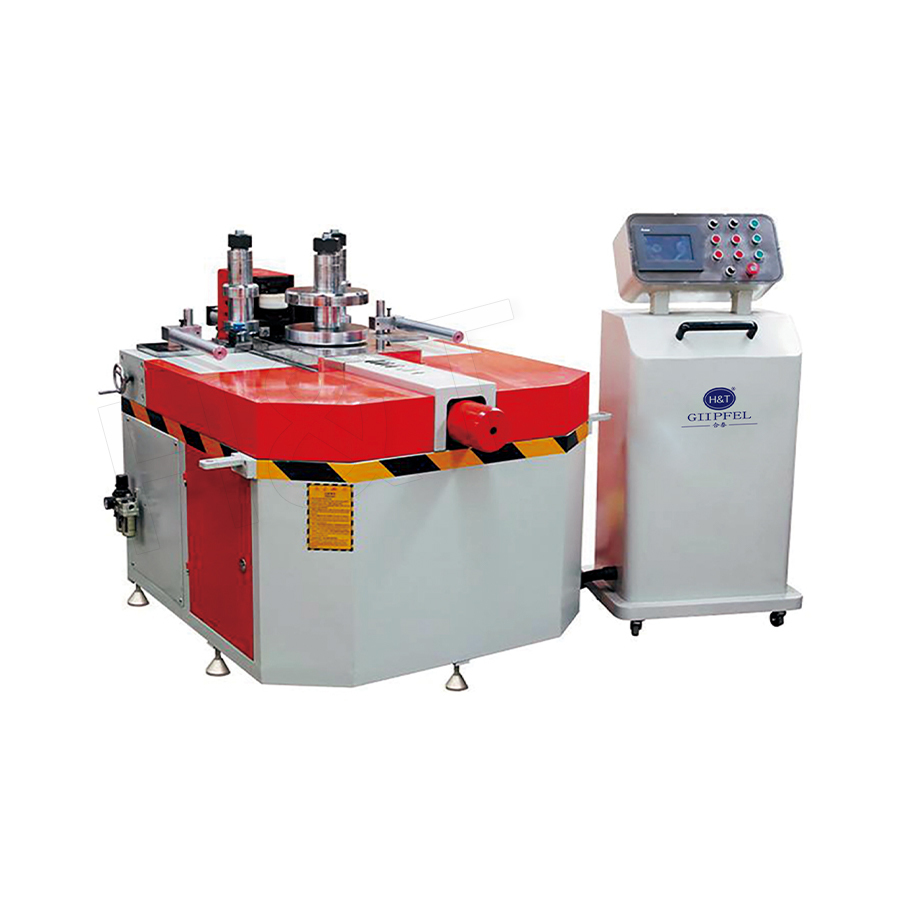
No. 196, Lifa Avenue, Haian City, Nantong, Jiangsu Province, China

News Category
Product Category
What is 3D Rolling Bending?
3D Rolling Bending is a CNC-controlled cold metal forming process that uses three independently adjustable rollers to bend metal profiles, pipes, or sheets simultaneously along the X, Y, and Z axes. Unlike conventional two-dimensional bending — which produces curves in a single plane — 3D rolling bending creates complex spatial geometries such as helical coils, three-dimensional arcs, ellipses, parabolas, and compound curves in a single continuous pass. The process achieves positioning repeatability of approximately 0.01 mm, making it indispensable in industries where precision curved metalwork is critical.
Content
- 1 How 3D Rolling Bending Works
- 2 Key Technical Features of 3D Rolling Bending Machines
- 3 Materials and Profile Types Suited to 3D Rolling Bending
- 4 3D Rolling Bending vs. Conventional Roll Bending
- 5 Industries and Applications of 3D Rolling Bending
- 6 Achievable Geometries: What Shapes Can Be Formed
- 7 Advantages of 3D Rolling Bending Over Alternative Forming Methods
- 8 Important Parameters When Specifying a 3D Rolling Bending Machine
- 9 Limitations and Considerations
How 3D Rolling Bending Works
The fundamental principle of 3D rolling bending relies on controlled plastic deformation. A metal workpiece is fed between three rollers arranged in a triangular formation. As the rollers rotate and apply pressure, the material is progressively bent beyond its elastic limit, taking on a permanent curved shape. What distinguishes 3D rolling bending from standard roll bending is the ability of each roller to move independently along multiple axes simultaneously.
The process sequence typically follows these stages:
- Profile loading: The metal profile or tube is positioned between the three rollers and secured at the entry point.
- CNC program execution: The operator selects or inputs the target geometry; the CNC system calculates the required roller positions and feed rates automatically.
- Multi-axis roller adjustment: The top (bending) roller descends to apply the forming force while the two lower rollers provide counter-support. The lateral rollers adjust independently to introduce the out-of-plane (Z-axis) displacement needed for 3D curvature.
- Continuous feed and forming: The workpiece is driven through the roller set while all three axes adjust dynamically, creating a continuously varying curve along the profile's length.
- Online measurement and correction: An integrated radius measurement system monitors the actual curvature in real time and feeds corrections back to the servo drives, compensating for springback and material variation.

Key Technical Features of 3D Rolling Bending Machines
3D CNC Control System
The CNC system is the core of any 3D rolling bending machine. It coordinates the displacement and rotational speed of each roller with sub-millimeter precision. Modern systems offer graphical programming interfaces where operators can input target curve geometries — including radius, arc length, twist angle, and transition zones — directly from engineering drawings or imported CAD files. Positioning repeatability of ±0.01 mm allows complex shapes to be reproduced consistently across production batches without manual re-adjustment.
Multi-Axis Independent Drive
Each of the three rollers is driven by an independent servo motor, allowing simultaneous and differentiated motion across axes. This independence enables several bending modes within a single machine:
- Symmetrical bending (equal radii on both sides of center)
- Tangential bending in forward and reverse directions
- Combined large-radius and small-radius transitions in a single profile
- Compound spatial curves combining horizontal and vertical plane bending simultaneously
Online Radius Measurement and Springback Compensation
Metal profiles naturally spring back partially after the forming load is released — a phenomenon that varies with material grade, wall thickness, and bend radius. Advanced 3D rolling bending machines incorporate online radius measurement sensors that continuously compare the actual formed radius against the programmed target. The CNC system automatically applies additional forming displacement to compensate, achieving the specified radius after springback without operator intervention.
Servo Drive and Automation Interface
Servo-driven roller systems respond to positional commands within milliseconds, enabling smooth transitions between curve segments. The human-machine interface (HMI) typically provides real-time process visualization, program storage for hundreds of part geometries, and diagnostic monitoring of forming forces — all of which reduce setup time and operator skill requirements compared to manually adjusted roll benders.
Materials and Profile Types Suited to 3D Rolling Bending
One of the most significant advantages of 3D rolling bending is its broad material and profile compatibility. Because the process applies gradual, distributed forming force rather than concentrated impact, it produces low residual stress and excellent dimensional stability across a wide range of cross-sections and alloys.
| Profile Type | Common Materials | Typical Applications |
|---|---|---|
| Angle steel (L-section) | Mild steel, stainless steel | Structural frames, curved brackets |
| Channel steel (U/C-section) | Carbon steel, aluminum alloy | Curved purlins, rail guides |
| I-beam / H-beam | Structural steel grades | Curved roof beams, arch structures |
| Square and rectangular tube | Steel, aluminum, stainless steel | Handrails, furniture frames, vehicle components |
| Round tube and pipe | Steel, copper, titanium alloy | Pipework, exhaust systems, decorative arches |
| Flat bar and sheet | Mild steel, stainless steel, aluminum | Curved cladding panels, rings |
| T-section and Z-section | Carbon steel, galvanized steel | Curved curtain wall framing, steel construction |
3D Rolling Bending vs. Conventional Roll Bending
Understanding the distinction between 3D rolling bending and traditional two-roller or three-roller bending machines helps in selecting the right process for a given application.
- Dimensional freedom: Conventional roll bending produces curves in a single plane only. 3D rolling bending simultaneously forms in all three spatial axes, enabling helical, compound, and spatially twisted profiles that are impossible to produce conventionally.
- Repeatability: Manual or semi-manual roll benders depend heavily on operator skill and trial-and-error adjustment. 3D CNC machines reproduce programmed geometries to ±0.01 mm consistently from the first piece.
- Setup time: Changing from one profile geometry to another on a 3D rolling bending machine requires only a program selection and tooling change — often achievable in under 15 minutes compared to hours of manual re-setup on conventional machines.
- Material utilization: The precise control over forming force in 3D rolling bending reduces material scrap and the need for correction passes, improving overall material yield.
- Part complexity: A single 3D rolling bending cycle can produce a geometry that would require multiple setups, fixtures, and operations on conventional equipment — reducing total manufacturing time and handling risk.
Industries and Applications of 3D Rolling Bending
The ability to produce precise, repeatable three-dimensional curved metalwork makes 3D rolling bending a valued process across several demanding industries.
Architecture and Construction
Curved structural steel elements — including arched roof beams, helical staircases, elliptical façade framing, and circular column cladding — are among the most common outputs of 3D rolling bending in construction. Stadium roofs, airport terminals, and landmark buildings frequently specify spatially curved steel sections that can only be produced economically through this process. Curved I-beams and H-beams used in such projects can span radii from as tight as 1.5 meters to over 100 meters, depending on the section size and material grade.
Automotive and Transportation
Vehicle chassis rails, roll cage components, exhaust system pipes, and bus or rail vehicle body framing often require complex three-dimensional curves to fit within constrained envelope spaces. 3D rolling bending enables these components to be formed with consistent cross-section geometry and minimal wall thinning — critical for structural performance and weight targets.
Shipbuilding and Offshore
Hull frames, deck beams, and pipe spools on ships and offshore platforms are frequently non-planar curved sections. 3D rolling bending allows these components to be produced directly from engineering geometry without the need for custom dies or extensive manual correction — reducing lead times and improving fit-up accuracy during assembly.
Industrial Equipment and Machinery
Pressure vessel rings, heat exchanger coils, conveyor frame sections, and crane boom components all benefit from the dimensional accuracy and low residual stress that 3D rolling bending provides. In pressure equipment applications, consistent wall thickness after bending is essential for pressure rating compliance.
Furniture and Architectural Metalwork
Curved handrail systems, decorative metal screens, bespoke furniture frames, and sculptural installations increasingly use 3D rolled profiles for their smooth, organic geometry. Stainless steel and aluminum profiles processed on 3D rolling bending machines can achieve aesthetically seamless curves without weld joints or visible correction marks.
Achievable Geometries: What Shapes Can Be Formed
The combination of three independently controlled axes allows 3D rolling bending machines to produce a wide spectrum of curved geometries in a single forming pass:
- Circular arcs and full rings: Constant-radius curves in a single plane — the baseline capability of all roll bending machines.
- Ellipses and parabolas: Variable-radius planar curves requiring continuous roller adjustment as the workpiece advances.
- Helical (spiral) curves: Constant or variable pitch coils where the profile rises uniformly along its length — used in spiral staircases and helical conveyor frames.
- Compound spatial curves: Profiles that change radius and plane orientation simultaneously — such as the curved ribs of an organic architectural façade.
- S-curves and Z-curves: Reverse-curvature profiles that transition from one direction of bend to the opposite within the same workpiece.
- Tapered curves: Profiles where the bend radius changes progressively from one end to the other — common in aerodynamic and hydrodynamic structural applications.
Advantages of 3D Rolling Bending Over Alternative Forming Methods
When evaluated against alternative methods for producing curved metal components — such as press bending, induction bending, or hot forming — 3D rolling bending offers a distinctive combination of benefits:
| Criterion | 3D Rolling Bending | Press Bending | Induction Bending |
|---|---|---|---|
| 3D geometry capability | Excellent | Limited | Moderate |
| Repeatability | ±0.01 mm (CNC) | ±0.5–2 mm | ±1–3 mm |
| Tooling cost per part | Low (no dedicated dies) | High (custom die per geometry) | Moderate |
| Residual stress in part | Low | Moderate to high | Low (heat-assisted) |
| Surface finish preservation | Excellent (cold process) | Good | Scale/oxidation risk |
| Profile cross-section distortion | Minimal | Moderate | Low to moderate |
Important Parameters When Specifying a 3D Rolling Bending Machine
Selecting the right 3D rolling bending machine for a given application requires evaluating several technical parameters:
- Maximum profile section modulus: Determines the largest and strongest profile the machine can bend. Expressed in cm³, this must exceed the section modulus of the heaviest workpiece in the intended production range.
- Minimum bending radius: The tightest curve the machine can form for a given profile without causing buckling, wrinkling, or excessive wall thinning. Typically expressed as a multiple of the profile's largest dimension.
- Roller spacing and adjustment range: The distance between the two lower rollers and the vertical travel range of the top roller define the bending geometry envelope.
- Number of CNC axes: Entry-level 3D machines may offer 3–4 controlled axes; advanced models can feature 6 or more axes for maximum geometric freedom.
- Drive system power: Servo motor power and roller torque capacity must be matched to the material yield strength and profile cross-section to avoid under-forming or machine overload.
- Roller material and interchangeability: Roller inserts are typically profile-specific; machines with quick-change roller systems minimize tooling changeover time between different section types.
Limitations and Considerations
While 3D rolling bending offers exceptional capability, several factors must be managed in practice:
- Straight end zones: Like all roller bending processes, 3D rolling bending leaves a short unbent section at each end of the workpiece — typically equal to half the roller spacing distance. These zones must be accounted for in part length planning or trimmed after forming.
- Profile-specific tooling: Each different cross-section profile requires its own set of roller inserts, machined to match the profile's outer geometry and prevent distortion during bending. Tooling costs add to project setup expenses for low-volume runs.
- Material variability: Batch-to-batch variation in yield strength within a nominal material grade affects springback behavior. While online measurement systems compensate automatically, significant material variation may require program re-qualification between heats.
- Capital cost: 3D CNC rolling bending machines represent a substantially higher capital investment than conventional roll benders — typically suited to manufacturers with sufficient production volume or premium part value to justify the equipment cost.
Featured Products
A Complete Range of Tube Processing Solutions
Precision Tube Bending
 Ready To Customise
Your Bent Tube Products?

Ready To Customise Your Bent Tube Products?
Proprietary software, smart control systems, and 50+ patents ensure more efficient and intelligent production at every step.
Copyright © 2025 by Gipfel Precision Machinery Co.,Ltd All Rights Reserved. Privacy Precision Tube Machinery Manufacturer | Pipe Forming, Cutting, End Forming Solutions
