

 简体中文
简体中文 English
 日本語
日本語 한국어
한국어 Español
 русский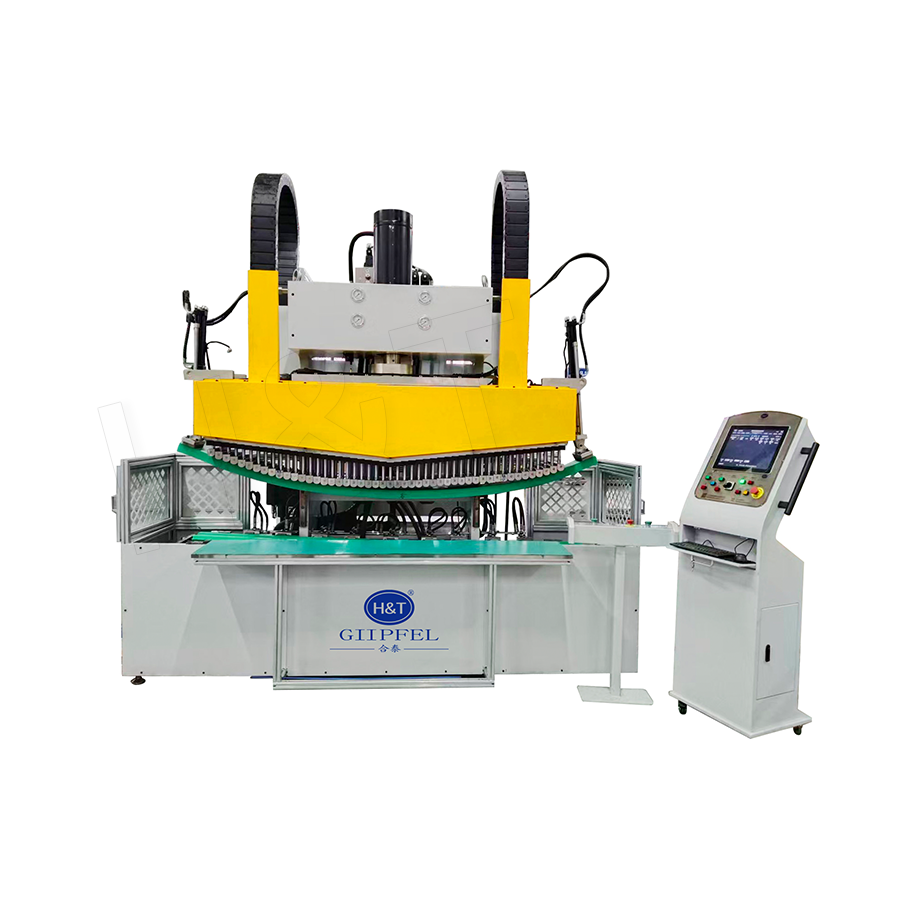
No. 196, Lifa Avenue, Haian City, Nantong, Jiangsu Province, China

News Category
Product Category
What is a Press Bending?
Press bending is a metal forming process that uses a mechanical device called a press brake or stamping machine to apply pressure to sheet metal, causing plastic deformation between upper and lower dies to bend, form, or cut the material. This manufacturing technique is widely used in sheet metal processing industries to create precise angles, shapes, and components for applications ranging from electronics enclosures to automotive parts and construction materials.
Content
Main Components of Press Bending Machines
Frame and Worktable
The frame and worktable form the structural foundation of the press bending machine, supporting the entire machine structure and providing a stable platform for operations. The lower die is mounted on the worktable, which must maintain precise alignment and withstand the significant forces generated during bending operations. High-quality frames are constructed from heavy-duty steel to minimize deflection under load, ensuring consistent bending accuracy.
Upper Die (Pressure Head)
The upper die, also called the pressure head or punch, is a liftable component mounted on the main column that presses downward onto the sheet metal. This component is typically interchangeable, allowing different die shapes to create various bend profiles. The upper die's vertical movement is precisely controlled to achieve accurate bend depths and angles. Modern press brakes may feature quick-change tooling systems to reduce setup times between different bending operations.
Drive Systems
Press bending machines employ various drive systems to generate bending force. Hydraulic systems use pressurized fluid to generate high force with smooth control, making them suitable for heavy-gauge materials and long bends. Mechanical systems use gears and flywheels for fast, energy-efficient operation ideal for high-production environments. Servo-electric drives provide precise control with energy efficiency and reduced maintenance requirements, representing the latest advancement in press brake technology.

Control and Safety Systems
Control System Types
The control system manages press bending operations through either CNC (Computer Numerical Control) or manual control panels. CNC systems allow operators to program bending sequences, angles, positions, and strokes for automated production. These systems store programs for recall, calculate bend allowances, and compensate for material springback. Manual controls suit simpler applications requiring individual bend setup and operation.
Safety Devices
Press bending machines incorporate comprehensive safety devices to protect operators. Safety doors and light curtains prevent machine operation when personnel are in danger zones. Emergency stop switches enable immediate shutdown in hazardous situations. Two-hand controls ensure operators' hands are clear of the bending area during operation. Modern systems may include laser safety scanners and automatic barrier systems that stop operation if intrusion is detected.
The following table summarizes drive system characteristics:
| Drive Type | Force Capacity | Best Application |
|---|---|---|
| Hydraulic | Very high (1000+ tons) | Heavy gauge, long bends |
| Mechanical | High, fast cycling | High-volume production |
| Servo-electric | Moderate to high | Precision, energy efficiency |
Press Bending Working Principle
Positioning Stage
The press bending process begins with positioning the sheet metal to be processed on the lower die of the worktable. The operator aligns the material with the center line of the upper die, using back gauges or CNC-controlled positioning systems to ensure accurate placement. Proper positioning is critical for achieving precise bend locations and maintaining consistency across multiple parts.
Pressure Application and Forming
Once positioned, the drive system moves the upper die downward, generating high pressure that causes the sheet metal to plastically flow between the dies. Near the stress point, the sheet metal bends to form a predetermined angle or shape. The amount of penetration determines the bend angle, with deeper penetration creating sharper bends. The plastic deformation permanently reshapes the material without cutting or removing material.
Return and Removal
After the bend is completed, the upper mold rises, releasing pressure on the formed sheet metal. The operator then removes the formed part, and the process repeats for subsequent bends or parts. In automated systems, robots may handle material loading and unloading, enabling continuous production with minimal operator intervention.
Applications and Capabilities
Sheet Metal Fabrication
Press bending is essential in general sheet metal fabrication for creating enclosures, brackets, panels, and chassis components. The process handles materials ranging from thin gauge aluminum to thick steel plate, depending on machine capacity. Multiple bends can be formed in sequence to create complex three-dimensional shapes from flat sheet stock.
Industry Applications
Press bending serves diverse industries including automotive (body panels, structural components), aerospace (aircraft skins, frames), electronics (enclosures, racks), construction (architectural metalwork, HVAC components), and appliances (cabinetry, panels). The versatility of press bending makes it a fundamental process in modern manufacturing.
Precision and Quality Considerations
Bend Accuracy
Modern press bending machines achieve bend angle accuracies within 0.5 degrees or better. CNC systems compensate for material springback—the tendency of metal to partially return to its original shape after bending—by over-bending to achieve the desired final angle. Precision back gauges position material within 0.01 inches, ensuring bend locations meet tight tolerances.
Surface Quality
Press bending produces clean bends without material removal, maintaining surface finish integrity. Proper die selection prevents marking or scratching of sensitive materials. Radius dies create smooth curved bends, while acute angle dies produce sharp corners. The process preserves protective coatings and finishes better than cutting and welding alternatives.
Featured Products
A Complete Range of Tube Processing Solutions
Precision Tube Bending
 Ready To Customise
Your Bent Tube Products?

Ready To Customise Your Bent Tube Products?
Proprietary software, smart control systems, and 50+ patents ensure more efficient and intelligent production at every step.
Copyright © 2025 by Gipfel Precision Machinery Co.,Ltd All Rights Reserved. Privacy Precision Tube Machinery Manufacturer | Pipe Forming, Cutting, End Forming Solutions
