

 简体中文
简体中文 English
 日本語
日本語 한국어
한국어 Español
 русский
No. 196, Lifa Avenue, Haian City, Nantong, Jiangsu Province, China

News Category
Product Category
NC vs CNC Bending Machines: Key Differences, Accuracy, Cost and Selection Guide
We were talking to a fabricated parts supplier recently about replacing an older bender. The shortlist came down to an NC machine and a CNC machine. The NC was cheaper, simpler, and familiar to the operators. The CNC had a higher price tag but offered more control and less manual adjustment. The question that kept coming back was: what is the actual difference between NC and CNC bending machines in daily production? This article answers that question by comparing control architecture, accuracy, setup, cost, and the type of jobs each machine handles best.
Here is the bottom line. NC bending machines are straightforward for simple, repetitive parts. CNC bending machines use computer controlled servo axes to handle complex, multi plane parts with tight tolerances. The right choice depends on your part mix, batch sizes, labor skill level, and plans for future work.
Content
What Is an NC Bending Machine?
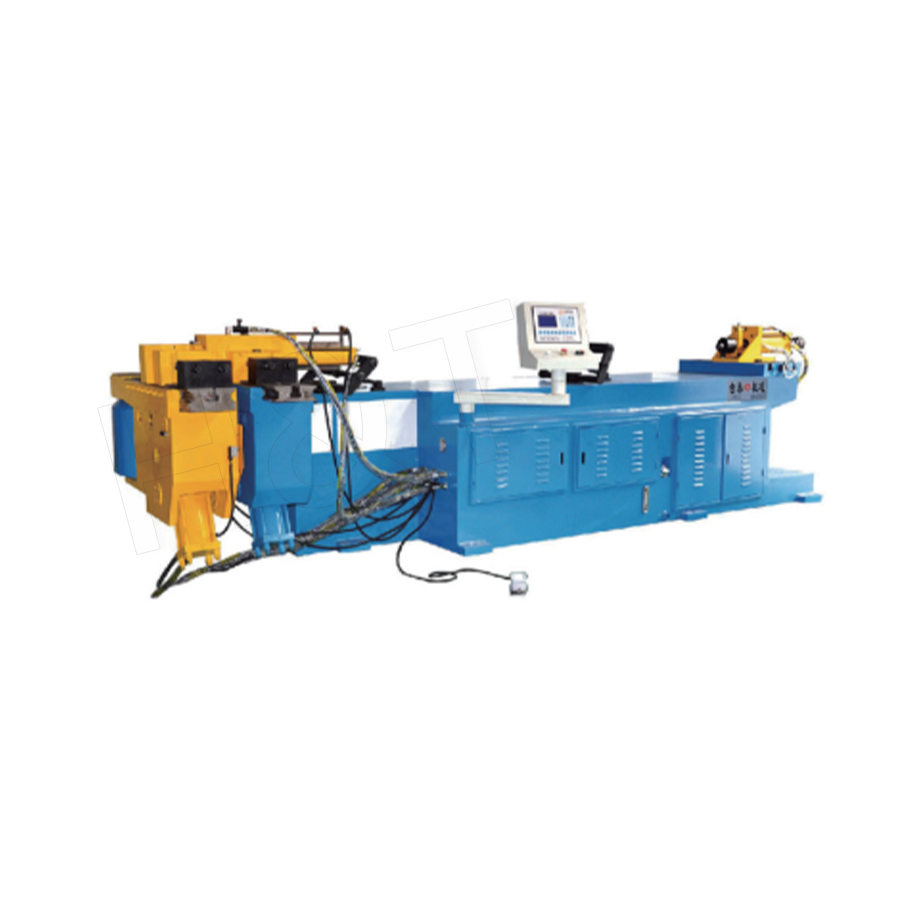
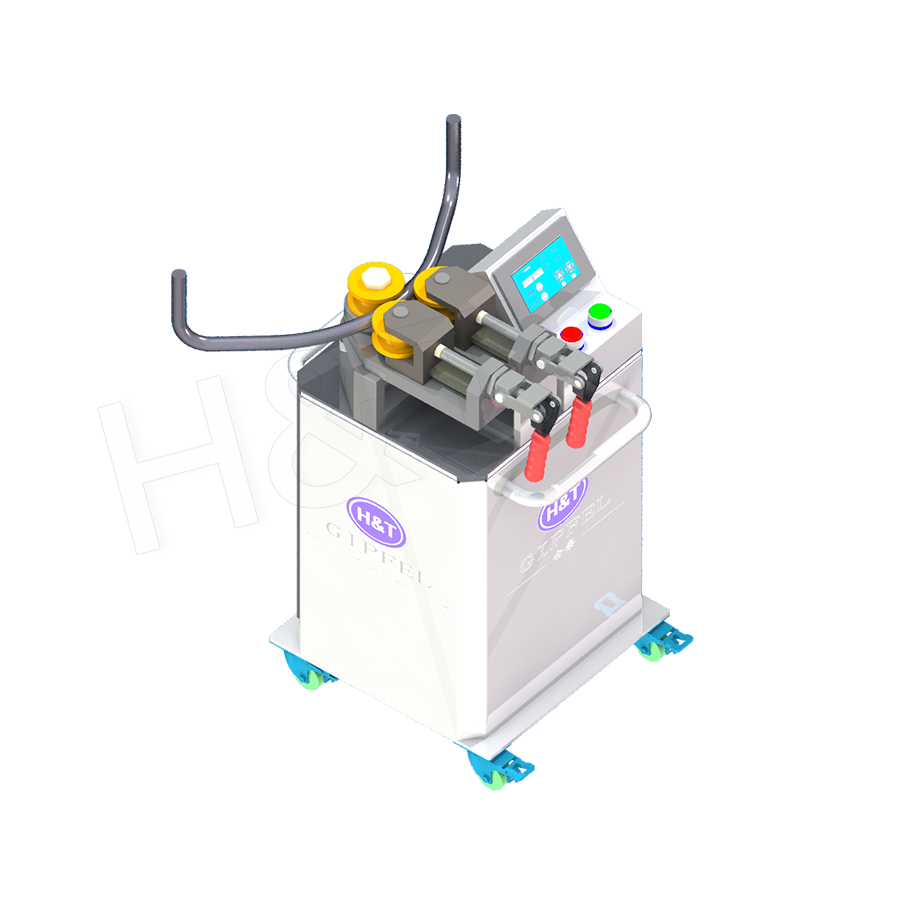
NC stands for numerical control. An NC bending machine uses a basic controller that stores a limited set of parameters such as bend angle and feed distance, then repeats them through switches or a small keypad. The machine typically controls the bend arm and one or two auxiliary axes. The operator sets up the machine for each job manually: position the tube, select the program, and check the first part for accuracy. If a different angle is needed, the operator enters the new value and runs the part again.
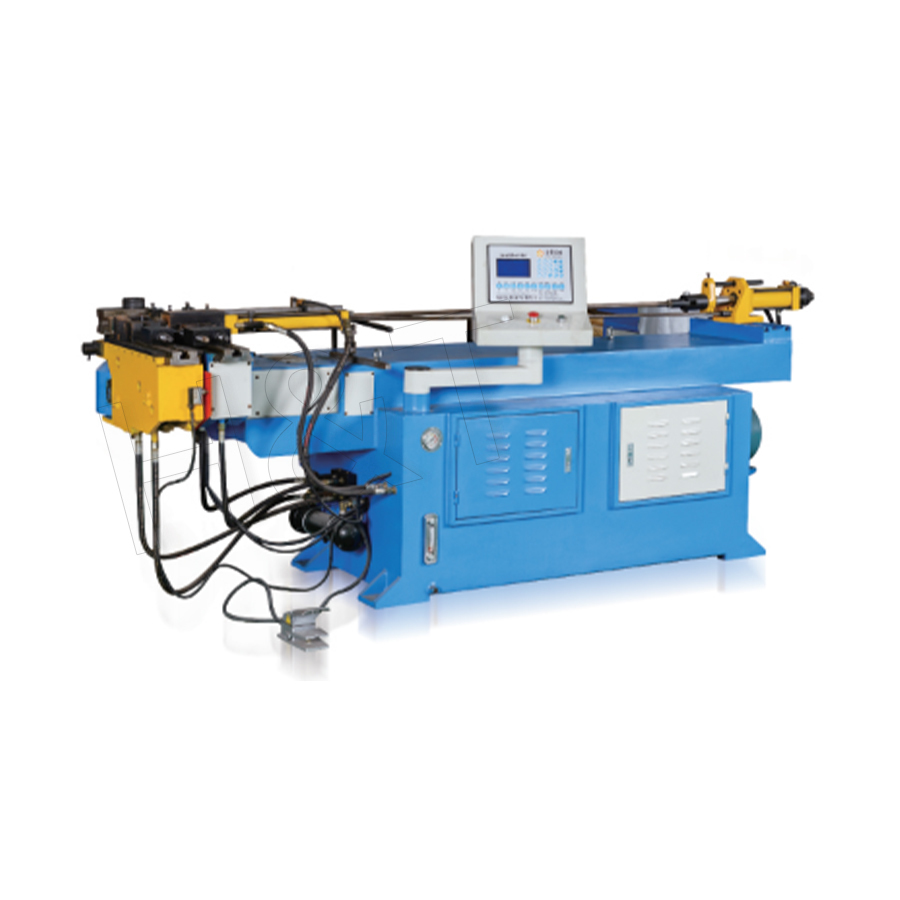
For simple, repetitive production, this approach is fast enough and represents the lowest cost entry point. Many metal fabricators find that a medium-duty NC single-head pipe bending machine is a practical first investment because the control system is easy to learn and the machine is rugged. NC machines shine when you bend a small range of tube diameters and angles day after day.
 NC Single Head Pipe Bending Machine (Medium) Supplier, OEM/ODM Factory - Gipfel Gipfel Precision Machinery Co.,Ltd is top China NC Single Head Pipe Bending Machine (Medium) supplier and OEM/ODM factory, our product is...View Product →
What Is a CNC Bending Machine?
CNC stands for computer numerical control. A CNC bending machine uses a dedicated computer to command multiple servo motors at the same time. On a modern tube bender, the main axes include the bend arm, tube rotation, and linear feeding, plus auxiliary axes for carriage movement, die clamping, and stacked die indexing. The controller stores thousands of programs, and the operator can call up a completely different part with precise parameters in seconds.
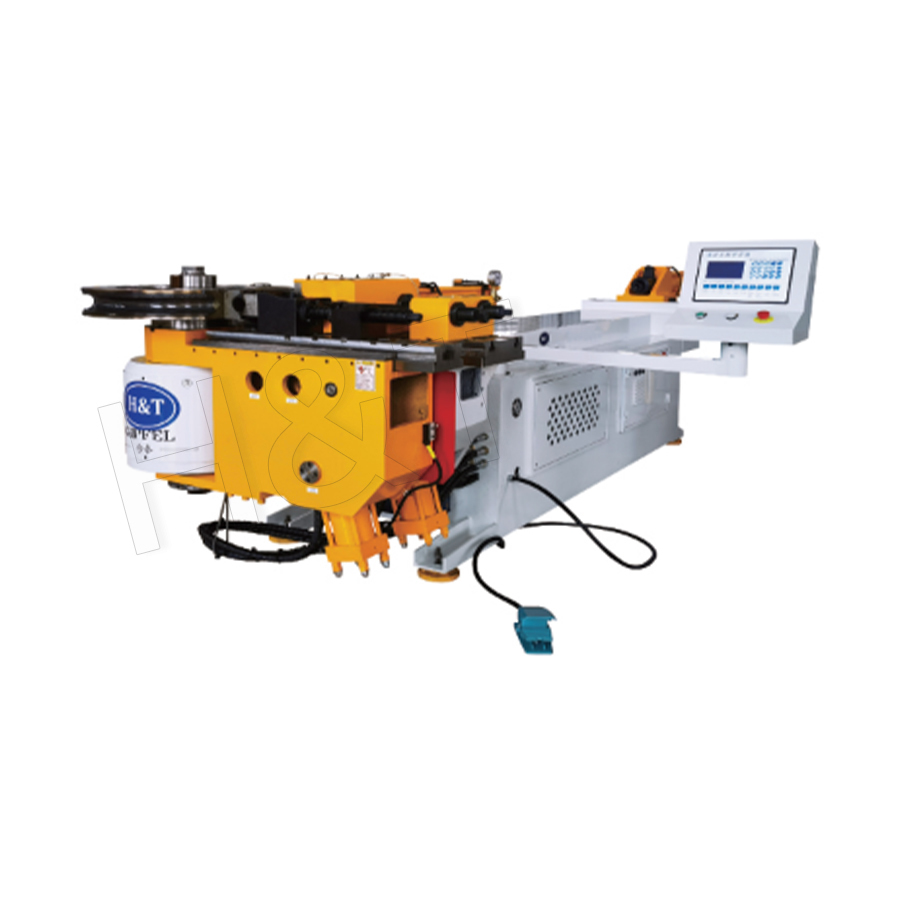
This is what makes CNC the standard for complex parts with multiple bends in different planes. A full-servo CNC tube bending machine can execute a fifteen bend part in one cycle, with every rotation and distance controlled automatically. If you are not familiar with the term, our guide on what is CNC bending explains the software workflow in more detail.
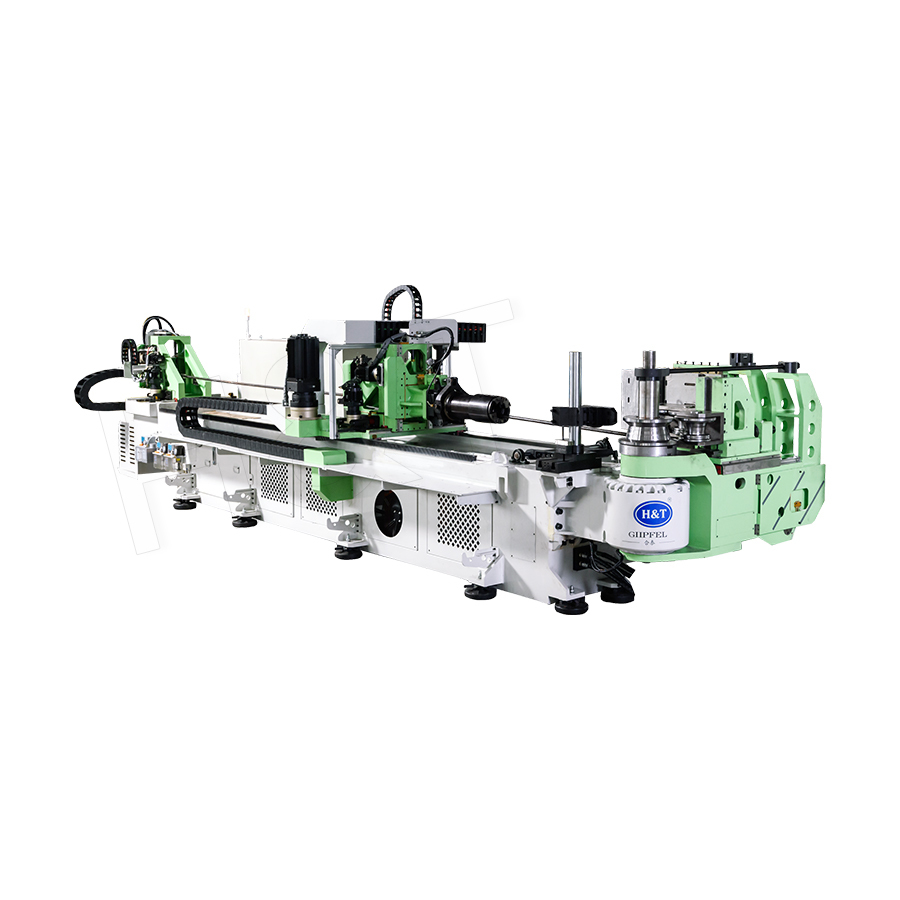 Unidirectional All-Electric Pipe Bending Machine Supplier, OEM/ODM Factory - GipGipfel Precision Machinery Co.,Ltd is top China Unidirectional All-Electric Pipe Bending Machine supplier and OEM/ODM factory, our produc...View Product →
Key Differences at a Glance
Before comparing the two machine types in detail, here is a quick reference.
| Feature | NC Bending Machine | CNC Bending Machine |
|---|---|---|
| Control interface | Switches, keypad and numeric codes | Computer console with graphical display |
| Typical axis count | 2 to 3 axes | 4 to 8 axes or more |
| Programming | Manual entry of angles and distances | On screen programming or offline software with simulation |
| Positioning accuracy | 0.5 to 1 degree | 0.01 to 0.05 degree |
| Setup time for complex jobs | Long, with many trial adjustments | Short, with program recall and auto setup |
| Operator skill required | High manual skill | Moderate skill plus software knowledge |
| Capital cost | Lower | Higher |
| Best suited for | Simple, low mix parts | Complex, high mix parts and tight tolerances |
This table summarizes the main themes. The rest of this article explains why those differences matter on the shop floor.
Axis Control and Machine Architecture
The most fundamental difference between NC and CNC bending is the number of axes the control can command.
The bar chart shows that a typical NC bending machine controls two axes, while a CNC machine controls six or more. More axes mean the machine can bend, rotate, and feed the tube in the same setup. This is essential for parts with bends in different planes. With an NC machine, the operator often needs to reposition the tube manually between bends. A CNC machine removes those intermediate steps. The result is faster cycles, fewer handling errors, and the ability to run complex products automatically.
An NC machine usually controls the bend arm and the feed carriage. A CNC machine adds tube rotation, die clamping, and auxiliary functions such as multiple radius dies. The extra axes give CNC the flexibility to complete a multi bend part without moving the tube to another machine.
Setup Time and Changeover
Setup time is often more important than cycle time when a shop runs many small batches.
For a simple bend, the difference in setup time is about five minutes: 15 minutes for NC and 10 minutes for CNC. The gap widens when the part has multiple angles and rotations. An NC machine may need 45 minutes of trial and adjustment, while a CNC machine can be set up in about 20 minutes by recalling the stored program. Over a day with several changeovers, those minutes turn into hours. In high mix production, the CNC machine can run more orders per shift. Therefore, setup time should be part of any cost comparison.
Cost per Part and ROI
Purchase price alone is not a reliable reason to choose a bending machine.
The chart compares cost per part for NC and CNC machines across different batch sizes. At very small batches, CNC has a higher cost per part because of higher amortization and programming effort. As batch size grows, CNC cost per part drops faster because setup time and scrap rate are lower. At some volume, the curves cross and CNC becomes the cheaper option. For simple, single bend parts, that crossover may be very high or never reached. For complex parts, the crossover usually happens at a relatively small batch. So compare cost per part for the actual production mix, not the list price.
Overall Capability Comparison
A radar chart helps to visualize how NC and CNC machines emphasize different strengths.
The radar chart shows that NC bending machines score high on ease of use and cost efficiency, but lower on precision, automation, programming, and flexibility. CNC bending machines show the opposite pattern: they lead in precision, automation, programming, and flexibility, while requiring more training and a larger investment. The two shapes hardly overlap, which means the decision is really between two production philosophies. If you mostly run routine bends and want a simple, low cost machine, the NC shape is attractive. If you need repeatable accuracy across many different parts, the CNC shape gives you more room to grow.
How to Choose Between NC and CNC Bending Machines
Start by classifying your typical parts. Count how many bends each part has and whether the bends are in one plane or multiple planes. Note the required tolerance. In general, if the angle tolerance is tighter than about plus or minus one degree, a CNC machine gives you a safety margin. Then look at your operators. A shop with experienced manual benders may run an NC machine very well, but a shop with less bending experience will benefit from CNC software assistance.
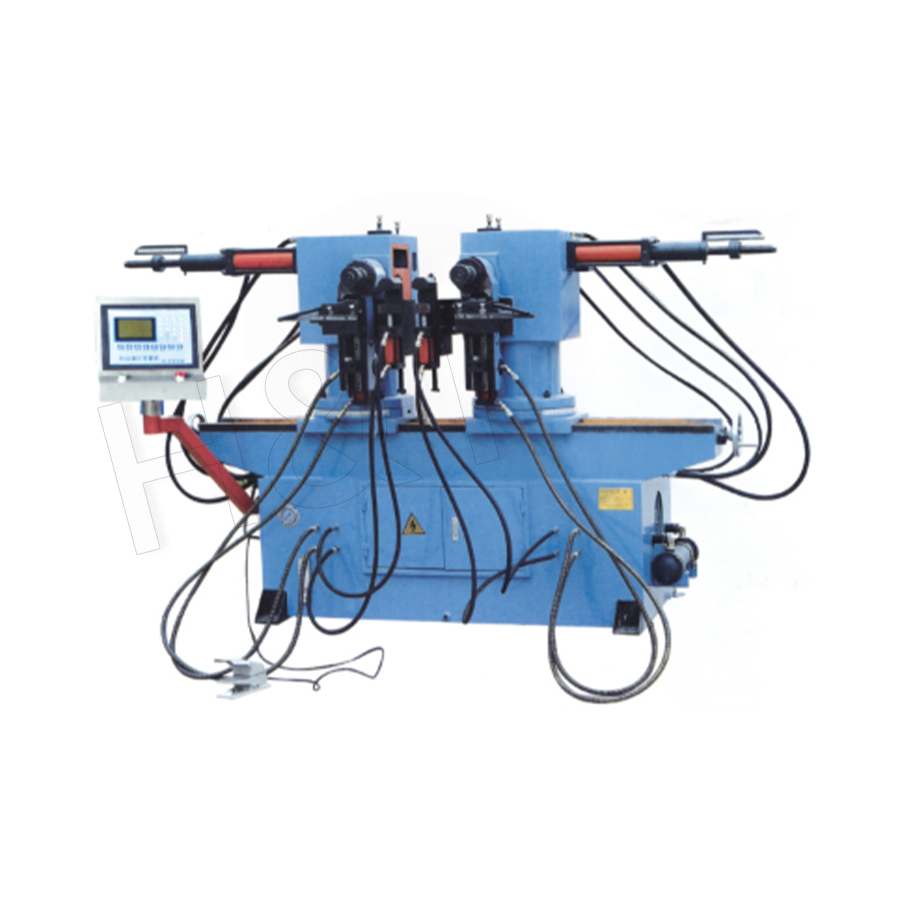
Batch size also matters. For long runs of the same simple part, NC is hard to beat on cost. For frequent small batches and complex geometry, CNC wins by reducing setup and scrap. Consider your growth path as well. A CNC machine can take on more demanding contracts without buying a second machine. For manufacturers moving to 3D frames and multi plane parts, a 3D double-head full-servo bending machine processes both ends in one cycle, making complex parts even more productive.
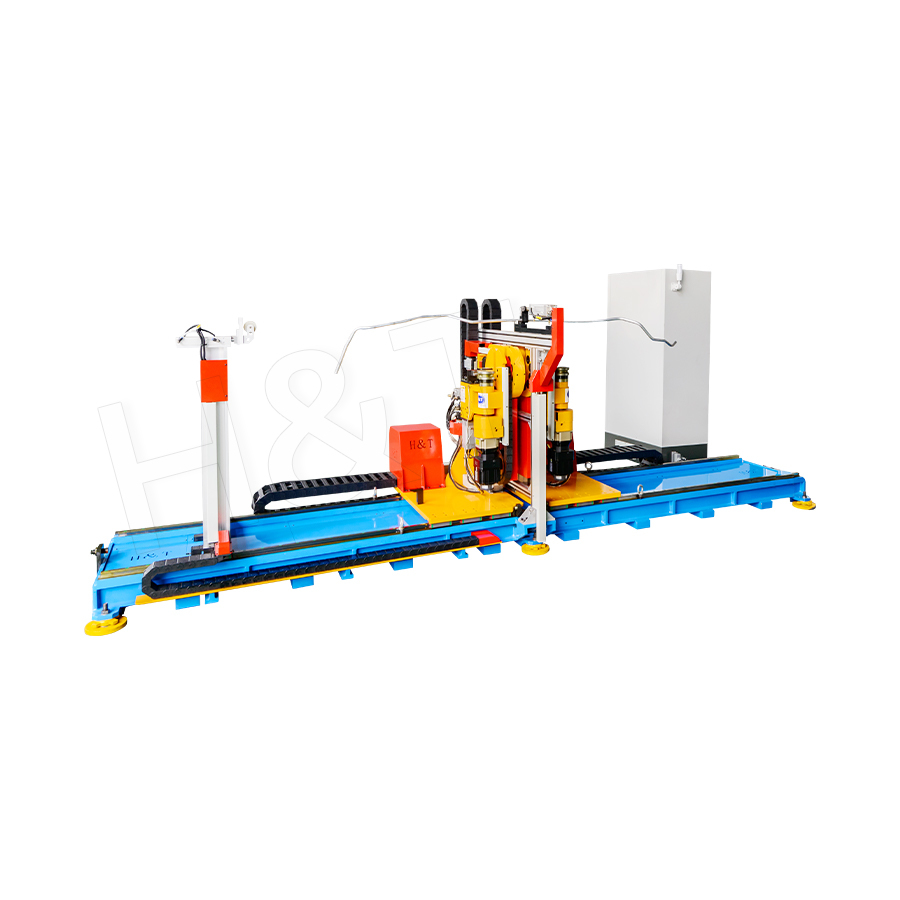 3D Double-Head Full-Servo Bending Machine Supplier, OEM/ODM Factory - Gipfel PreGipfel Precision Machinery Co.,Ltd is top China 3D Double-Head Full-Servo Bending Machine supplier and OEM/ODM factory, our product is wi...View Product →
Still, many shops start with an NC machine and add a CNC machine later when the order mix changes. That path is valid as long as you know the limitations of NC before you commit. If you would like to match a machine to your specific drawings and production volumes, contact our team and send us your part list.
Bottom Line
NC and CNC bending machines serve different jobs. NC machines are affordable, simple, and effective for routine bends with limited axis requirements. CNC machines are more precise, more flexible, and faster to change over, which makes them a better fit for complex parts and growing shops. The extra cost of CNC is justified when it reduces setup time, scrap, and skilled labor per part. By comparing axis count, accuracy, setup time, and cost per part for your own production mix, you can make a confident buying decision.
Featured Products
A Complete Range of Tube Processing Solutions
Precision Tube Bending
 Ready To Customise
Your Bent Tube Products?

Ready To Customise Your Bent Tube Products?
Proprietary software, smart control systems, and 50+ patents ensure more efficient and intelligent production at every step.
Copyright © 2025 by Gipfel Precision Machinery Co.,Ltd All Rights Reserved. Privacy Precision Tube Machinery Manufacturer | Pipe Forming, Cutting, End Forming Solutions
