

 简体中文
简体中文 English
 日本語
日本語 한국어
한국어 Español
 русский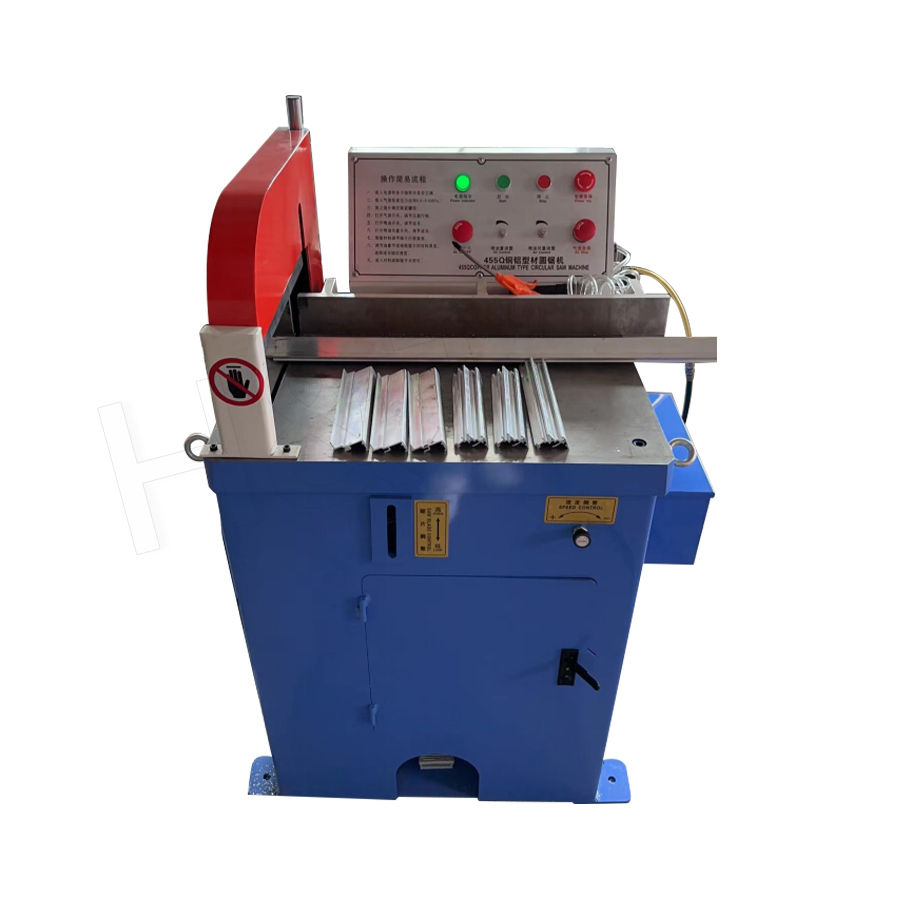
No. 196, Lifa Avenue, Haian City, Nantong, Jiangsu Province, China

News Category
Product Category
Metal Tube Fabrication: Processes, Materials, and the Equipment That Determines Quality
A tube assembly misses specification for one of three reasons: the wrong process was chosen, the material was treated as a constant instead of a variable, or the machine lacked the rigidity to hold what the program demanded. In metal tube fabrication, those three causes account for most scrap, rework, and delivery delays. Each is preventable once the relationship between process, material, and equipment is understood.
This guide explains how metal tube fabrication works in production, where cutting, bending, and end forming fit, how yield strength changes the outcome, and what to check when evaluating a CNC machine, an NC bender, or a full automation line.
Content
- 1 The four process families that define metal tube fabrication
- 2 Material behavior drives every fabrication decision
- 3 Machine capability separates consistent parts from scrap
- 4 From single machines to integrated fabrication lines
- 5 How to evaluate a metal tube fabrication equipment partner
- 6 The practical takeaway for metal tube fabrication
The four process families that define metal tube fabrication
Metal tube fabrication is a sequence of controlled operations that turns tube, pipe, or hollow profile into a functional part. It starts with cutting, moves through bending and end forming, and ends with cleaning, polishing, or joining. Each operation changes the material: cutting creates burrs, bending thins and work-hardens the outer wall, and end forming alters local diameters. A good plan accounts for these changes before the first part is run.
Cutting and preparation set the quality ceiling
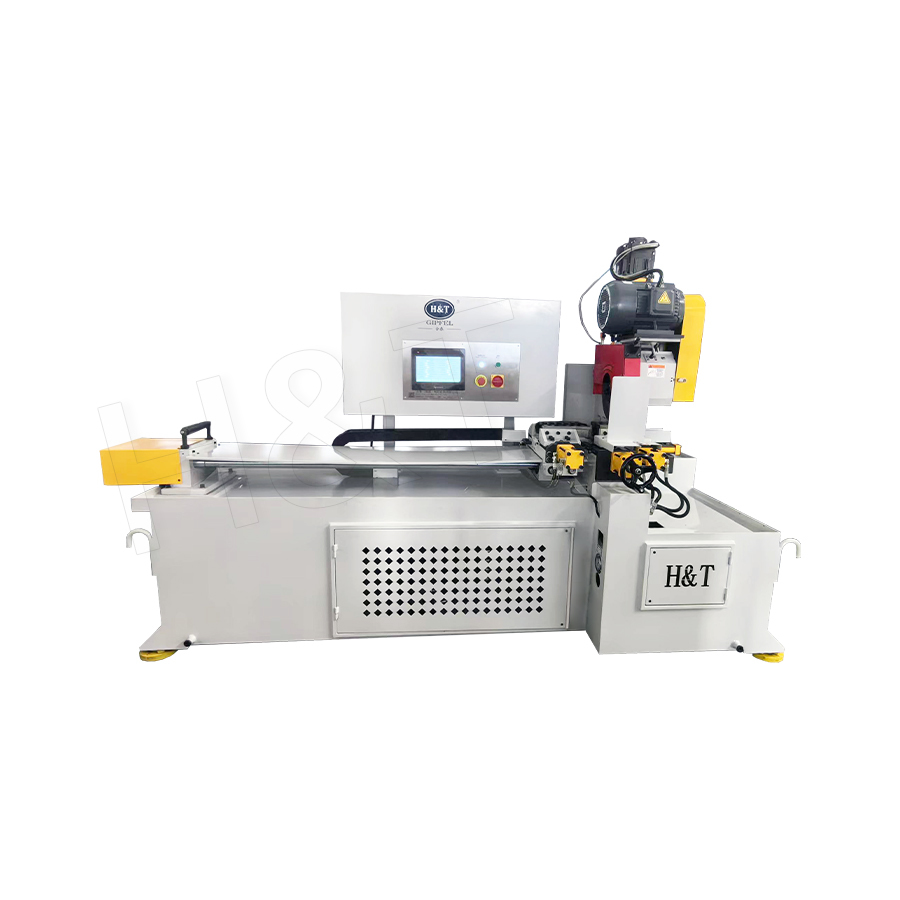
Cutting is the first chance to introduce defects. A hot saw blade leaves a burr that scratches the mandrel and blocks clean weld fit-up; an out-of-square cut shifts the reference point for every bend after it. Shops therefore treat cutting as a preparation step: automatic circular saws hold length repeatability, while laser cutting adds contour freedom for complex profiles. A deburring or chamfering pass removes the edge conditions that create trouble downstream. Our overview of laser cutting fundamentals compares beam-based cutting with mechanical sawing in more detail.
The equipment choice comes down to volume and part condition. High-mix, low-volume work benefits from a flexible laser tube cutting machine that changes geometry without tooling change-over. High-volume repetition is usually more economical on an automatic saw with a magazine feed. The answer depends on burr tolerance, length tolerance, and how many part numbers run through the line each week.
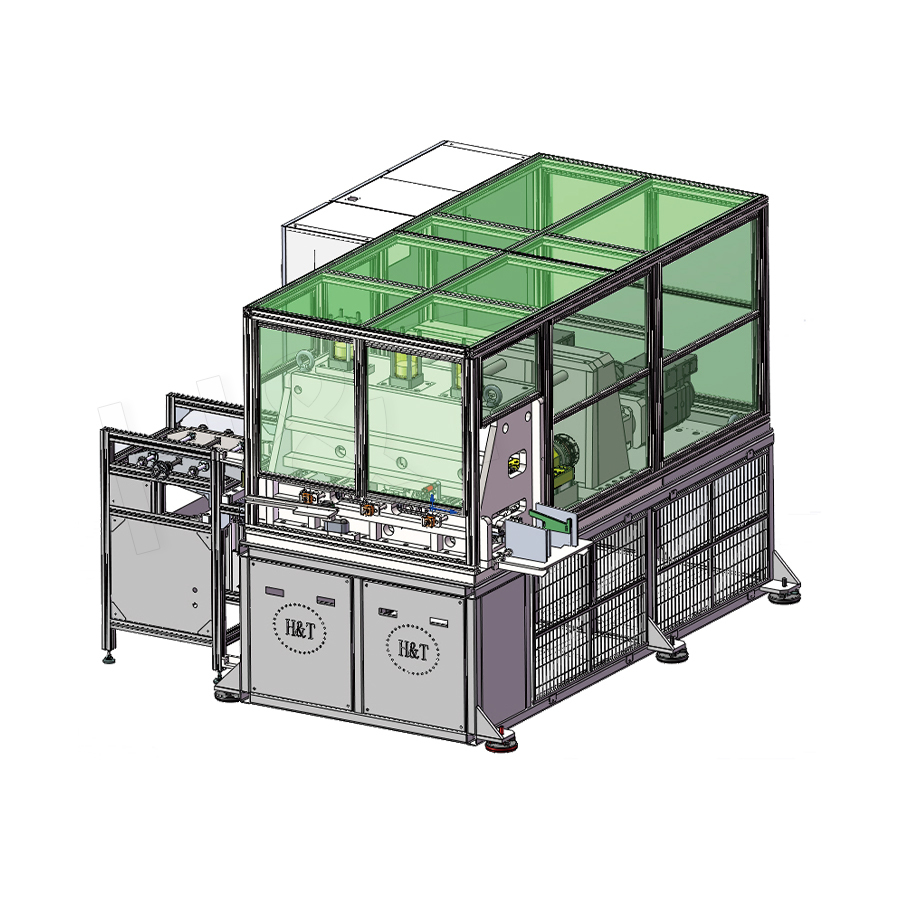
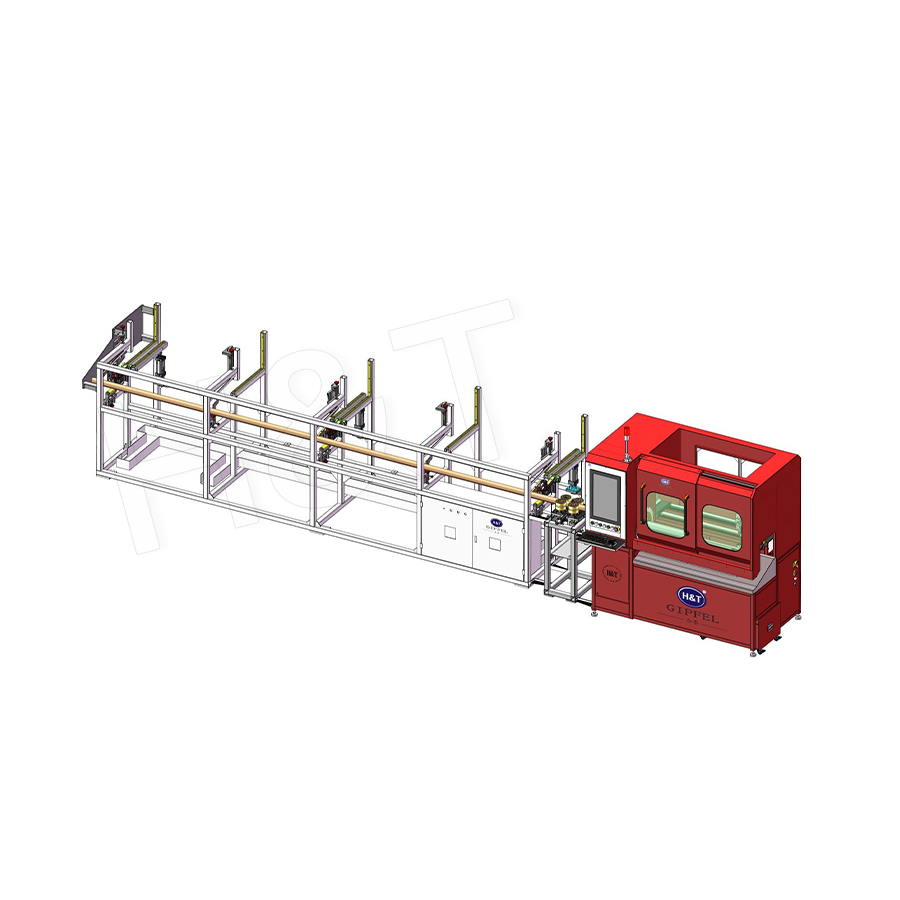 Laser Cutting Machine Supplier, OEM/ODM Factory - Gipfel Precision Machinery Co.Gipfel Precision Machinery Co.,Ltd is top China Laser Cutting Machine supplier and OEM/ODM factory, our product is widely used in metal p...View Product →
Bending is where geometry and material collide
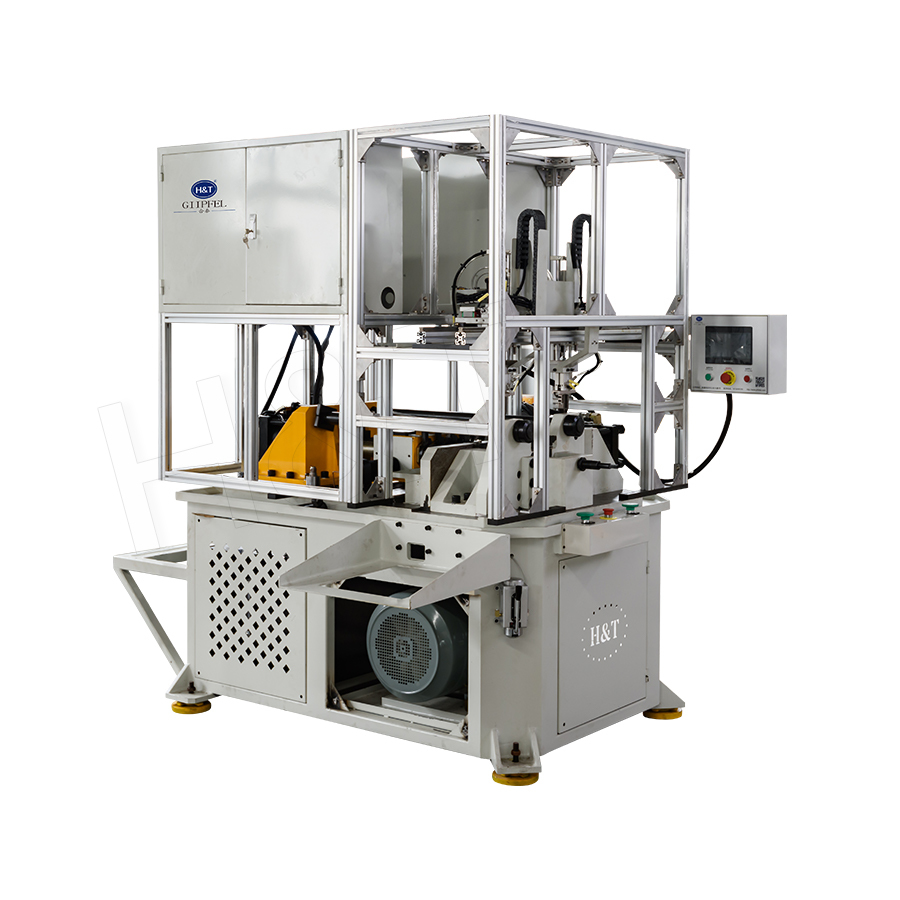
Rotary draw bending is the backbone of most metal tube fabrication because it produces tight radii with good surface quality. The tube is clamped against a bend die while a pressure die and, for thin walls, a mandrel and wiper die control collapse and wrinkling. Springback appears in every material and every bend; the machine must over-bend by the right amount and repeat that correction from the first part to the last.
That consistency is what separates NC from CNC. NC machines store sequences but rely on the operator to judge corrections. CNC bending machines calculate springback compensation and reproduce every axis position with servo control, which matters when one program runs across shifts and batches. For most production environments, a full-servo CNC tube bending machine pays for itself in lower setup time and repeatable first-piece quality.
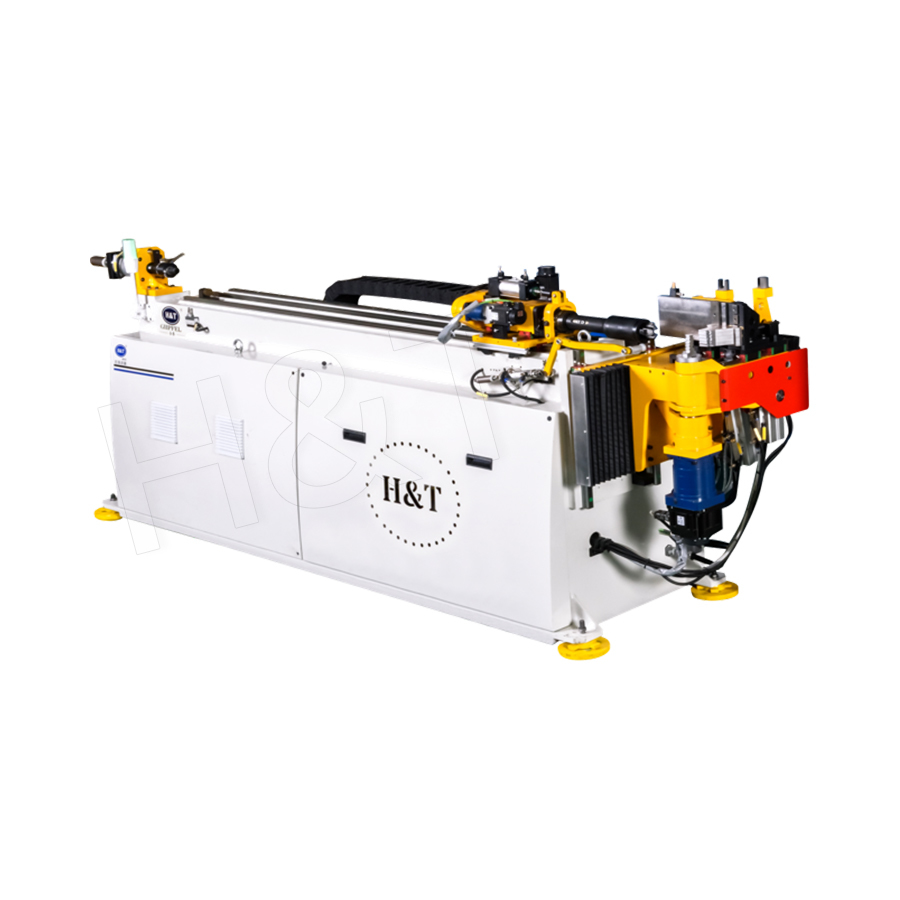
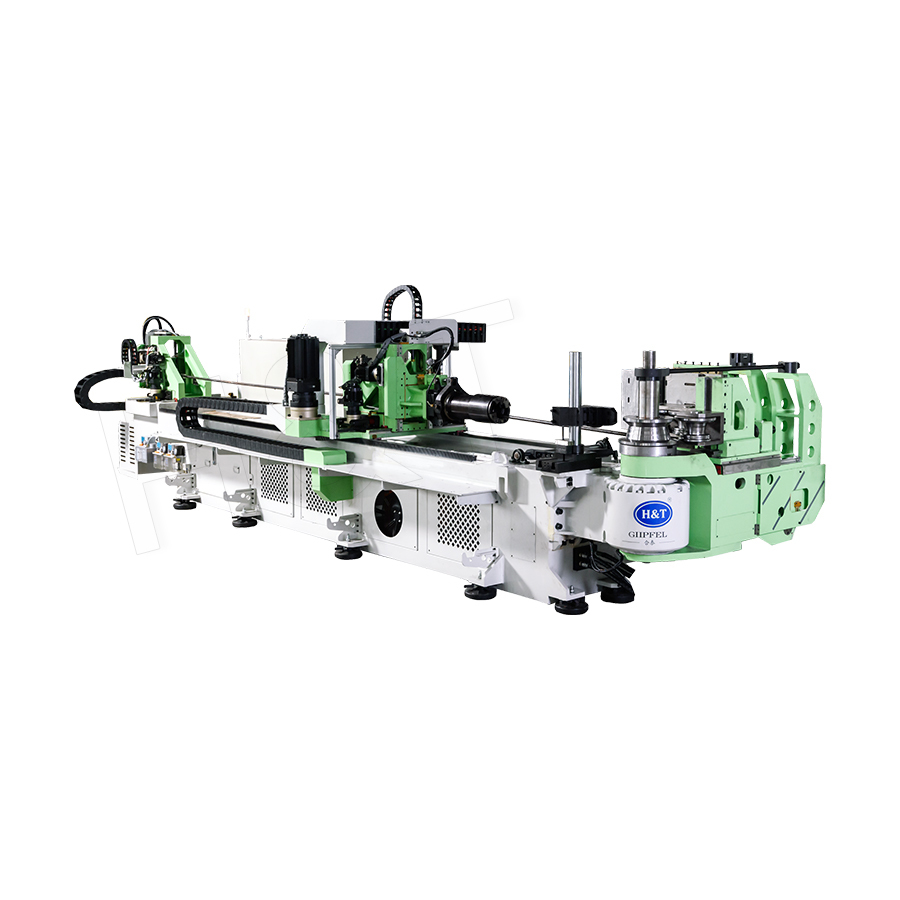 Unidirectional All-Electric Pipe Bending Machine Supplier, OEM/ODM Factory - GipGipfel Precision Machinery Co.,Ltd is top China Unidirectional All-Electric Pipe Bending Machine supplier and OEM/ODM factory, our produc...View Product →
End forming and finishing close the tolerance loop
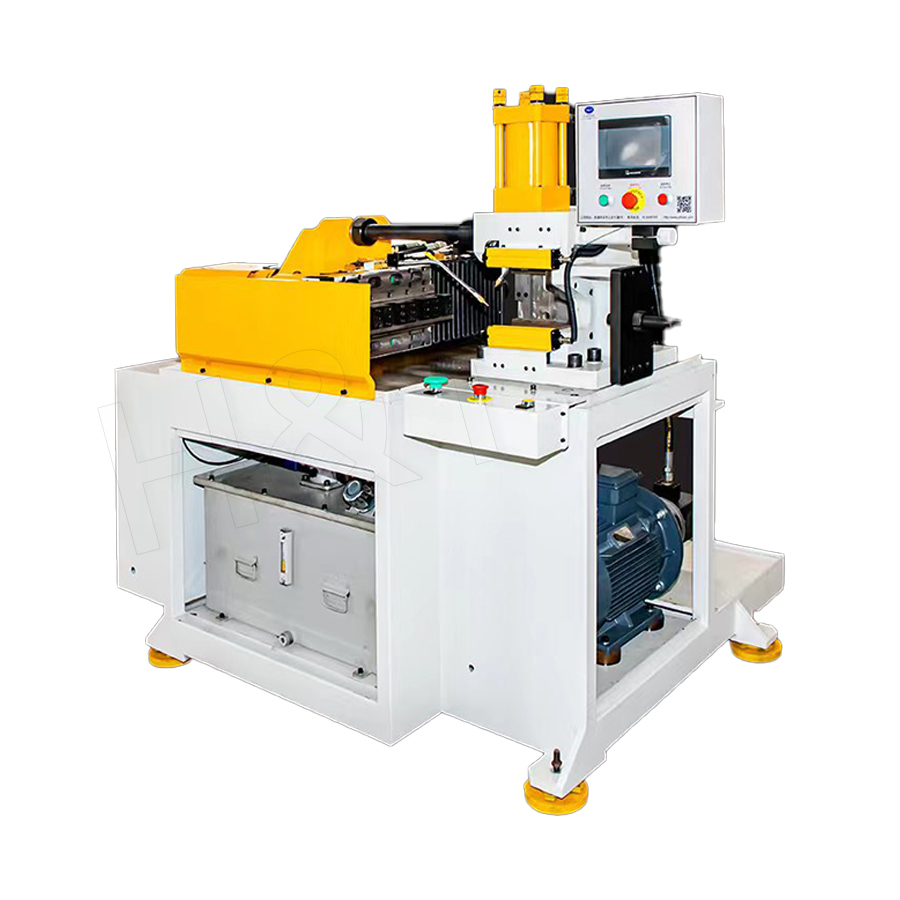
Many fabricated tubes do not end at the bend. Flaring, reducing, beading, grooving, and spinning create the features that connect the tube to a fitting, hose, or another tube. These operations are usually done cold, so they harden the material and set final dimensions; a small variation in wall thickness shifts the final diameter. NC spinning or flaring holds tight fit tolerances, and a multi-station former does the job in one cycle for high volumes.
After forming, stainless parts often need polishing to restore surface condition, and carbon steel parts may need cleaning before coating. These steps do not add geometry, but they decide whether the part passes inspection. This is where a tube end forming machine is the difference between a part that fits on the first try and one that needs rework.
 Tube End Forming Machine Supplier, OEM/ODM Factory - Gipfel Precision Machinery Gipfel Precision Machinery Co.,Ltd is top China Tube End Forming Machine supplier and OEM/ODM factory, our product is widely used in meta...View Product →
The table maps the four process families to their quality drivers and typical equipment.
| Process family | Typical operations | What decides quality | Common equipment |
|---|---|---|---|
| Cutting and preparation | Sawing, laser cutting, deburring, chamfering | Squareness, burr height, length repeatability | Automatic circular saw, laser cutter, chamfering machine |
| Bending and forming | Rotary draw bending, roll bending, press bending | Angle accuracy, wall thinning, springback control | NC bender, CNC bender, robot bending cell |
| End forming | Flaring, reducing, beading, grooving, spinning | Dimensional consistency, surface condition | Tube end former, groove and spinning machine |
| Finishing and joining | Welding, polishing, cleaning | Weld integrity, surface finish | Welding equipment, polishing systems |
Material behavior drives every fabrication decision
Metal tube fabrication is often discussed as if the tube were an inert blank, but the tube remembers everything done to it. A tube cold drawn over a mandrel carries residual stress; stainless has higher yield strength than mild steel of the same diameter; aluminum springs back differently after every bend. These differences become failed tolerances when the process is planned without them.
Minimum bend radius by material
The first practical question in any bending job is how tight the radius can be before the outer wall cracks or the inner wall wrinkles. Industry guidance is expressed as a multiple of the tube outside diameter, and the value depends mainly on ductility and wall factor. The chart below shows typical minimum centerline bend radius guidance for rotary draw bending.
Typical minimum centerline bend radius guidance by material
The pattern is clear: softer materials tolerate tighter tooling. Copper, at one tube diameter, bends aggressively in most wall thicknesses and dominates refrigeration work. Carbon steel at 1.5 diameters is the working limit for standard frames and handrails. Stainless steel and aluminum sit at two diameters or more because work hardening makes the outer wall likely to crack. Titanium needs the largest radius and usually requires heated tooling. The actual limit still depends on wall thickness, bend angle, and mandrel use, so treat the chart as a starting point rather than a guarantee.
Springback and how CNC machines compensate
Springback is the elastic recovery of the tube after the bending load is released. The higher the yield strength relative to the elastic modulus, the more the tube tries to return to its original shape. Because yield strength varies between batches of the same grade, springback drifts with material condition, wall thickness, and position along the tube. CNC controls handle this by storing per-bend compensation values and applying them automatically.
Illustrative springback trend after a 90 degree bend versus yield strength
The curve shows why springback cannot be treated as a constant. Low-carbon steel typically recovers one to two degrees after a 90 degree bend, which an operator can correct with shims. Stainless steel sits higher, which is why stainless frames show open corners when the program lacks compensation. Aluminum alloys are more sensitive to temper condition, so a harder batch behaves differently. High-strength steel moves the curve sharply upward, and small strength changes produce large springback changes. This is the practical argument for CNC bending: the machine stores, verifies, and updates compensation for every bend.
Machine capability separates consistent parts from scrap
Process knowledge and material data are useless if the machine cannot hold position under load. The bending moment on a 50 mm tube can reach several thousand newton-meters, and any deflection in the frame, clamp, or carriage shows up as angle error. Rigidity, servo resolution, and tooling condition matter more than the label on the control panel.
Rigidity and drive systems
A well-built bending machine is a stiff structure with precision guidance. The bend arm must move smoothly at low speed, the clamp must grip without marking the tube, and the carriage must advance to a repeatable stop. Full-servo machines use servos on the bending axis, carriage, and plane of bend, which shortens cycles and allows simultaneous axis control. Hydraulic machines remain relevant for heavy-wall, large-diameter work where force matters more than speed. The practical check: run a bend at full load and see whether the first part matches the last part of the batch.
Setup time and cycle time by machine class
Machine selection is a trade-off between investment and per-part cost. The chart below compares representative setup time and cycle time for the same simple bend on a manual bender, an NC machine, a CNC machine, and a robot cell, as a percentage of the manual baseline.
Setup time and cycle time per bend relative to a manual baseline
The comparison shows where automation actually pays. Setup time falls by half from manual to NC, and by roughly half again from NC to CNC, because programs are stored digitally instead of adjusted by hand. Cycle time follows a similar path, with the largest jump coming from the robot cell, which removes the manual loading that dominates small-part cycles. This is not a recommendation to buy the most automated option in every case. A shop running large, heavy tube may find that a sturdy NC machine gives the best return, while high-mix small-part production justifies the robot. Calculate the real saving per part including setup and compare it with the capital cost difference.
Matching the machine to the part family
Beyond setup and cycle time, the right machine depends on part geometry and volume. The radar chart below compares three equipment classes across five criteria: complexity handling, repeatability, cycle efficiency, automation readiness, and investment efficiency. Scores are relative and meant to guide discussion, not to replace part-by-part analysis.
Relative equipment comparison across five selection criteria
The radar chart makes the trade-off visible. A single-head CNC machine leads on investment efficiency and scores well on repeatability, which is why it is the default for general fabrication. A double-head 3D CNC machine adds complexity handling because it bends both ends without re-fixturing, at the cost of higher price and more tooling. Robot bending cells score highest on automation readiness and complexity, but they demand the largest investment and the most programming skill. No machine wins on all five axes; the selection reflects the part family that dominates volume. For a shop that cannot predict next year's mix, a flexible single-head CNC with good support is the safer anchor investment.
From single machines to integrated fabrication lines
The highest cost in metal tube fabrication is often not machining time but handling time between operations. Every time a bundle moves from the saw to the bender, from the bender to the end former, and then to washing or welding, labor and floor space are consumed and tolerances drift. Integration connects machines with automated loading, unloading, and transfer. A circular saw cutting automation line feeds raw tube and sorts finished blanks; a rotary cutting and chamfering line combines both operations in one cycle; robot cells load and unload benders. The benefit is shorter lead time, fewer operators per shift, and quality that does not depend on who runs the machine. Understand the process before connecting the machines, because an automated line repeats the process, including its mistakes.
How to evaluate a metal tube fabrication equipment partner
When the question moves from specification to supplier, the weight shifts to manufacturing depth and service. A machine is only as good as the company that builds, tests, and supports it. Buyers should ask four questions before committing to a tube fabrication equipment supplier.
- Does the supplier machine and weld its own components, or is it an assembler of bought-in parts? In-house precision machining and welding give better control of frame rigidity and alignment.
- Does the supplier develop its own control software? Software turns a rigid frame into a useful bending machine, because springback compensation, synchronization, and diagnostics live in the program.
- Does the supplier test before shipment? Factory and site acceptance tests catch problems while the machine is still in the workshop, where they are cheap to fix.
- Can the supplier deliver in a predictable timeframe? A 90 to 120 day delivery cycle backed by a real production base matters more than a short promise that slips.
These criteria are not theoretical. Gipfel Precision Machinery, founded in 2010 in Nantong, China, runs a 30,000 square meter base with about 160 employees, 30 percent of them engineers. The company develops more than 20 software systems in-house, holds over 50 national design patents, and has completed one national first-set major technical equipment project. Every machine passes through in-house precision machining, welding, assembly, and FAT and SAT testing before delivery. That structure supports a stable 90 to 120 day delivery cycle from CNC benders to automation lines.
Choosing a partner for metal tube fabrication is a decision about long-term process capability. The machine will run for years, the software will be updated, and the tooling will be refined as the part family grows. If the next step is a specific part family or volume, discuss the requirements directly with a fabrication equipment team and ask for machine recommendations, cycle estimates, and reference visits. A good partner answers with numbers, not adjectives.
The practical takeaway for metal tube fabrication
Metal tube fabrication rewards people who think in sequences. Choose the cutting method that prepares the tube for bending, match the bend radius and machine class to the material, and protect final dimensions with the right end forming equipment. Then check that the supplier has the manufacturing depth, software, and testing discipline to support the machine for years. Consistent parts are not the result of one clever machine; they come from a process understood end to end, from the first cut to the last inspection.
Featured Products
A Complete Range of Tube Processing Solutions
Precision Tube Bending
 Ready To Customise
Your Bent Tube Products?

Ready To Customise Your Bent Tube Products?
Proprietary software, smart control systems, and 50+ patents ensure more efficient and intelligent production at every step.
Copyright © 2025 by Gipfel Precision Machinery Co.,Ltd All Rights Reserved. Privacy Precision Tube Machinery Manufacturer | Pipe Forming, Cutting, End Forming Solutions
