

 简体中文
简体中文 English
 日本語
日本語 한국어
한국어 Español
 русский
No. 196, Lifa Avenue, Haian City, Nantong, Jiangsu Province, China

News Category
Product Category
How does CNC bending work?
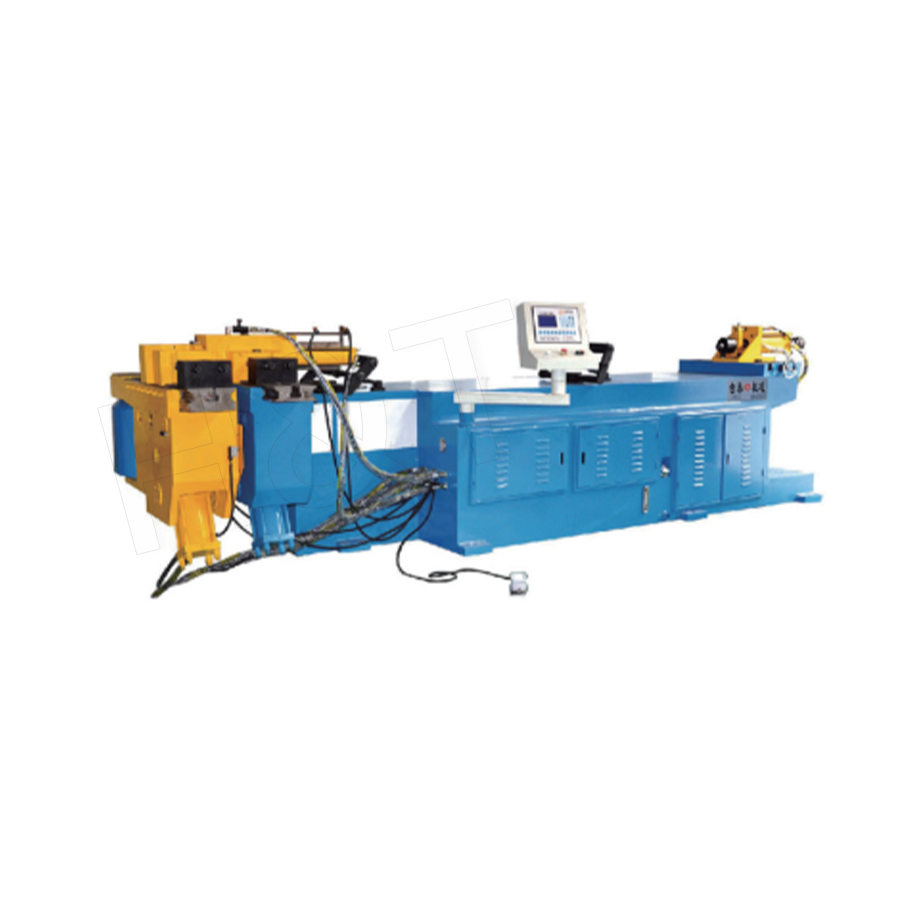
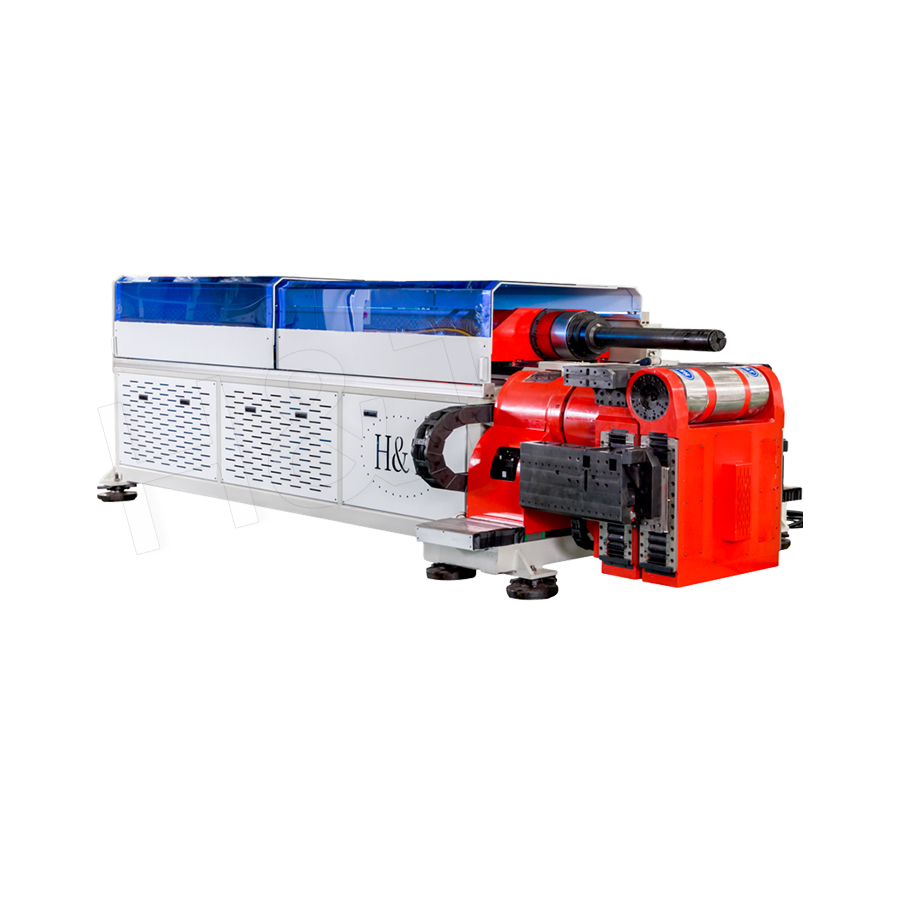
CNC bending works by using a computer-controlled machine to precisely position a tube or profile against a bending die, then apply controlled force through programmed axis movements to achieve an exact bend angle, radius, and rotation without relying on manual operator adjustment for each cycle. The machine's servo-driven axes execute a pre-programmed sequence that controls bend angle, mandrel positioning, and rotation between multiple bends on the same part, allowing complex multi-bend components to be produced with consistent accuracy across an entire production run. Manufacturing tolerance data commonly referenced in tube and pipe fabrication shows that CNC bending machines can achieve repeatability within plus or minus 0.1 degrees per bend, a level of precision that manual or semi-automatic bending equipment typically cannot match consistently across high-volume production.
Content
- 1 The Core Components That Enable Precision Bending
- 2 How the Programming Sequence Controls the Bending Process
- 3 The Role of the Mandrel in Preventing Deformation
- 4 Multi-Axis Coordination for Complex Bend Geometries
- 5 Springback Compensation During the Bending Cycle
- 6 Quality Verification During and After Bending
- 7 Applications Where CNC Bending Delivers the Most Value
- 8 Who Should Consider CNC Bending for Their Production Needs
The Core Components That Enable Precision Bending
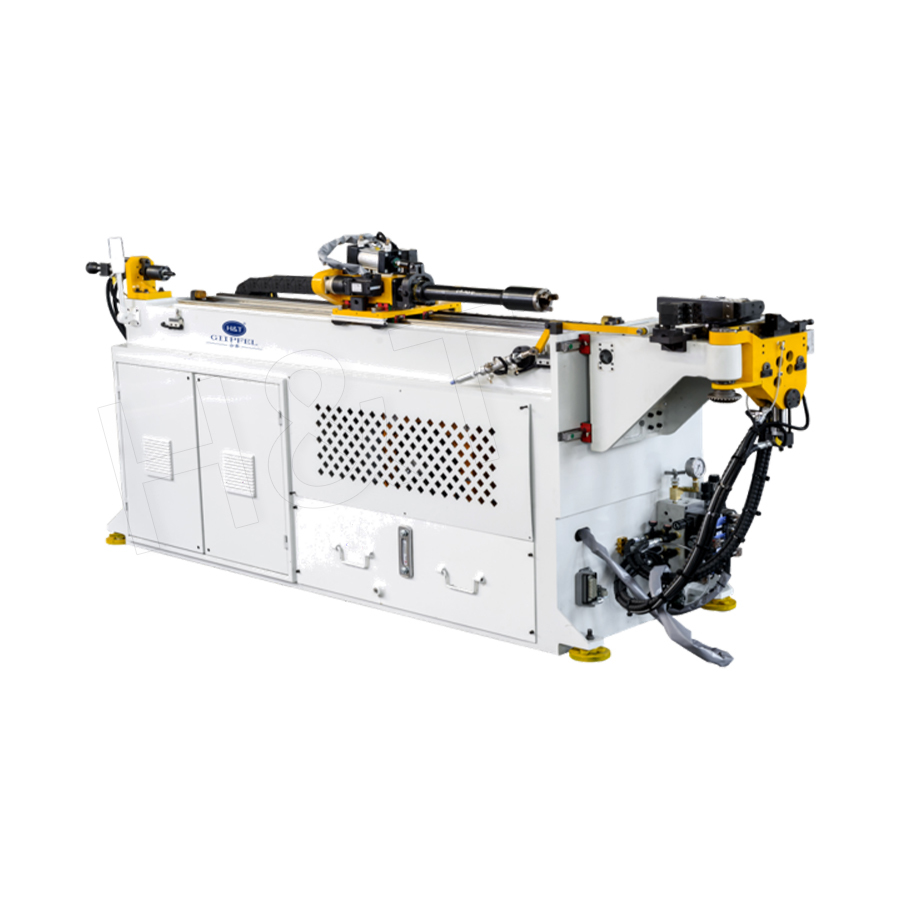
A CNC bending machine relies on several coordinated mechanical and control components working together to execute each bend with programmed accuracy, rather than depending on operator skill to judge angle and positioning manually.
Key Machine Components
- Bend die and clamp die that hold the tube securely in position during the bending motion
- Mandrel system that supports the tube's internal wall to prevent collapse or wrinkling during the bend
- Servo-controlled axes that manage bend angle, tube rotation, and linear feed positioning throughout the cycle
A well-engineered CNC bending machine coordinates these components through a programmed control sequence, allowing the same bend program to be run repeatedly with consistent results across large production batches without manual recalibration between parts.
How the Programming Sequence Controls the Bending Process
Before any bending occurs, the desired part geometry must be translated into a programmed sequence of movements that the machine's control system executes step by step during operation.
Typical Programming Elements
| Program Element | Function |
| Bend angle setting | Determines the exact degree of each individual bend |
| Rotation angle between bends | Controls the orientation of subsequent bends on multi-bend parts |
| Linear feed distance | Positions the tube correctly before each bend along its length |
Once programmed, these parameters can be saved and reused for future production runs of the same part, allowing manufacturers to switch between different product configurations quickly without needing to redevelop bending parameters from scratch each time.
The Role of the Mandrel in Preventing Deformation
For tighter bend radii or thinner-walled tubing, an internal mandrel plays a critical role in maintaining tube shape and wall thickness consistency throughout the bending process.
Why Mandrel Support Matters
Without internal support, tubing subjected to tight-radius bending can wrinkle on the inner bend radius or flatten on the outer radius, both of which compromise the structural integrity and dimensional accuracy of the finished part.
Mandrel Types and Selection
Different mandrel designs, including ball mandrels and form mandrels, are selected based on tube diameter, wall thickness, and required bend radius, with CNC systems precisely coordinating mandrel extraction timing with the bending motion to avoid marking or deforming the tube's interior surface.
Multi-Axis Coordination for Complex Bend Geometries
Modern CNC bending machines coordinate multiple axes simultaneously, allowing production of complex, multi-plane bend geometries that would be extremely difficult to achieve consistently through manual bending methods.
Common Axis Functions
- Bend axis controlling the actual degree of angle applied at each bend point
- Rotation axis adjusting tube orientation between sequential bends for multi-plane geometries
- Feed axis advancing the tube to the correct position for each subsequent bend along its length
This coordinated multi-axis movement allows a single machine cycle to produce parts with multiple bends in different planes, a capability particularly valuable in applications such as automotive exhaust systems or hydraulic tubing assemblies requiring complex three-dimensional routing.
Springback Compensation During the Bending Cycle
One of the more technical aspects of CNC bending involves compensating for springback, the natural tendency of metal to partially return toward its original shape after the bending force is released.
How CNC Systems Address Springback
Advanced CNC bending control systems incorporate springback compensation algorithms that slightly overbend the tube beyond the target angle, accounting for the material's elastic recovery so the finished part settles at the precise intended angle once the bending force is removed.
Material-Specific Compensation Adjustments
Since springback behavior varies between different metal types and tube wall thicknesses, CNC programming often requires material-specific compensation values, which experienced operators or the machine's material database help determine for consistent accuracy across different production materials.
Quality Verification During and After Bending
Maintaining consistent part quality throughout a production run requires verification methods that confirm each bend meets the required dimensional tolerances before parts move to subsequent manufacturing stages.
Common Verification Methods
- In-process angle sensors that monitor bend accuracy in real time during the cycle
- Post-bend dimensional checks using coordinate measuring equipment for critical tolerance applications
- Periodic first-article inspection to confirm program accuracy before running a full production batch
Combining automated in-process monitoring with periodic manual verification helps facilities using CNC bending equipment catch any developing tooling wear or program drift before it results in a significant quantity of out-of-tolerance parts.
Applications Where CNC Bending Delivers the Most Value
CNC bending technology is widely applied across industries requiring precise, repeatable tube and profile geometry, particularly where manual bending methods would introduce unacceptable part-to-part variation.
Common Industry Applications
Automotive exhaust and fuel line manufacturing, HVAC refrigerant tubing, furniture frame fabrication, and hydraulic and pneumatic tubing assembly all commonly rely on CNC bending to achieve the consistent, complex bend geometries these applications require across high production volumes.
Who Should Consider CNC Bending for Their Production Needs
Manufacturers producing tube or profile components requiring tight tolerance consistency, complex multi-plane bend geometries, or high production volumes benefit significantly from CNC bending technology compared to manual or semi-automatic alternatives. Facilities currently relying on manual bending processes for parts requiring repeatable accuracy across large batch sizes may find that transitioning to CNC bending equipment offers meaningful improvements in both part consistency and overall production efficiency.
Featured Products
A Complete Range of Tube Processing Solutions
Precision Tube Bending
 Ready To Customise
Your Bent Tube Products?

Ready To Customise Your Bent Tube Products?
Proprietary software, smart control systems, and 50+ patents ensure more efficient and intelligent production at every step.
Copyright © 2025 by Gipfel Precision Machinery Co.,Ltd All Rights Reserved. Privacy Precision Tube Machinery Manufacturer | Pipe Forming, Cutting, End Forming Solutions
