

 简体中文
简体中文 English
 日本語
日本語 한국어
한국어 Español
 русский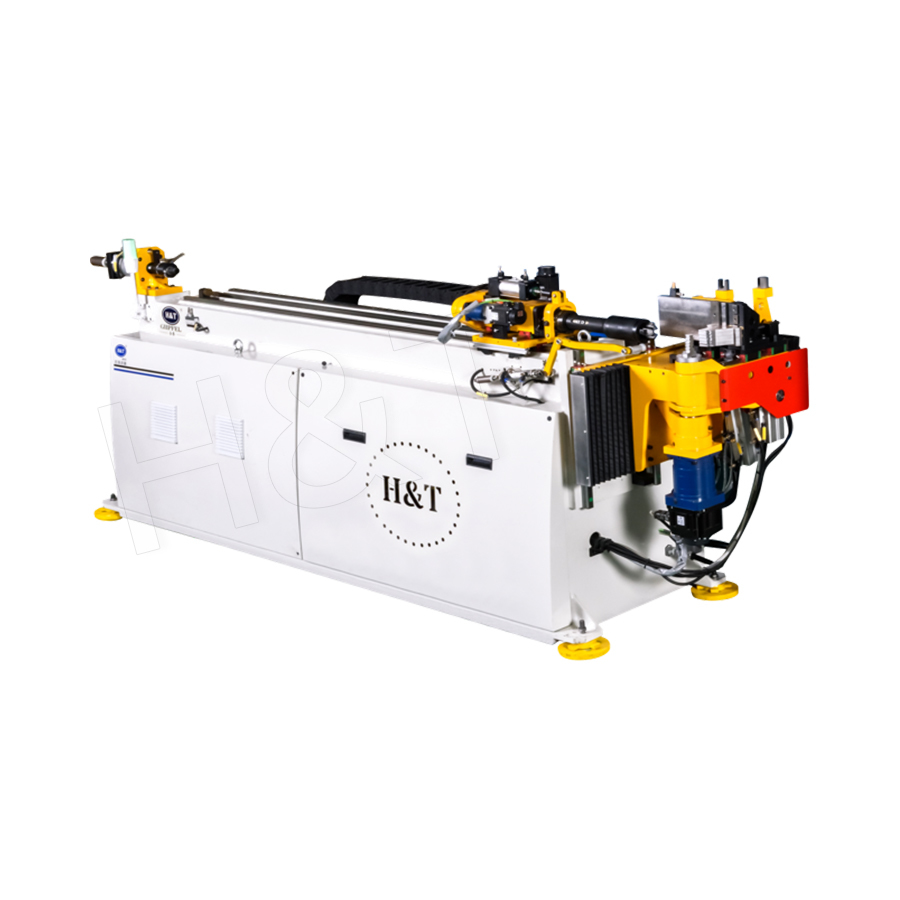
No. 196, Lifa Avenue, Haian City, Nantong, Jiangsu Province, China

News Category
Product Category
What is the working principle of CNC bending?
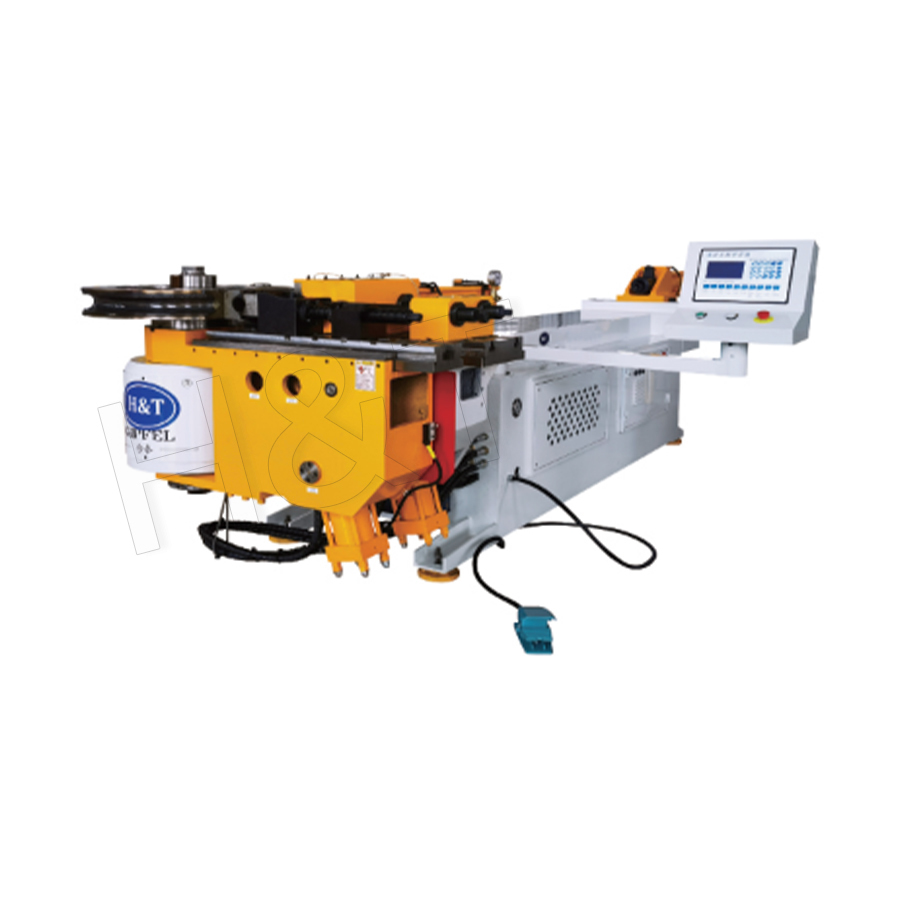
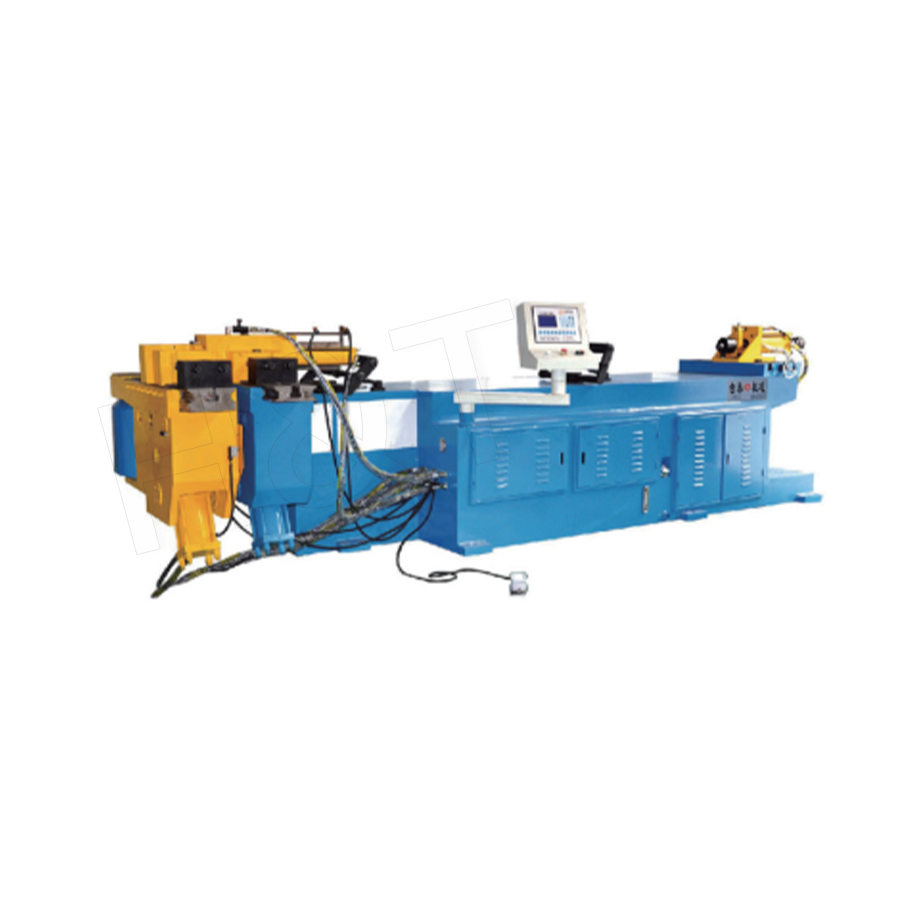
CNC bending works by using computer-controlled servo motors to precisely coordinate multiple machine axes, including rotation, bend angle, tube feed distance, and mandrel positioning, so that a metal tube or pipe is formed around a die to an exact programmed shape. A typical CNC tube bender can hold bend angle tolerances within 0.1 degrees, a level of repeatability that manual or semi-automatic bending equipment simply cannot match, since human operator input introduces variability at every bend cycle.
This precision comes from the machine executing a pre-programmed sequence rather than relying on operator judgment for each bend, which means once a program is validated for a given part, every subsequent piece produced from that program comes out dimensionally identical, a critical requirement for industries such as automotive exhaust systems and aerospace tubing where part consistency directly affects assembly fit.
Content
- 1 Core Axes That Define CNC Bending Motion
- 2 The Role of Mandrel Support in Bend Quality
- 3 How a CNC Bending Cycle Actually Runs
- 4 Programming and Simulation Before Production
- 5 Why CNC Bending Outperforms Manual and Semi-Automatic Methods
- 6 Common Applications for CNC Bent Tubing
- 7 Factors That Influence Bend Quality on a CNC Machine
- 8 Choosing the Right CNC Bending Equipment
Core Axes That Define CNC Bending Motion
A CNC tube bending machine coordinates several independent axes simultaneously, each controlling a specific aspect of the bend. Understanding these axes clarifies how the machine translates a digital program into a physical bend.
Primary CNC bending axes
- Bend axis, which rotates the bend die to the programmed angle
- Feed axis, which advances the tube to the correct position for the next bend
- Rotation axis, which rotates the entire tube around its own centerline to set the plane of the next bend
- Mandrel axis, which positions internal support to prevent wall collapse during the bend
Higher-end CNC benders often include five, six, or more controlled axes, allowing complex multi-plane bends to be produced in a single continuous cycle without needing to unclamp and manually reposition the tube between bends.

The Role of Mandrel Support in Bend Quality
One of the most important elements distinguishing CNC bending from simple manual bending is the use of internal mandrel support, particularly for thin-wall tubing or tight bend radii where the tube wall is at high risk of collapsing or wrinkling on the inside of the bend.
How mandrel support affects bend outcome
| No mandrel support | Suitable for thicker-wall tube with generous bend radius, higher risk of wrinkling on tight bends |
| Ball mandrel | Provides internal support through a series of linked balls, common for tighter radius bends |
| Form-fitted mandrel | Custom-shaped support for the tightest radii and thinnest wall applications |
The CNC system precisely synchronizes mandrel withdrawal timing with the bend cycle, since removing the mandrel too early or too late can still cause wall thinning or surface marking even on an otherwise well-programmed machine.
How a CNC Bending Cycle Actually Runs
Once a program is loaded, the machine executes a repeatable sequence of movements that transforms a straight tube into the finished bent geometry defined in the CAD or programming software.
Typical CNC bending cycle sequence
- The tube is loaded and clamped securely against the bend die
- The feed axis advances the tube to the first programmed bend location
- The rotation axis orients the tube to the correct bend plane
- The bend axis rotates the die to the specified angle, forming the bend around the mandrel
- The mandrel retracts at the programmed point in the cycle to avoid marking the tube surface
- The sequence repeats automatically for each additional bend defined in the program
Because every step in this sequence is governed by the servo control system rather than manual adjustment, cycle times remain consistent from the first part to the last, which is a major reason CNC bending is favored for high-volume production runs.
Programming and Simulation Before Production
Before any physical tube is bent, the part geometry is typically programmed using dedicated tube bending software that simulates the entire bend sequence, checking for potential collisions between the tube, the mandrel, and the machine's clamping tooling.
Simulation software can catch tooling collisions before a single part is produced, which prevents costly tooling damage and scrapped material that might otherwise occur if a complex multi-bend part were programmed by trial and error directly on the machine. This upfront simulation step has become standard practice across tube fabrication shops working with complex three-dimensional bend geometries.
Why CNC Bending Outperforms Manual and Semi-Automatic Methods
Manual and semi-automatic bending machines rely on operator skill to control bend angle and tube positioning, which introduces variability that becomes more pronounced as bend complexity increases. CNC bending removes this variability by controlling every axis through the same programmed sequence for each part produced.
Comparative advantages of CNC bending
- Consistent bend angle accuracy across an entire production run
- Faster changeover between different part programs compared to manually resetting stops and angle gauges
- Reduced scrap rate from operator error on complex multi-bend geometries
- Ability to store and recall programs for repeat production orders without reprogramming from scratch
Manufacturers producing tube bending equipment, such as the CNC systems built by Tube Bending Machinery, design their machines around this multi-axis servo control approach specifically to deliver the repeatability and precision that manual bending methods cannot achieve on complex parts.
Common Applications for CNC Bent Tubing
The precision and repeatability of CNC bending make it the preferred method across industries where dimensional accuracy directly affects part function and assembly fit.
| Automotive exhaust systems | Requires precise multi-plane bends to fit within tight underbody clearances |
| HVAC and refrigeration lines | Needs consistent bend radius to maintain proper fluid or refrigerant flow |
| Furniture and fixture tubing | Depends on repeatable bends for consistent aesthetic and structural results |
| Aerospace and hydraulic tubing | Demands tight tolerances where even minor bend deviation can affect system performance |
Factors That Influence Bend Quality on a CNC Machine
Even with precise servo control, several process variables must be correctly configured to achieve a clean, dimensionally accurate bend without wrinkling, flattening, or surface marking.
- Correct die and mandrel selection matched to the tube diameter and wall thickness
- Proper lubrication between the tube, die, and mandrel to reduce friction during the bend
- Accurate clamping pressure to prevent tube slippage during the bending motion
- Correct mandrel retraction timing synchronized with the bend cycle
Getting these variables right during initial setup is often more time-consuming than the actual programming step, since even a well-written program will produce flawed parts if the physical tooling setup does not match the tube material and geometry being processed.
Choosing the Right CNC Bending Equipment
Selecting the appropriate CNC bending machine depends on tube diameter range, wall thickness, required bend complexity, and expected production volume. A machine with more controlled axes generally supports more complex geometries but may add unnecessary cost for simpler, high-volume single-plane bending applications.
Equipment such as the CNC bending machines produced by Tube Bending Machinery are engineered with multi-axis servo control and mandrel synchronization built in, giving fabricators the flexibility to handle both simple production runs and complex multi-plane bending work on a single platform.
Featured Products
A Complete Range of Tube Processing Solutions
Precision Tube Bending
 Ready To Customise
Your Bent Tube Products?

Ready To Customise Your Bent Tube Products?
Proprietary software, smart control systems, and 50+ patents ensure more efficient and intelligent production at every step.
Copyright © 2025 by Gipfel Precision Machinery Co.,Ltd All Rights Reserved. Privacy Precision Tube Machinery Manufacturer | Pipe Forming, Cutting, End Forming Solutions
