

 简体中文
简体中文 English
 日本語
日本語 한국어
한국어 Español
 русский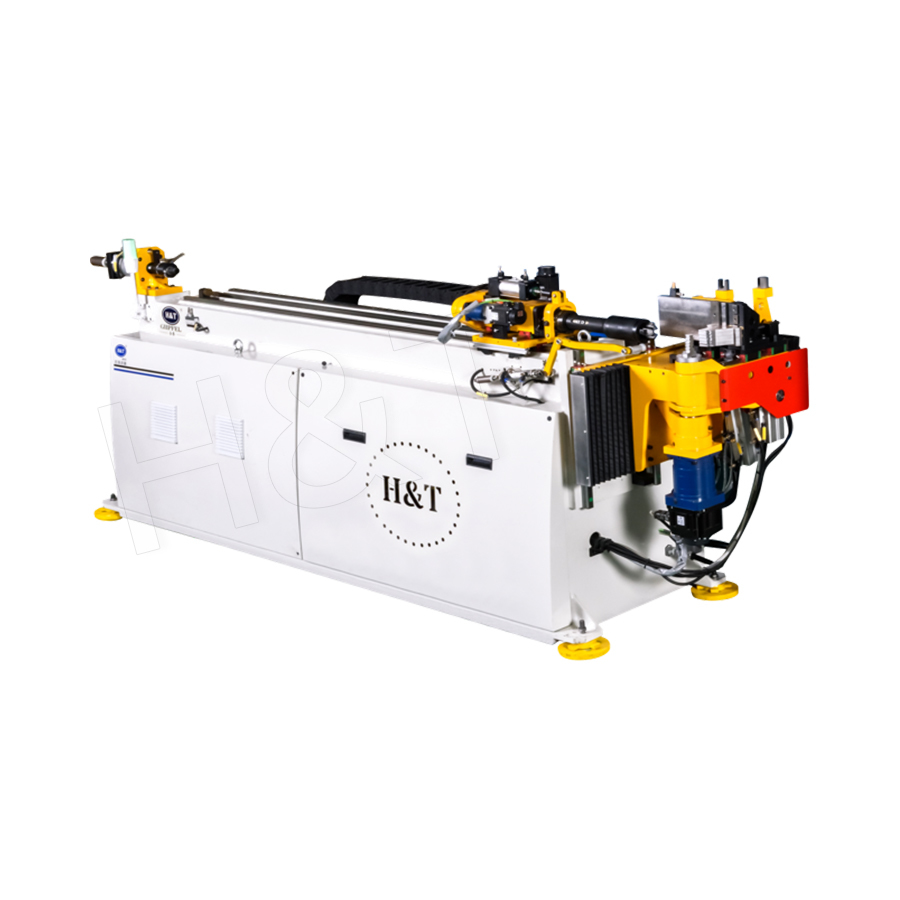
No. 196, Lifa Avenue, Haian City, Nantong, Jiangsu Province, China

News Category
Product Category
What is the function of CNC bending?
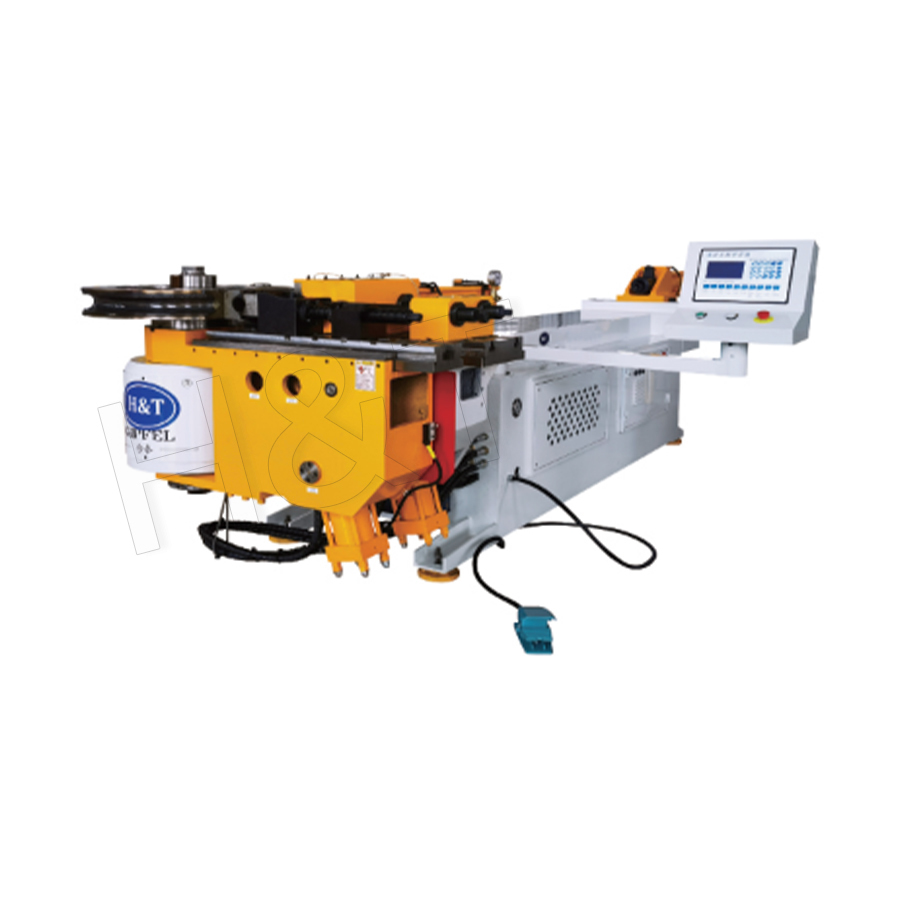
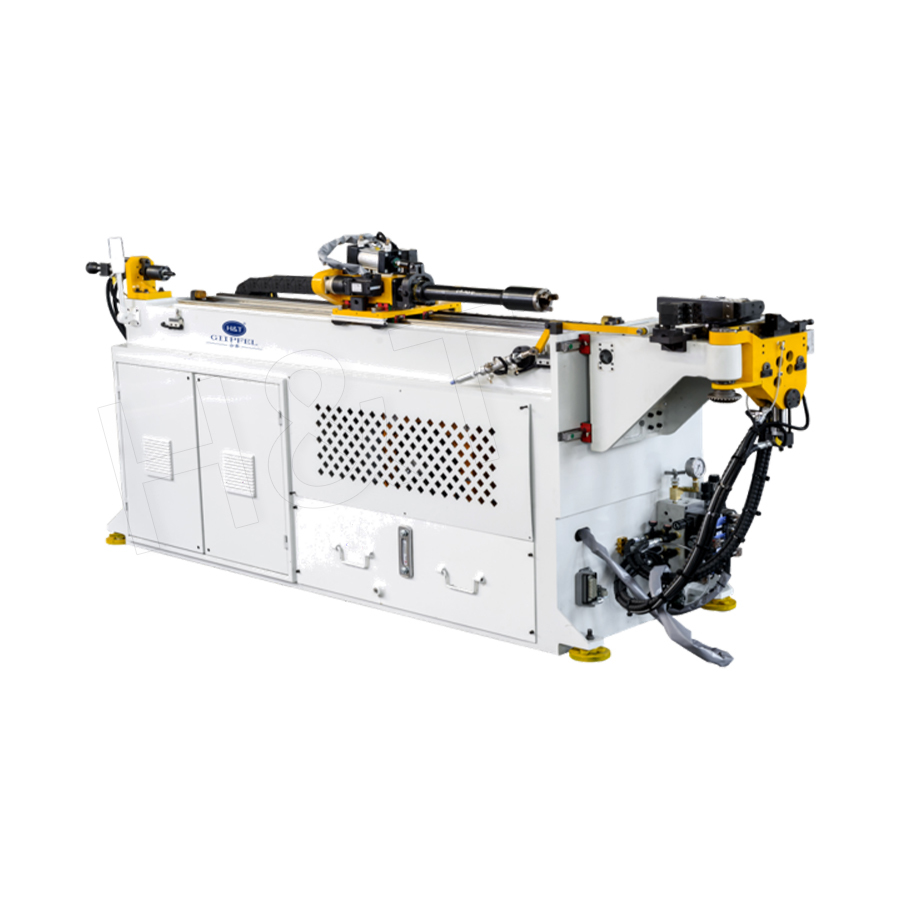
CNC bending functions to precisely shape metal tube, pipe, and profile material into programmed angles and curves by using computer controlled servo axes to guide the material through a bending die with exact repeatable accuracy, eliminating the guesswork and inconsistency associated with manual bending methods. This programmed control allows a single machine to produce complex multi plane bends, tight tolerance angles, and consistent results across large production runs, which is why systems such as CNC bending equipment are widely used in automotive, furniture, HVAC, and structural fabrication industries that require both precision and repeatability.
The sections below break down how CNC bending achieves this function mechanically, what specific capabilities it offers over manual or semi automatic bending, and the industries and applications where this precision matters most.
Content
Core Mechanical Function of CNC Bending
At its foundation, CNC bending performs its function through coordinated movement of multiple machine axes working together to form the material into the desired shape.
Programmed Axis Control
A CNC bending machine typically controls several axes simultaneously, including bend angle, rotation, feed length, and sometimes plane angle for multi directional bends. Each of these axes is driven by servo motors that follow programmed coordinates, allowing the machine to execute complex bend sequences without manual repositioning between each bend.
Mandrel and Die Support During Forming
During the bending process, an internal mandrel is often used to support the tube wall from collapsing or wrinkling on the inside of the bend radius, while an external die shapes the outer bend geometry. This combined support system is what allows CNC bending to achieve tight bend radii, sometimes as low as one times the tube diameter for certain applications, without compromising the structural integrity of the tube wall.
Precision and Repeatability Function
One of the most valuable functions CNC bending provides is the ability to reproduce identical bends across large production quantities without operator dependent variation.
Consistent Angle Accuracy
Because bend angles are controlled through programmed servo positioning rather than manual measurement and adjustment, CNC bending machines can achieve angle tolerances within a fraction of a degree on well maintained equipment, a level of consistency difficult to replicate reliably through manual bending methods.
Reduced Part to Part Variation
In manufacturing environments producing hundreds or thousands of identical bent components, this repeatability directly reduces scrap rates and rework, since each part follows the exact same programmed path regardless of which shift or operator is running the machine.
Functional Capability for Complex Geometries
Beyond simple single plane bends, CNC bending equipment is specifically built to handle geometric complexity that would be extremely difficult to achieve manually.
- Multi plane bending, where successive bends occur in different rotational orientations along the same tube
- Variable radius bending, allowing different bend radii within a single continuous part
- Compound bend sequences combining multiple angles and directions in one automated program cycle
- Tight tolerance bends required for parts that must fit precisely with other assembled components
This capability is particularly valuable in automotive exhaust systems, furniture frame manufacturing, and HVAC ductwork, where bent components frequently need to navigate around other parts within a tightly packaged assembly space.
Comparison of CNC Bending Function vs Manual Bending
| Function | Manual Bending | CNC Bending |
| Angle accuracy | Operator dependent, variable | Programmed, highly consistent |
| Complex multi plane bends | Difficult and time consuming | Executed automatically in sequence |
| Production speed at volume | Slower, limited by manual handling | Significantly faster once programmed |
| Repeatability across batches | Inconsistent between operators | Identical results across runs |
This comparison reflects general manufacturing process differences commonly referenced in metal forming industry guidance, and explains why facilities scaling up production volume typically transition from manual to CNC bending equipment.
Data Driven Process Control Function
Modern CNC bending machines also serve a data management function, storing and recalling bend programs for future production runs without needing to reset machine parameters manually each time.
- Bend programs can be saved and reused for recurring part numbers, reducing setup time on repeat orders
- Digital angle and length data allows for easier quality documentation and traceability
- Simulation software integrated with some CNC bending systems allows operators to preview bend sequences before running physical material, reducing material waste from trial and error setup
This programmability significantly reduces changeover time between different part numbers, which is a meaningful advantage for manufacturers producing varied product lines on the same equipment.
Industries That Rely on This Function
The precision and repeatability function of CNC bending makes it a standard process across several manufacturing sectors that depend on consistent bent tube or profile geometry.
| Industry | Typical CNC Bending Application |
| Automotive manufacturing | Exhaust systems, roll cages, chassis components |
| Furniture production | Tubular chair frames and table structures |
| HVAC systems | Ductwork and refrigerant piping |
| Handrail and architectural fabrication | Curved railings and structural tube framing |
Manufacturers across these industries evaluating equipment upgrades often review the specific bend radius, tube diameter capacity, and axis configuration offered by systems such as CNC bending machines to confirm compatibility with their specific part geometry requirements before committing to a production line investment.
Summary
The core function of CNC bending is to transform tube, pipe, and profile material into precisely programmed shapes through coordinated servo controlled axes, delivering a level of accuracy, repeatability, and geometric complexity that manual bending methods cannot reliably match. This function makes CNC bending equipment essential across automotive, furniture, HVAC, and structural fabrication industries where consistent, high volume, precision bent components are a core production requirement.
Featured Products
A Complete Range of Tube Processing Solutions
Precision Tube Bending
 Ready To Customise
Your Bent Tube Products?

Ready To Customise Your Bent Tube Products?
Proprietary software, smart control systems, and 50+ patents ensure more efficient and intelligent production at every step.
Copyright © 2025 by Gipfel Precision Machinery Co.,Ltd All Rights Reserved. Privacy Precision Tube Machinery Manufacturer | Pipe Forming, Cutting, End Forming Solutions
